
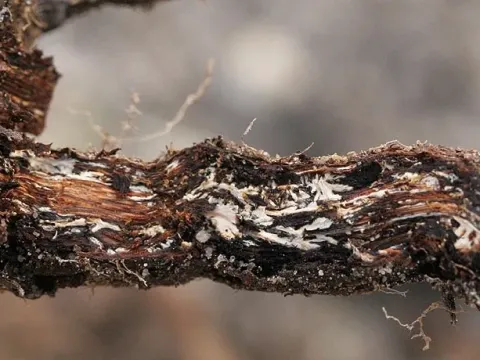
Roesleria root rot
Roesleriaceae
The causative agent of the disease is the fungus Roesleria subterranea (also known as Roesleria pallida). It is an ascomycete fungus that primarily infects the underground parts of woody plants.
What the section contains
Roesleria root rot
The pathogen is soil-borne, colonizing weakened or dying root systems. It utilizes specialized structures to penetrate the root bark and eventually the woody cylinder of the host plant.
A distinctive feature of the fungus is the formation of small, stalked fruit bodies known as apothecia, which emerge from the infected root surface and resemble tiny dark pins.
The fungus spreads via spores moved by water, soil disturbance, or contaminated farming tools. It can persist in the soil for extended periods on organic debris.
In terms of pathogenicity, it is often opportunistic, attacking plants that are already struggling with unfavorable growing conditions or environmental stress.
Symptoms of Roesleria root rot include stunted growth of the vines, yellowing of leaves (chlorosis), and reduced shoot elongation compared to healthy neighboring plants.
Upon examination of the root system, one will observe a dark, necrotic discoloration of the root bark, which begins to slough off, revealing compromised tissue beneath.
The presence of small, dark, pin-like apothecia on the root surface is a definitive diagnostic sign of Roesleria infection, especially in humid soil environments.
Affected roots often emit a foul or musty odor, resulting from the fungal decomposition of the root tissues and associated bacterial secondary infections.
As the root system decays, the vine loses its ability to uptake water and nutrients, leading to gradual decline and eventually the death of the entire plant.
The disease thrives in poorly drained, heavy clay soils where aeration is limited. Such conditions provide the moisture necessary for fungal proliferation.
Excessive soil moisture is the primary driver for the germination of fungal spores and the advancement of the mycelium along the roots.
Vines that have been stressed by root damage (from tillage or pests), nutrient imbalances, or extreme temperatures are significantly more susceptible to colonization.
Poor agricultural practices, such as lack of orchard sanitation, facilitate the accumulation of the fungus in the soil, allowing it to infect subsequent plantings.
Sites with high levels of decaying organic matter or old vineyard stumps are at a higher risk of harboring the pathogen and initiating an outbreak.
The harm caused by Roesleria root rot includes a significant decline in vine productivity, resulting in smaller clusters and poor fruit ripening quality.
The loss of functional root tissue limits the plant's ability to store carbohydrates, which leaves the vine vulnerable to winter injury and low-temperature damage.
Vineyard longevity is compromised, as infected plants become unproductive and eventually expire, leaving gaps in the rows that disrupt production efficiency.
Economic losses arise not only from reduced grape yields but also from the high costs associated with vine removal, soil remediation, and replanting.
Because the fungus is persistent, it complicates the use of the affected area, often requiring long periods of rest or soil treatment before replanting is possible.
The primary control strategy is ensuring optimal vineyard site selection, focusing on well-drained soils and improving aeration to prevent moisture accumulation.
If an infection is detected, affected vines should be uprooted, ensuring as much of the root system as possible is removed and destroyed to reduce inoculum levels.
Strict sanitation practices should be followed, including the removal of old stumps and root residues that may harbor the fungus between planting cycles.
Minimizing mechanical damage to roots during tillage and weed control is essential to prevent entry points for the pathogen.
While chemical control for root pathogens is challenging, disinfecting nursery stock before planting and using healthy, certified material are critical preventive measures.