
Root anthracnose
Colletotrichum radicis
Description
Symptoms
The first symptoms are often non-specific, characterized by stunted growth and yellowing of the foliage. Plants may appear to be suffering from water stress despite moist soil conditions.
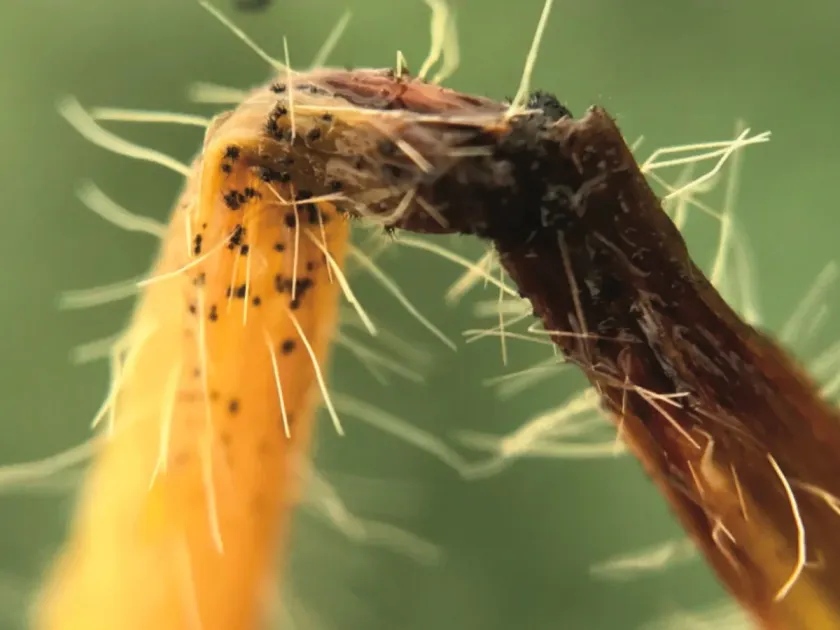
Root system examination reveals distinct browning and necrosis of the roots. As the disease progresses, the root structure becomes soft and eventually decays, leading to the plant easily detaching from the substrate.
Small, dark, cushion-like structures called acervuli may appear on the surface of decaying roots. These produce spores that serve as secondary inoculum within the crop area.
Wilting typically occurs during the warmest part of the day when transpiration demands are high, with partial recovery at night. Eventually, as the root mass is consumed, the plants die permanently.
When the taproot is cross-sectioned, a visible discoloration of the vascular bundle indicates internal fungal colonization, which prevents the uptake of water and essential nutrients.
Pathogen
The causative agent of this disease is the phytopathogenic fungus Colletotrichum radicis. Unlike other Colletotrichum species that attack leaves or fruits, this pathogen specifically targets the root system of host plants.
The fungus persists in the soil for extended periods as mycelium or resistant structures. It remains dormant under adverse conditions and resumes activity when moisture and temperature levels become suitable.
Infection usually begins through root hairs or minor wounds in the root epidermis. Once established, the pathogen colonizes the cortex and vascular tissues, disrupting water and nutrient transport.
The life cycle involves the production of conidia, which spread rapidly through irrigation water, contaminated soil particles, or moving agricultural machinery. It is a persistent threat in high-intensity greenhouse systems.
Identifying this specific pathogen is critical, as root rot symptoms can often be confused with infections by other soil-borne organisms like Fusarium or Phytophthora species.
Conditions for development
High soil moisture is the primary driver for Colletotrichum radicis development. Poor drainage or excessive irrigation provides the necessary conditions for spore germination and mycelial spread.
Optimal temperatures for the fungus range between 20°C and 25°C. Within this range, the pathogen exhibits high virulence and rapid colonization rates.
Compact, poorly aerated soil promotes the disease by limiting oxygen supply to the roots, which stresses the plant and compromises its natural defense mechanisms.
Continuous cropping of susceptible species without adequate rotation allows the pathogen population to build up significantly in the soil over time.
The introduction of the pathogen via contaminated compost, irrigation water, or infested seedlings is the most frequent cause of new outbreaks in commercial operations.
Why it matters
Root anthracnose is highly destructive, leading to significant yield losses due to early plant mortality. Affected plants often fail to reach their productive phase.
In greenhouse settings, the disease can spread rapidly through irrigation systems, potentially causing entire blocks of production to be lost if not managed promptly.
The quality of fruits is drastically reduced, as the weakened plants cannot provide the necessary photosynthates to support proper development, resulting in undersized or unmarketable yields.
Secondary infections by opportunistic bacteria often exploit the damaged root tissue, which complicates management and often accelerates the total collapse of the crop.
Once established in the soil, the pathogen is extremely difficult to eradicate, often forcing producers to switch to hydroponic systems or invest in expensive soil sterilization techniques.
Protection
Integrated pest management (IPM) is essential for controlling root anthracnose. The primary defense is strict sanitation, including the use of certified disease-free seedlings and sterile growing media.
Optimizing irrigation practices is crucial to prevent saturated soil conditions. Ensuring proper drainage and using sensors to monitor moisture levels can significantly reduce infection risk.
Biological control, specifically the use of beneficial fungi like Trichoderma harzianum, has shown success in suppressing Colletotrichum species by competing for space and nutrients in the rhizosphere.
- Rotate crops with non-host species for 3+ years.
- Sterilize all tools and containers after each use.
- Immediately rogue and dispose of infected plants to prevent inoculum spread.
If chemical intervention is necessary, apply registered fungicides according to the label, focusing on soil drenches to reach the root zone directly.
Discussion
No discussions yet — be the first.