
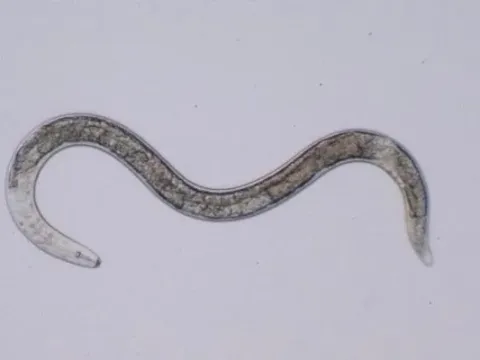
Ring nematode
Criconemella
Ring nematodes of the genus Criconemella are microscopic plant-parasitic roundworms that are widely distributed in agricultural soils globally.
What the section contains
Ring nematode
They are characterized by a heavy, ringed cuticle, which gives them a distinctive appearance under a microscope and provides physical protection.
Unlike endoparasites, these nematodes are ectoparasites, meaning they feed on root tissues from the outside using their long, needle-like stylet.
The host range is extensive, affecting economically important plants such as apple trees, peaches, almonds, walnuts, alfalfa, beans, and sorghum.
These pests survive by inserting their stylet into root cells, extracting nutrients, and causing cellular disruption that weakens the plant significantly.
Above-ground symptoms often mimic nutrient deficiencies or drought stress, as the compromised root system cannot supply water or minerals efficiently.
Leaves may become chlorotic, yellowing prematurely, and trees often exhibit stunted growth and reduced vigor compared to healthy specimens.
Roots themselves appear stubby, stunted, and darkened, with visible lesions at the feeding sites where the nematode has punctured the tissue.
In perennial crops, canopy thinning and decline are common markers of a long-term infestation that has gone untreated for several seasons.
A definitive diagnosis is usually made through a soil sample analysis in a nematology laboratory to count the number of nematodes per volume of soil.
Ring nematodes thrive in light, sandy, or coarse-textured soils that offer enough pore space for easy movement of the larvae and adults.
They prefer moderate soil temperatures and adequate moisture levels, though they are highly resilient and can persist in soil for years.
The absence of a preferred host plant does not immediately eradicate them, as they can maintain low population levels on various weed species.
Poor soil management, such as soil compaction or inadequate drainage, can exacerbate the impact of nematode damage on already stressed root systems.
Human activity is a primary vector for spreading these pests, particularly through the movement of contaminated machinery and infested nursery stock.
The primary harm caused by Criconemella is the weakening of the host plant, making it significantly more susceptible to environmental stress.
By creating entry wounds, ring nematodes facilitate the secondary infection of roots by soil-borne fungi and bacteria, leading to complex root rots.
Economic losses arise from reduced fruit size, lower crop quality, and shorter lifespans for orchard trees, ultimately affecting agricultural profitability.
Severely infested fields show uneven patches of growth, which makes uniform harvest management and irrigation application nearly impossible.
If left unmanaged, the nematode population can reach levels that make the soil unproductive for sensitive crops for many subsequent years.
Preventive measures begin with planting only certified, nematode-free nursery stock to avoid introducing the pathogen into clean soils.
Crop rotation with non-host species or cover crops that suppress nematode populations can significantly reduce the pressure in annual cropping systems.
Soil solarization or chemical fumigation may be used before planting high-value perennial crops if initial soil tests reveal high population densities.
Maintaining high organic matter levels encourages beneficial soil organisms that may act as natural antagonists to ring nematodes.
- Regular sanitation of farm equipment.
- Use of nematode-resistant rootstocks.
- Aggressive weed control programs.
- Biocontrol with beneficial fungi.
- Proper irrigation to minimize plant stress.