
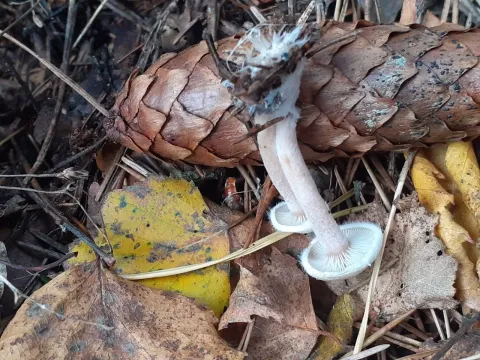
Ripartites
Ripartites
The genus Ripartites refers to a group of soil-inhabiting mushrooms belonging to the Tricholomataceae family. It is crucial to clarify that these are not plant pathogens and do not cause diseases in agricultural crops.
What the section contains
Ripartites
These fungi act primarily as saprotrophs, playing a vital role in decomposing complex organic matter such as leaf litter, twigs, and agricultural residues into simpler compounds.
Their biological structure is characterized by small, often ochre or whitish fruiting bodies. The spores of Ripartites are known for their distinctively rough or warted texture, which is a key diagnostic feature for mycologists.
By breaking down cellulose and lignin, these fungi contribute significantly to the formation of humic substances, improving overall soil structure and nutrient availability for plants.
In ecological terms, their presence is often viewed as a positive indicator of soil health and organic matter accumulation, rather than a threat to farm production.
Ripartites species thrive in environments with high moisture levels and a steady supply of decaying plant material. They are frequently found in woodlands but can appear in agricultural settings with high organic matter content.
Ideal conditions for the formation of fruiting bodies include periods of high humidity and mild temperatures, typically between 15°C and 22°C, often following heavy rainfall.
Soil management practices greatly influence these fungi. Intensive tillage and the heavy use of synthetic fungicides often lead to a decline in their population and overall diversity in the soil biome.
They are sensitive to soil pH levels; most species prefer slightly acidic to neutral soils to maintain optimal enzymatic activity required for the decomposition process.
Dissemination is achieved through spores, which are airborne. Once they land on a suitable substrate with enough moisture, they germinate and form new mycelial networks to begin the breakdown of organic components.