
Rinodina gennarii
Rinodina gennarii
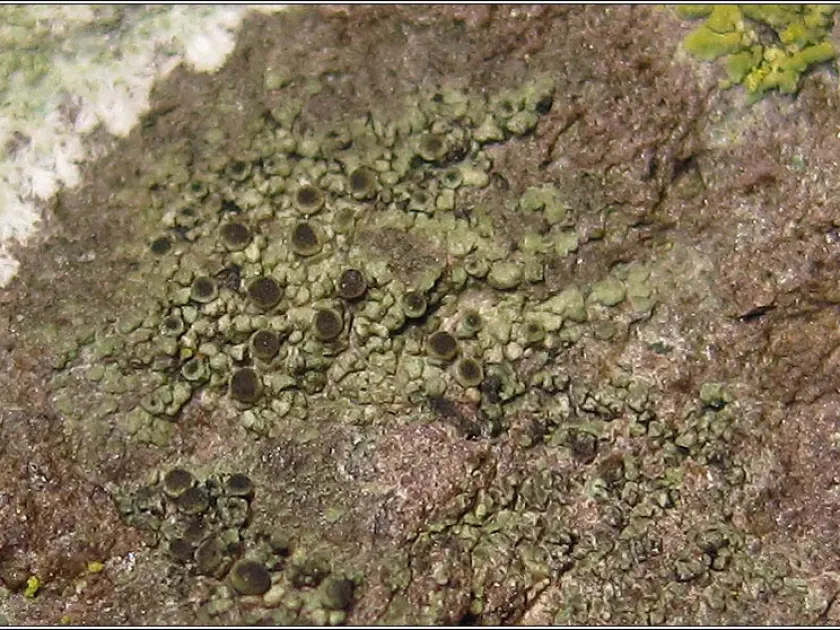
Description
Symptoms
The visual signs of colonization include thin, crust-like thalli appearing in shades of gray or brown, which adhere closely to the bark surface.
Characteristic features are the numerous small apothecia (fruiting bodies), which appear as tiny black dots scattered across the surface of the lichen.
The bark area occupied by the lichen may become rougher to the touch and exhibit a change in coloration compared to clean bark surfaces.
These lichens are most commonly found on the trunks and major scaffold branches, especially on the shaded or wetter sides of the tree.
Distinguishing it from actual bark necrosis is relatively simple, as the underlying tissue usually remains intact and healthy beneath the thallus.
Pathogen
Rinodina gennarii is a species of crustose lichen belonging to the Physciaceae family, commonly found on tree bark in various environments.
This organism is a symbiotic association between a fungus and algae, which utilizes the surface of the bark as a stable anchor for growth.
It is not classified as a pathogenic disease in the strict sense, as it does not typically penetrate or derive nutrients directly from the tree's vascular system.
In an agricultural context, its presence is usually indicative of high environmental humidity and specific microclimatic conditions surrounding the tree.
As an epiphytic species, it is highly sensitive to air quality and thrives in regions where atmospheric pollutants, such as sulfur dioxide, are at low levels.
Conditions for development
Development is favored by prolonged moisture retention on the bark, often occurring in unmanaged orchards with dense, overgrown canopies.
Lack of sufficient sunlight and stagnant air circulation within the tree architecture promote the germination and growth of lichen propagules.
Aging trees with coarse, furrowed bark provide the most suitable substrate for these organisms to establish and expand their coverage.
Orchards located in humid lowlands or near water sources often experience higher levels of colonization due to constant atmospheric humidity.
The absence of regular bark care and structural pruning allows these epiphytes to colonize large areas of the scaffold branches over several seasons.
Why it matters
While not a primary pathogen, the primary harm lies in providing refuge for overwintering pests such as scale insects, mites, and aphids.
The lichen layer can trap excess moisture against the bark, potentially leading to bark softening and facilitating the growth of wood-decay fungi.
Dense colonization may interfere with the gas exchange of the bark, which can subtly affect the overall vigor of already stressed or weak trees.
Its presence often acts as a camouflage for other more dangerous bark-inhabiting pathogens, making early diagnosis of tree health issues more difficult.
Ultimately, while Rinodina gennarii is largely aesthetic, its dominance in a garden suggests an imbalance in microclimatic management.
Protection
The most effective preventive measure is regular structural pruning to open the canopy, ensuring better light penetration and airflow.
Mechanical removal of lichens using scrapers or stiff-bristled brushes is an effective method for clearing infested areas during the dormant period.
Applying traditional lime-based whitewash to trunks can create an alkaline environment that is inhospitable for lichen growth.
Treatment with ferrous sulfate solutions during the dormant season acts as a powerful cleaner, effectively destroying lichen colonies on the bark.
- Maintaining proper tree nutrition to promote vigorous growth and bark health.
- Integrating fungal and lichen control during general orchard hygiene programs.
- Ensuring proper garden sanitation by removing dead or dying branches.
Discussion
No discussions yet — be the first.