
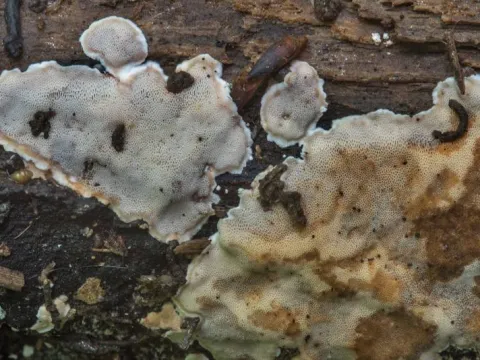
Rigidoporus vinctus
Rigidoporus vinctus
The pathogen responsible for this condition is the wood-decaying basidiomycete fungus known as Rigidoporus vinctus. It is recognized as a significant agent causing white rot in woody plant species.
What the section contains
Rigidoporus vinctus
The fungus actively colonizes the root zone and root collar of susceptible host plants. It enters the plant through small wounds, abrasions, or direct contact between healthy and diseased roots in the soil.
Mycelium growth progresses from the root system into the lower stem, where the fungus releases enzymes that break down lignin and cellulose, causing structural degradation of the wood.
The fungus is capable of forming perennial reproductive structures, or fruiting bodies, on dead or dying organic matter, which serve as the primary source for air-borne and splash-borne spore dissemination.
Rigidoporus vinctus has a broad host range, particularly impacting plantation crops such as tea, coffee, rubber trees, and various tropical fruit trees, leading to severe economic losses.
Early symptoms of infestation often include a gradual decline in tree health. Foliage may exhibit chlorosis, thinning, or premature wilting during dry periods due to the damaged root system's inability to uptake water.
A closer inspection of the root system usually reveals necrosis and decay of fine lateral roots. The larger structural roots may become brittle, showing a bleached appearance typical of white rot.
White, crusty mycelial mats are frequently observed on the surface of the root collar or under the bark near the soil line, which is a clear diagnostic indicator of the fungus.
Fruiting bodies of the pathogen may emerge near the base of the infected plant. These are often leathery or woody in texture and range in color from pale white to tan or light brown.
In advanced stages of infection, the plant may suffer sudden collapse, especially during periods of stress, as the internal conductive tissues are no longer able to support the plant's physiological needs.
High humidity and consistent soil moisture are critical environmental conditions that facilitate the germination of Rigidoporus vinctus spores and the subsequent spread of the mycelium.
The presence of decomposing wood debris, such as buried stumps or dead roots from previous crops, serves as a reservoir for the pathogen, allowing it to persist in the soil for several years.
Mechanical injuries sustained by the root system during cultivation, weeding, or harvesting operations create ideal entry points for the pathogen to infiltrate the plant's tissues.
Poor soil drainage and waterlogging create anaerobic or saturated conditions that weaken the host's natural defenses, making plants significantly more susceptible to successful fungal infection.
High-density planting configurations that restrict air circulation and light penetration often contribute to a microclimate favorable for the development of fungal pathogens within the plantation.
The primary harm caused by Rigidoporus vinctus is the systemic destruction of the plant's root system, which invariably leads to reduced yields and the eventual death of the host.
The pathogen impairs the tree's structural integrity by decaying the base of the trunk and primary roots, significantly increasing the risk of tree fall and wind damage in affected orchards.
As the fungus spreads laterally through root-to-root contact, it forms infection foci that can rapidly expand, potentially wiping out large contiguous areas of a crop plantation.
Contaminated soil remains a long-term problem, as the fungus can survive in the absence of a host, creating a significant barrier to replanting susceptible species on the same ground.
The slow progression of the disease often results in delayed diagnosis, allowing the pathogen to become well-established before effective management interventions can be implemented.
Sanitation is the cornerstone of control. This involves the complete removal and destruction of infected stumps and root systems, which prevents the build-up of the pathogen in the soil.
Implementing quarantine measures and preventing the movement of soil or plant material from infected areas to healthy sections of the plantation is essential to stop the spread.
Establishing isolation trenches around detected infection pockets can physically prevent root-to-root transmission between infected plants and their healthy neighbors.
Maintaining high standards of plant health through proper nutrition and balanced fertilization helps plants resist initial infections and recover from minor environmental stressors.
The use of fungicides as a soil drench or paint for cut surfaces may be considered as part of an integrated pest management strategy, provided it is applied early in the infection cycle.