
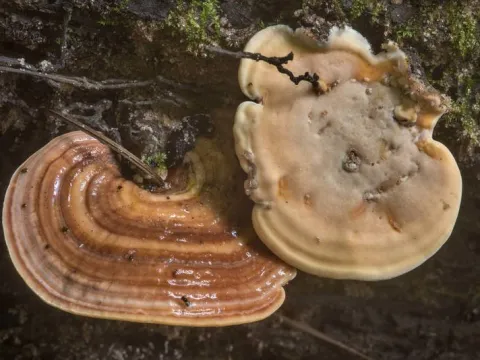
Rigidoporus zonalis
Rigidoporus zonalis
The causative agent of this disease is the basidiomycete fungus Rigidoporus zonalis, belonging to the Polyporaceae family. This pathogen acts as both an active parasite and a saprotroph, primarily affecting perennial woody plants and shrubs in tropical and subtropical regions.
What the section contains
Rigidoporus zonalis
The fungus produces characteristic fruiting bodies that often develop at the base of trunks or on the roots of infected plants. The mycelium of the pathogen penetrates deep into the tissues, degrading the wood structure and causing progressive decay.
In the fungus's life cycle, basidiospores play a vital role, spreading via air currents to settle on fresh wounds or damaged bark. Beyond sexual reproduction, the pathogen spreads vegetatively through root contact with neighboring plants.
A biological key to the species is its ability to survive for long periods on plant debris, making it highly resilient to adverse environmental conditions. Infection typically begins in the root system before ascending the stem, clogging conducting vessels.
This pathogen is classified as an agent of white rot, as it breaks down lignin and cellulose, leading to a loss of mechanical strength in the wood and rapid death of the host plant if not managed properly.
The initial sign of infection is stunted growth, accompanied by gradual yellowing and shedding of leaves, commonly identified as chlorosis. The tree canopy often becomes sparse, and young shoots may wither before the end of the growing season.
The primary diagnostic sign is the appearance of leathery or corky fruiting bodies near the root collar. These bodies often display concentric zones on the surface, from which the specific epithet of the fungus is derived, ranging from reddish-brown to orange in color.
Removing the bark from infected root areas reveals white, fan-shaped mycelial mats adhering to the wood. The affected tissue becomes soft and fibrous, exhibiting a pale color typical of white rot.
In advanced stages, the disease leads to instability, causing trees to topple in light winds due to root destruction. Exudation of resin or gum near infected areas is also common as a defense response against the fungal invasion.
- Yellowing and premature leaf drop.
- Presence of concentric fruiting bodies.
- Fibrous texture and decay of the roots.
- Loss of structural stability.
- Mycelial mats present under the bark.
Rigidoporus zonalis thrives in high-humidity conditions, making it particularly dangerous in equatorial forests and plantations with frequent rainfall. High ambient temperatures further accelerate mycelial growth and spore production.
A critical factor in disease development is the presence of mechanical injuries on roots or trunks. Wounds caused by insects, agricultural tools, or natural causes serve as entry points for primary spore colonization.
High planting density significantly facilitates the spread of the pathogen. Close contact between root systems of healthy and infected trees allows the fungus to move across plots, forming large infection centers in orchards or forests.
Soil pH levels and the availability of organic matter influence fungal activity. High amounts of woody debris in the soil allow the fungus to build up significant inoculum potential before attacking live hosts.
Poor soil drainage leads to waterlogged conditions, weakening the tree's immune system and increasing its vulnerability. While healthy trees may possess some level of resistance, it is quickly overwhelmed under prolonged stress.
The primary damage caused by Rigidoporus zonalis is the destruction of the root system, leading to the eventual death of the plant. This is particularly devastating for plantations of coffee, cocoa, rubber, and valuable timber species, where losses can be catastrophic.
Beyond crop loss, the disease incurs significant economic costs due to the need for clearing infected trees and disinfecting the soil. Infected sites often remain unsuitable for sensitive crops for several years.
Wood decay reduces the quality of timber products. Infected trunk sections lose all commercial value, severely impacting the profitability of forestry enterprises.
Infected trees serve as a constant source of inoculum, spreading spores to surrounding areas. This necessitates strict quarantine measures, which limit the export and movement of products from infested zones.
The long-term persistence of the pathogen in the soil poses a persistent threat to agroecosystems. Without comprehensive control measures, restoring plantation productivity after an outbreak is extremely difficult without switching to resistant crop species.
The primary defense measure is strict sanitary culling and removal of diseased trees along with their root systems. Roots must be excavated thoroughly, as remaining fragments in the soil can serve as sources of infection for years.
Isolating infected plots with deep trenches around the perimeter helps prevent vegetative spread through root contact. This method is effective for containing outbreaks and preventing their encroachment into healthy areas.
Maintaining good horticultural practices, including proper spacing and regular removal of plant debris, is essential. Adequate fertilization and water management strengthen tree immunity against fungal infections.
Chemical control involves the use of broad-spectrum fungicides, primarily focused on protecting pruning wounds or treating the soil in high-value areas. However, soil fumigation is often limited by high costs and environmental concerns.
Biological control methods include the introduction of antagonistic fungi, such as Trichoderma species, which suppress Rigidoporus zonalis. Breeding and planting resistant varieties remain the most sustainable strategy for long-term protection.