
Rhizomucor
Rhizomucor
The disease is caused by fungi of the Rhizomucor genus, which are members of the Mucorales order. These are highly active saprophytic microorganisms that excel at breaking down organic matter.
What the section contains
Rhizomucor
A distinctive feature of this pathogen is its thermotolerance. The fungi thrive at temperatures ranging from 30 to 45 degrees Celsius, allowing them to remain active in conditions where many other molds would stop growing.
Reproduction occurs primarily through spores, which are easily disseminated by air currents, water splashes, or contaminated equipment. The fungus has a robust biological strategy that ensures its survival in various environments.
The mycelium grows aggressively, invading plant tissues and secreting enzymes that degrade cell wall structures. This rapid colonization turns firm plant tissue into a soft, decaying mass within a short period.
Due to the high resilience of its spores to desiccation and standard environmental stress, the pathogen can persist in soil and agricultural remnants for extended periods, serving as a constant source of infection.
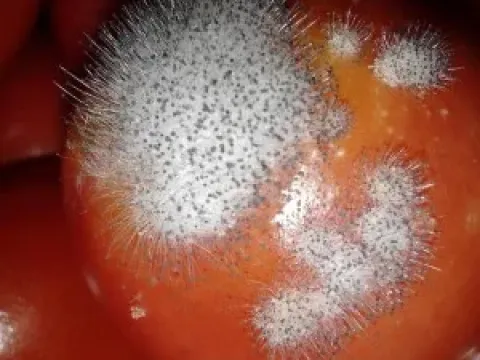
The most common symptom is the development of a dense, cotton-like mycelial mat on the surface of the affected plant or fruit. Initially white, it often turns grey or brownish as the fungus produces its spores.
Affected tissues quickly lose their structural integrity, becoming soft and pulpy. This decay is frequently accompanied by a distinct, unpleasant, and sour odor, indicative of the intense enzymatic activity characteristic of Mucor-related rots.
Lesions typically initiate at points of mechanical injury or surface bruising. From these focal points, the fungus spreads rapidly, eventually covering the entire surface of the affected host.
Microscopic examination of the mycelial mat reveals the presence of small, dark sporangia. These structures house thousands of spores, which are easily liberated into the air upon physical disturbance.
At advanced stages of the disease, internal tissues are completely destroyed, leaving nothing but a watery, unusable mass. This level of damage makes the produce completely unfit for sale or consumption.
High relative humidity, typically above 80 percent, is the primary requirement for the development and spread of Rhizomucor. In humid environments, spore germination occurs rapidly.
Elevated temperatures significantly accelerate the growth rate of the fungus. This makes it a particular problem in warm climates or during poor storage practices where heat buildup occurs.
Lack of proper ventilation in storage facilities creates stagnant microclimates. Condensation forming on the surfaces of stored fruits and vegetables provides an ideal moisture film for the pathogen to establish.
Mechanical damage incurred during harvesting or transport provides the necessary entry points for the fungus. Fresh wounds on the surface of the produce are the primary sites for infection establishment.
Contaminated equipment, crates, and storage surfaces are major vectors for the pathogen. Since spores can survive in wood crevices or on concrete floors, sanitation is critical to preventing outbreaks.
Rhizomucor causes severe economic losses during the post-harvest phase. It is capable of destroying a significant percentage of stored produce within a matter of days if conditions remain unchecked.
The accumulation of metabolic toxins and the rapid degradation of texture make the product entirely unmarketable. Furthermore, once an outbreak starts, it can spread quickly through a crate, causing "nesting" rot.
In greenhouse operations, the pathogen can cause significant losses in seedling production. It attacks young tissues, leading to high mortality rates and the loss of entire nursery trays.
The presence of this fungus often necessitates expensive disposal of spoiled goods and intensive disinfection of facilities, adding extra layers of operational costs for producers.
Consistent loss to this pathogen can destabilize supply chains and force farmers to sell produce at lower prices immediately after harvest to minimize the risk of storage rot.
- Implement strict sanitation protocols for storage facilities, including the disinfection of crates and harvesting tools.
- Ensure adequate ventilation and temperature control to prevent moisture accumulation and heat buildup.
- Adopt careful harvesting and handling techniques to minimize mechanical damage and surface bruising.
- Regularly inspect stored produce to detect and remove infected items before the fungus spreads to healthy stock.
- Use appropriate fungicide treatments during storage or post-harvest processing where allowed and necessary.