
Rhizopogon luteolus
Rhizopogon luteolus
Description
Symptoms
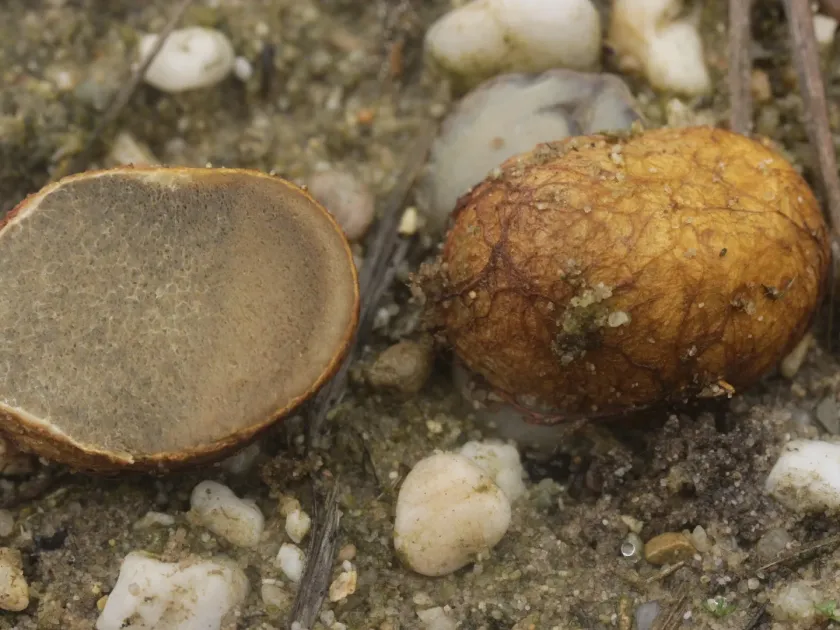
The primary identification sign is the appearance of yellow to ochre-colored, tuberous fruit bodies near the soil surface or under leaf litter.
As the fruit bodies age, they tend to darken and may show signs of cracking on the peridium surface.
Affected pine roots often show a dense mantle of white or yellowish mycelial cords, which can visually differentiate them from healthy, uncolonized roots.
Seedlings may exhibit stunted growth or discoloration of the needles when the fungal colonization is overly aggressive and parasitic.
Field diagnostics often involve inspecting the soil depth around the base of the stem to locate the maturing fruit bodies of the fungus.
Pathogen
Rhizopogon luteolus is a basidiomycete fungus commonly recognized as a mycorrhizal symbiont, although it can behave as a facultative pathogen in nurseries.
Belonging to the Rhizopogonaceae family, it produces subterranean or semi-subterranean fruit bodies often referred to as false truffles.
In forest ecosystems, it establishes ectomycorrhizal relationships with pine roots, facilitating the exchange of water and mineral nutrients between the fungus and the host tree.
While often beneficial, its presence in high concentrations within forest nurseries can complicate the development of standard seedling stock.
The biology of the fungus involves the rapid spread of mycelial strands throughout the rhizosphere, allowing it to dominate the root environment of young conifers.
Conditions for development
Rhizopogon luteolus thrives best in sandy and loamy-sand soils, which are typical habitats for pine species, favoring moderate to high soil moisture.
The fungus is acidophilic, meaning it performs better in soils with a lower pH, where it can easily colonize available root systems.
Growth is most active during the growing season when temperatures range between 15 and 22 degrees Celsius, coinciding with periods of high root activity.
Spore dissemination is facilitated by soil fauna, water runoff, and physical disturbance of the fruit bodies during nursery operations.
High seedling density promotes the transfer of the fungus between hosts, creating a continuous network of mycelium across the nursery beds.
Why it matters
The harm associated with this fungus stems from its competitive nature; it can outcompete more beneficial mycorrhizal species essential for long-term tree health.
Over-colonization of root systems can lead to a reduction in nutrient uptake efficiency, negatively impacting the growth rate of young seedlings.
In extreme cases, the fungus may cause stress to the plant, making it more susceptible to environmental factors like drought or frost damage.
Nursery managers may face economic losses due to the production of non-standard, weakened seedlings that are unfit for reforestation purposes.
Excessive presence of this fungus is often interpreted as a symptom of a degraded soil environment requiring intervention to restore balance.
Protection
The most effective management practice is to maintain proper seedling spacing, which reduces the chance of rapid fungal migration between plants.
Regular cultivation and soil aeration are crucial, as they disrupt the mycelial network and inhibit the formation of large fungal colonies.
Implementing strict crop rotation protocols helps prevent the buildup of the fungus in nursery soils over consecutive growing seasons.
Optimizing fertilization programs can improve host resilience and reduce reliance on fungal symbionts that may not be optimal for nursery-grown seedlings.
- Frequent monitoring and physical removal of fruit bodies.
- Managing soil pH to levels less favorable for fungal proliferation.
- Use of appropriate fungicides only if seedling survival is threatened.
Discussion
No discussions yet — be the first.