
Rhizopogon roseolus
Rhizopogon roseolus
Description
Symptoms
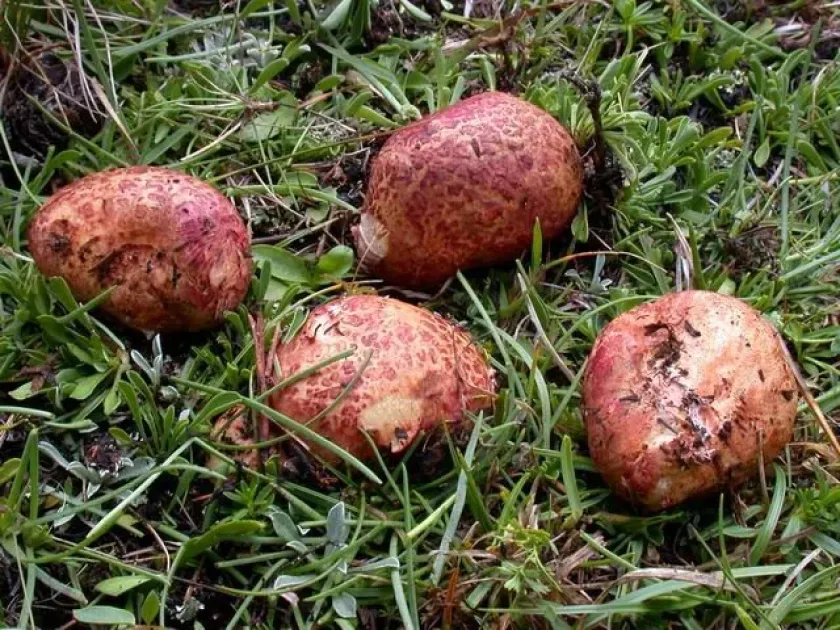
The primary sign of its presence is the formation of yellowish to brown rounded fruiting bodies buried just beneath the soil surface.
A distinctive feature is that the internal flesh turns a characteristic pink or reddish color upon exposure to air or during maturity.
The root system of associated trees will show extensive whitish mycelial strands, known as rhizomorphs, weaving through the soil.
Seedlings inoculated with this fungus often display superior vigor and faster growth rates compared to non-mycorrhizal control groups.
Visually, the presence of the fungus is often correlated with darker, healthier needles and more robust root architecture.
Pathogen
Rhizopogon roseolus is not a plant pathogen but a beneficial ectomycorrhizal fungus that forms a symbiotic relationship with trees.
It acts as a critical partner for conifers, particularly species within the Pinaceae family, helping them thrive in diverse soil conditions.
The fungus develops a complex underground network that integrates with the host tree's root system to facilitate nutrient exchange.
Biologically, it is classified as a basidiomycete that produces hypogeous (underground) fruiting bodies, often referred to as false truffles.
It is valued in agroforestry for its ability to enhance the uptake of phosphorus, nitrogen, and water in forest ecosystems.
Conditions for development
This fungus thrives in well-aerated sandy or loamy soils typical of pine forest habitats across temperate regions.
It requires a living host tree, primarily species of Pinus, to complete its life cycle and maintain its underground network.
Moderate soil moisture levels are essential for the expansion of the mycelium and the development of the fruiting bodies.
The fungus is highly sensitive to excessive chemical fertilizers and broad-spectrum fungicides, which can inhibit its growth.
A natural layer of leaf litter provides the necessary microenvironment for spore germination and protects the mycelium from temperature extremes.
Why it matters
There is no evidence of harm; Rhizopogon roseolus does not induce disease, decay, or growth reduction in trees.
In fact, its absence can be considered a limitation, as trees lacking this symbiont are often more susceptible to drought and nutrient stress.
It does not produce toxins that affect the host tree, and it consumes only a small fraction of the carbon fixed by the plant in exchange for minerals.
In forestry, it is regarded as an essential component of healthy stands rather than a damaging agent.
No economic damage is associated with this organism, as its ecological value far outweighs any minor competitive interactions in the soil.
Protection
No control measures are necessary because the organism is an integral part of a healthy, productive coniferous forest ecosystem.
If sterilization is required for research or nursery sanitation, thermal treatment of the soil substrate is the most effective method.
Management practices should prioritize the preservation of soil health rather than the eradication of beneficial fungal partners.
In cases where nursery soil is treated with strong chemicals, re-inoculation with mycorrhizal fungi is often recommended to restore tree health.
General management involves maintaining natural soil conditions and avoiding excessive chemical interventions to protect the underground fungal web.
Discussion
No discussions yet — be the first.