
Rhizodiscina
Rhizodiscina
The disease is caused by the fungus Rhizodiscina, a member of the ascomycete group. This pathogen primarily targets the bark and vascular tissues of woody plants, acting as a parasitic agent.
What the section contains
Rhizodiscina
The fungus is characterized by the formation of small, disk-shaped fruiting bodies known as apothecia. These structures are essential for the survival and reproduction of the pathogen on the surface of the bark.
Microscopic analysis reveals that the mycelium penetrates the host's cortical tissues, gradually invading deeper layers. This invasive behavior leads to the destruction of parenchymal cells and surrounding tissues.
The pathogen is highly dependent on humidity for its reproductive cycle. Spores are released from the fruiting bodies and dispersed via wind and rain splashes to new, susceptible plant parts.
Overwintering occurs within the infected bark or in the remnants of dead branches. Once temperatures rise in the spring, the pathogen reactivates and begins the cycle of secondary infection.
Early symptoms include the appearance of localized dark spots or discolored areas on the branches. As the fungus spreads, these spots typically evolve into necrotic lesions or sunken cankers.
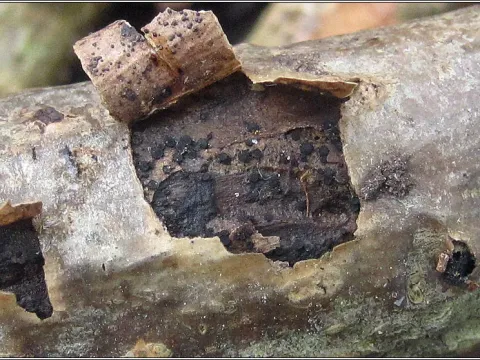
The presence of small, light-colored, disk-like fungal structures on the bark surface is a definitive sign of Rhizodiscina. These fruiting bodies often appear in clusters near cracks in the bark.
Dieback of branches is a common progression of the disease. Foliage on affected limbs may turn chlorotic, wilt, and eventually drop, reflecting the disruption of water and nutrient transport.
Peeling or cracking bark often exposes underlying tissues, which may show signs of decay. This necrosis indicates that the fungus has successfully established itself within the tree's defensive systems.
In advanced stages, the structural integrity of the branches is compromised. Affected areas may become brittle and susceptible to breakage during windy conditions.
High humidity and moderate temperatures are the most critical factors favoring the development of the disease. Prolonged rainy spells significantly increase the rate of spore germination.
Poor aeration in dense canopy structures provides a stable microclimate for the fungus to thrive. Stagnant air allows moisture to persist, preventing the bark from drying out sufficiently.
Mechanical injuries to the trunk or branches, such as those caused by frost, wind, or pruning tools, act as entry points for the pathogen. Healthy, intact bark is much more resistant to penetration.
Stressed trees are far more vulnerable to Rhizodiscina infections. Factors such as nutrient deficiencies, improper watering, or drought stress weaken the tree's natural defense mechanisms.
Neglected orchards with accumulated deadwood are primary hotspots for the pathogen. Without proper sanitation, the concentration of spores in the environment remains consistently high.
The primary damage caused by Rhizodiscina is the systematic death of branches, which reduces the tree's photosynthetic capacity. This leads to diminished growth rates and lower yield.
Chronic infections significantly weaken the overall vitality of the tree. A tree affected by this fungus becomes a magnet for secondary pests and opportunistic pathogens, accelerating its decline.
Economic losses arise from the costs of intensive management, including pruning, specialized treatments, and the potential need for total removal of severely infested specimens.
The structural damage to the bark and wood can affect the commercial value of fruit trees. Long-term infestations can render a tree non-productive and aesthetically unacceptable.
If left unmanaged, the fungus spreads throughout the orchard, turning healthy trees into sources of infection. This domino effect can compromise the integrity of the entire plantation.
Sanitary pruning is the cornerstone of control. It is vital to remove infected branches, cutting well into healthy tissue to ensure that the entire mycelial colony is excised.
Disinfecting pruning equipment between trees is mandatory to prevent the mechanical transmission of spores. Use alcohol or specific disinfectant solutions for this purpose.
Protective sprays, particularly copper-based fungicides, can be applied during dormant periods to inhibit spore germination and protect the bark surface from new infections.
Applying wound sealants to large pruning cuts helps protect the fresh surface from moisture and fungal spores. Proper wound management accelerates healing and prevents entry points.
- Maintaining tree vigor through balanced fertilization and proper irrigation.
- Removing and destroying all fallen leaves and infected woody debris.
- Ensuring proper canopy spacing to improve air circulation.
- Regular monitoring of orchard health, especially during damp seasons.