
Rhizoglomus intraradices
Rhizoglomus intraradices
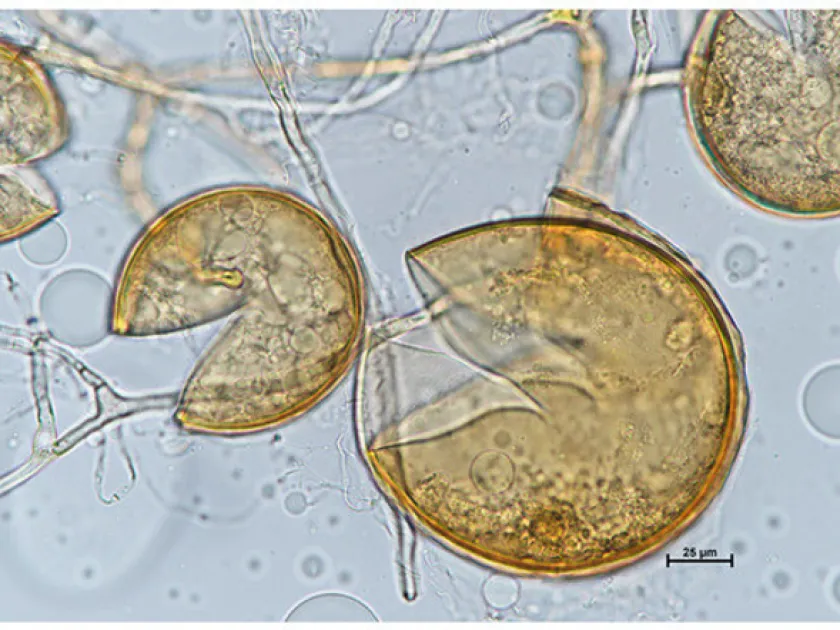
Description
Pathogen
Rhizoglomus intraradices is a well-studied arbuscular mycorrhizal fungus (AMF) that forms a symbiotic relationship with the root systems of most vascular plants. It functions as an endophyte, establishing intracellular structures called arbuscules within the root cortex.
These fungal structures facilitate a bi-directional exchange of nutrients: the plant provides carbohydrates and lipids to the fungus, while the fungus supplies the plant with phosphorus, nitrogen, and micronutrients absorbed from the soil.
The fungus propagates through the production of spores and the extension of mycelial networks. It is an obligate biotroph, meaning it cannot complete its life cycle or proliferate in the absence of a suitable host plant.
In research, this species is often used as a model organism to study nutrient transport mechanisms. Its genetic diversity allows it to adapt to various soil types and climatic conditions, making it a ubiquitous component of terrestrial ecosystems.
While often viewed as a beneficial partner, its ecological role can shift depending on the resource availability of the host environment, leading to complex interactions that agronomists must consider in high-yield scenarios.
Conditions for development
The colonization rate of the host roots is highly dependent on soil nutrient availability. High concentrations of soluble phosphorus suppress the formation of arbuscules, as the plant no longer relies on the fungus for nutrient acquisition.
Soil structure and aeration are vital for the development of the fungal network. Compaction or waterlogging reduces oxygen availability, which is essential for the metabolic activity of the mycorrhizal hyphae.
The temperature range of 20–25°C is ideal for fungal growth and root infection. Deviations from these temperatures significantly impact the efficiency of the symbiosis and the timing of root colonization.
Pesticide usage, particularly fungicides, can inadvertently disrupt mycorrhizal populations. Soil management practices such as deep tillage break the delicate mycelial filaments, which can limit the spread and effectiveness of the fungus.
Crop rotation plays a critical role in managing fungal density. Including non-mycorrhizal host plants, such as those in the Brassicaceae family, effectively reduces the spore load in the soil for subsequent seasons.
Why it matters
The potential negative impact, or "cost," of Rhizoglomus intraradices arises from the energy demand of the symbiosis. In nutrient-rich environments, the plant may lose efficiency by diverting significant carbon resources to support the fungal network.
In extreme cases of over-colonization, the mycelial mass can impose a structural burden on the roots, potentially affecting water uptake during peak demand periods or in drought conditions.
Although it does not typically cause disease, excessive colonization can alter the plant's hormonal balance. This can sometimes lead to reduced biomass accumulation in greenhouse crops where resources are tightly controlled.
In highly specialized crop production, the presence of the fungus might become a confounding variable in nutrient management, leading to unexpected plant behavior and uneven field growth patterns.
Economic damage is generally negligible but becomes a management concern when plants show symptoms of nutrient competition rather than the expected symbiotic growth promotion.
Protection
Effective management begins with precise soil testing and fertilizer planning. By providing sufficient nutrients directly to the plant, the need for mycorrhizal intervention is minimized, naturally regulating fungal population levels.
Strategic crop rotation with non-mycorrhizal hosts is a highly recommended biological control measure to reduce the spore bank in heavily infested agricultural soils.
Minimizing soil disturbance through no-till or reduced tillage systems helps maintain soil health but should be balanced against the desired level of mycorrhizal activity in specific field plots.
Preventative cleaning of agricultural machinery is essential to stop the spread of fungal spores between different fields, especially when moving from high-inoculum zones to cleaner environments.
Integrated soil health management, focusing on organic matter and balanced microbial communities, prevents the dominance of any single fungal species, ensuring a stable and productive root environment.
Discussion
No discussions yet — be the first.