
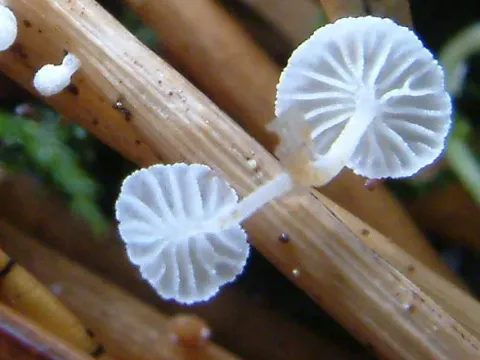
Resinomycena
Resinomycena
The genus Resinomycena includes several species of fungi belonging to the Mycenaceae family. While primarily characterized as saprotrophic, these organisms play a complex role in the decomposition of forest and agricultural organic matter.
What the section contains
Resinomycena
The fungus functions by secreting specialized enzymes that break down complex carbon structures. This process allows it to colonize woody substrates, leaf litter, and occasionally the bark of weakened trees or stems in agricultural landscapes.
Biologically, Resinomycena is distinguished by its distinct microscopic morphology and the formation of basidiocarps, which are often coated with a resinous or mucilaginous substance, aiding in water retention during spore development.
Though not classified as a primary parasite, Resinomycena can act as an opportunistic pathogen when a host plant's defense system is compromised by abiotic stress, such as drought, nutrient deficiency, or mechanical wounding.
The presence of this fungus is often a bio-indicator of high humidity levels and organic substrate availability in the environment. Its life cycle involves the production of basidiospores that are easily disseminated by wind and water splash.
Environmental conditions are the primary drivers of Resinomycena development. High humidity, especially during prolonged rainy seasons, provides the necessary moisture for the mycelium to spread rapidly across surfaces.
An optimal temperature range for the fungal metabolic activity is between 15°C and 22°C. Within these parameters, the fungus effectively utilizes organic substrates and produces sporocarps with greater frequency.
Accumulation of debris and poor sanitation in orchard or garden settings significantly increases the risk of infection. If leaf litter and woody remains are not managed, the inoculum density remains high in the ecosystem.
Soil and surface pH also influence colonization. Resinomycena tends to thrive in slightly acidic environments, which are common in forest edges and improperly managed agricultural soils with high organic content.
Lack of airflow, caused by dense planting or improper pruning, allows moisture to stagnate on plant surfaces. This creates a persistent microclimate that is highly conducive to the establishment of the fungus.
The harm caused by Resinomycena is largely indirect, focusing on the suppression of plant vigor. By colonizing tissues, the fungus competes with the plant for nutrients and creates openings that facilitate secondary infections.
In ornamental and forest trees, the colonization of the bark can interfere with transpiration and gas exchange, leading to premature leaf drop and the dieback of weaker, lateral branches over time.
In agricultural systems, the presence of these fungi in the root zone can negatively affect plant growth by altering the microbial balance of the soil and potentially inhibiting the beneficial mycorrhizal associations.
- Reduced photosynthetic efficiency due to premature chlorosis.
- Weakening of structural integrity in young stems.
- Increased susceptibility to severe, primary pathogens.
- Potential disruption of nutrient cycling in the root zone.
While an individual plant might tolerate the presence of the fungus, cumulative damage in an orchard can lead to an overall decline in yield and plant longevity if environmental stresses persist.
The management of Resinomycena relies on integrated cultural practices. Sanitation is paramount; removing dead wood, pruning debris, and fallen leaves significantly reduces the available substrate for fungal development.
Improving air circulation through proper canopy management is essential. Regular pruning ensures that surfaces dry out quickly after precipitation, effectively limiting the window of opportunity for fungal colonization.
Chemical control, if necessary, should utilize systemic fungicides or copper-based sprays applied preventatively. These treatments create a barrier that prevents the mycelium from gaining a foothold on the plant surface.
Biological control methods are highly recommended, specifically the application of Trichoderma species. These fungi act as aggressive competitors, outcompeting Resinomycena for space and resources in the soil.
Maintaining optimal soil health through proper fertilization and pH adjustment is a preventive strategy. A vigorous, well-nourished plant is naturally more resistant to the opportunistic colonization of saprotrophic fungi.