
Rhabdocline needle cast of larch
Rhabdocline laricis
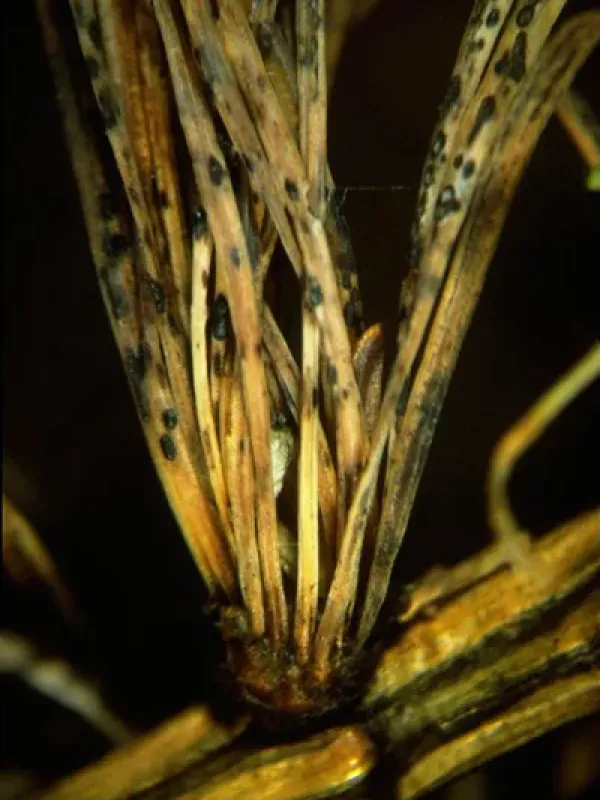
Description
Symptoms
The primary symptom of this condition is the appearance of chlorotic, yellow-to-brown spots on the needles, which eventually expand to cover the entire needle surface.
Distinctive longitudinal lines or splits become visible on the needles as the fungal fruiting bodies erupt through the needle tissues to release spores.
As the infection progresses, the needles lose their vibrant color, turning reddish-brown and dropping prematurely, often leaving the branches sparse.
The disease is most prominent during late summer, creating a stark contrast between healthy current-year needles and the damaged older growth.
- Chlorotic spotting on larch needles.
- Visible longitudinal ridges or fungal fruiting structures.
- Premature needle shedding.
- Discoloration turning into reddish-brown.
- Reduced crown density over the growing season.
Pathogen
The disease is caused by the fungus Rhabdocline laricis, which is an ascomycete specialized in infecting needles of the Larix genus.
The fungus develops its reproductive structures, known as apothecia, directly on the surface of infected needles, facilitating the release of spores.
The pathogen survives the winter in fallen needles under the trees, creating a continuous cycle of infection that begins each spring when conditions become favorable.
The spread of the fungus is primarily driven by air currents that transport spores from infected material to healthy, developing foliage during rainy or humid weather.
Upon landing on a suitable host, the fungal spores germinate, and the mycelium penetrates the needle epidermis, initiating the destructive infection process.
Conditions for development
High relative humidity and frequent rainfall are the most critical environmental drivers for the rapid spread and germination of fungal spores.
Dense, unmanaged stands with poor air circulation create microclimates that retain moisture, allowing the fungus to thrive and infect neighboring trees easily.
Low light levels, often found in overcrowded plantations, significantly weaken the trees' physiological status, making them more susceptible to fungal colonisation.
Moderate temperatures ranging from 15 to 22 degrees Celsius provide the ideal metabolic environment for the fungus to multiply and complete its reproductive cycle.
Sites with a history of infection and debris from previous years maintain a high level of inoculum, increasing the likelihood of recurrent outbreaks.
Why it matters
The main impact of the disease is the reduction of the photosynthetic capacity due to premature defoliation, which hampers the tree's energy storage.
Consistent annual infection leads to stunted growth and reduced wood production, which is a major concern for commercial larch timber management.
In ornamental or landscape settings, the disease causes severe aesthetic degradation, leaving trees looking thin, sickly, and sparse.
Severely weakened trees are predisposed to secondary pests, such as bark beetles, which can cause total tree mortality under stress conditions.
In nursery environments, Rhabdocline needle cast can cause significant losses in seedling stocks, resulting in economic damage to producers.
Protection
Sanitation practices, such as raking and removing infected fallen needles, are essential to decrease the primary inoculum present under the tree canopy.
Pruning lower, infected branches can improve air circulation and reduce the humidity levels that favor the development of fungal spores.
Application of fungicides during the active growth period can effectively protect new foliage from infection, especially in high-value or nursery situations.
Implementing proper spacing between trees during planting promotes good ventilation and prevents the creation of optimal conditions for fungal proliferation.
Maintaining optimal tree vigor through appropriate fertilization and water management helps the trees naturally resist and recover from the pathogen's attack.
Discussion
No discussions yet — be the first.