
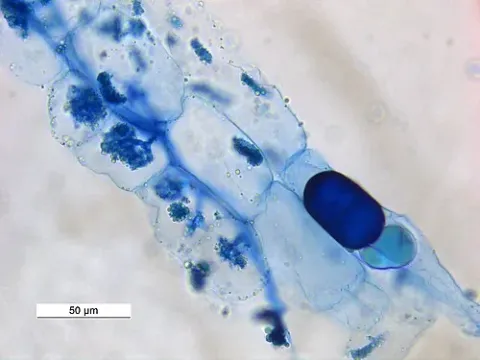
Arbuscular mycorrhiza
Glomerales
Glomeromycota (glomeromycetes) are not pathogens; they are a group of beneficial fungi that form symbiotic relationships known as arbuscular mycorrhiza (AM) with the roots of the vast majority of terrestrial plants.
What the section contains
Arbuscular mycorrhiza
The fungus colonizes the root cortex and forms arbuscules, which are branched, tree-like structures inside the root cells that serve as the primary interface for nutrient exchange.
These fungi are obligate biotrophs, meaning they rely entirely on the host plant for carbon sources, specifically sugars produced during photosynthesis, to complete their life cycle.
They propagate in the soil through large, multinucleate spores and via the extension of extraradical hyphae that explore the soil volume for new root hosts.
Understanding that these are symbionts rather than plant killers is crucial for modern agronomists who aim to foster soil health and improve crop sustainability.
Arbuscular mycorrhiza development thrives in soils with moderate to low phosphorus availability, as plants are more likely to seek fungal symbionts when essential nutrients are scarce.
High levels of synthetic phosphorus fertilizers can inhibit the formation of mycorrhizal associations, effectively causing the plant to terminate the symbiotic relationship with the fungus.
Optimal environmental conditions for these fungi include adequate soil aeration and moisture, which support both the health of the host root system and the growth of the fungal mycelial network.
Soil pH levels significantly influence the colonization rate, as different glomeromycete species exhibit varying preferences for soil acidity or alkalinity.
Regular cropping patterns and the absence of soil-disturbing activities like intensive deep plowing are essential to maintain the continuity of the fungal hyphae in the soil.
Glomeromycota do not cause disease; instead, their presence is associated with significant benefits to plant health, biomass production, and resource efficiency in agriculture.
The fungi play a vital role in mobilizing poorly soluble phosphorus and micronutrients such as zinc and copper, making them available for plant uptake through the hyphal network.
Mycorrhizal plants are significantly more resilient to environmental stresses, particularly drought, because the extended hyphal network increases the effective root surface area for water absorption.
Some studies indicate that colonization can provide a protective effect against certain soil-borne pathogens by competing for space or triggering the plant’s systemic defense responses.
There is no "harm" associated with these fungi; rather, the harm in an agricultural context comes from soil degradation that destroys these beneficial natural partnerships.
Management strategies for arbuscular mycorrhiza focus on conserving the existing fungal population and promoting their colonization through sustainable agronomic practices.
Reducing tillage intensity is highly recommended to protect the integrity of the soil mycelial network, which is often damaged by heavy mechanical soil disturbance.
Incorporating diverse crop rotations that include mycorrhizal-dependent species helps ensure that the soil remains a reservoir of beneficial fungal spores for future plantings.
Careful application of pesticides, particularly systemic fungicides, is necessary to prevent unintentional damage to these delicate symbiotic networks in the rhizosphere.
On depleted soils, the use of mycorrhizal inoculants can assist in establishing the symbiosis, leading to stronger plant growth and improved overall efficiency of nutrient management.