
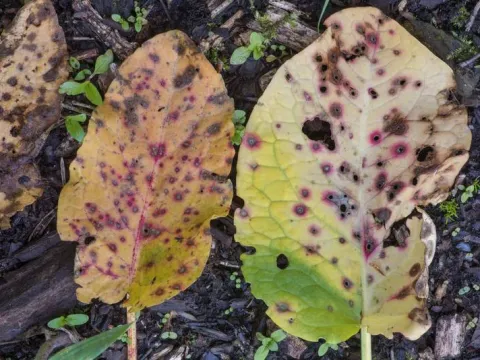
Sorrel leaf spot
Ramularia karelii
The primary symptom of this disease is the appearance of small, round spots on the leaves of the sorrel plant, typically ranging from yellowish to brown in color.
What the section contains
Sorrel leaf spot
As the infection progresses, these spots expand in size and often develop a distinct white center surrounded by a darker, necrotic border, a characteristic sign of the fungus.
Under humid conditions, a sparse, grayish fungal growth can be observed on the undersides of the affected leaves, representing the sporulation of the pathogen.
Leaves that are heavily infected will eventually turn yellow, wither, and collapse, significantly damaging the plant's overall health and vitality.
The cosmetic damage caused by the lesions makes the harvested leaves unmarketable and unsuitable for consumption, causing distress to farmers and gardeners.
The causal agent of this disease is Ramularia karelii, a pathogenic fungus belonging to the Deuteromycetes class that specifically targets certain plant species.
The fungus survives the winter in the soil and on leftover plant debris, lying dormant as mycelium or conidia until environmental conditions become favorable.
During the growing season, the fungus produces new spores that are easily spread by wind currents, rain splashes, or mechanical contact during cultivation.
The infection initiates when spores land on leaf surfaces and penetrate the tissue, often through stomata, leading to the development of necrotic lesions.
The biological cycle of the fungus is closely synchronized with the growth of the sorrel plant, allowing it to complete multiple life cycles within a single season.
Mild temperatures ranging between 15°C and 22°C, combined with high atmospheric humidity, create the perfect climate for the development and spread of this disease.
Overcrowded plantings that lack proper air circulation prevent the foliage from drying out, keeping the microclimate wet and inviting for fungal spore germination.
Frequent rainfall or heavy overhead irrigation that keeps the leaf canopy consistently damp drastically increases the incidence of the infection.
The presence of weeds within the field can act as alternative hosts, allowing the disease to persist even when cultivated plants are managed correctly.
Excessive use of nitrogen fertilizers encourages succulent, rapid growth that is inherently more susceptible to the penetration of fungal hyphae.
The economic impact of sorrel leaf spot is significant, primarily due to the loss of product quality, as spotted leaves are discarded as waste.
The disease reduces the plant's photosynthetic capacity, leading to lower overall yields and a general decline in the plant's ability to produce new growth.
Heavily infected plants are physically weakened, making them less resistant to other environmental stressors, such as frost or drought conditions.
If left unmanaged, the pathogen population in the soil increases over time, making it nearly impossible to maintain a productive sorrel patch in the same area.
In addition to direct losses, the disease management process requires additional labor and resources, further increasing the costs associated with crop production.
Crop rotation is the most effective cultural practice, as avoiding the same planting site for three to four years prevents the build-up of soil-borne inoculum.
Sanitation is critical; all infected plant debris must be removed and destroyed or buried deeply to break the cycle of the disease between seasons.
Ensuring proper plant spacing is essential to allow for adequate airflow, which helps keep the foliage dry and suppresses the development of the fungus.
Irrigation should be applied strictly at the soil level rather than over the tops of the plants to minimize the wetting of the leaves.
- Monitor fields regularly for early signs of lesions.
- Control weeds to remove alternative sources of infection.
- Select site locations with good drainage and sunlight.
- Use clean, disease-free seeds or planting materials.