
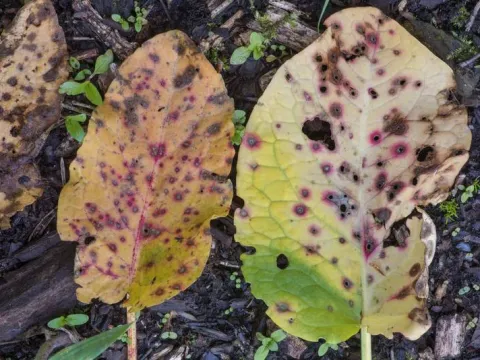
Ramularia leaf spot
Ramularia rumicis
The causal agent of this disease is the fungus Ramularia rumicis. It is a specific plant pathogen that primarily attacks plants of the Rumex genus, causing significant leaf damage.
What the section contains
Ramularia leaf spot
This fungus belongs to the class of Hyphomycetes and produces conidia in white, tufted masses on the leaf surface. These spores are wind-dispersed and facilitate the rapid spread of the disease.
The pathogen overwinters as mycelium or sclerotia on infected plant debris, fallen leaves, and sometimes within the soil, providing a source of inoculum for the next spring.
Infection begins when spores land on susceptible leaves under favorable moisture conditions, germinating and penetrating the leaf tissues through stomata or directly through the epidermis.
The life cycle of the fungus can repeat several times throughout a single growing season, allowing it to build up in population density and cause widespread outbreaks.
The primary symptom is the appearance of small, circular or irregular-shaped spots on the foliage. Initially, these are light gray or brown, often with a darker, distinct margin.
As the infection progresses, a white, powdery fungal growth (conidia) becomes visible on the underside of the leaf, directly corresponding to the spots on the upper surface.
As the spots enlarge and coalesce, the leaf tissue begins to yellow and eventually turns necrotic, leading to the collapse of the entire leaf structure.
Heavily infected plants show severe foliage wilting and premature drying, which significantly hinders photosynthesis and overall plant health.
Initial infection sites are typically located on older, lower leaves where the canopy microclimate is more humid and conducive to fungal colonization.
Ramularia leaf spot thrives in conditions of high humidity, frequent rainfall, and moderate temperatures, typically ranging from 18 to 25 degrees Celsius.
Poor airflow within dense plantings is a major contributing factor to the disease spread. Stagnant air prevents leaves from drying out after rain or dew, facilitating fungal growth.
Over-irrigation or overhead watering systems, if not managed correctly, can exacerbate the disease by keeping the foliage wet for extended periods.
Excessive nitrogen fertilization may result in lush, soft leaf growth, which is often more susceptible to infection by fungal pathogens than plants with balanced nutrition.
Continuous cropping of sorrel on the same plot year after year leads to an accumulation of inoculum in the soil, increasing the risk of early and severe disease outbreaks.
The disease causes significant economic loss by rendering the foliage unmarketable due to the unattractive spotting and necrosis of the leaves.
By reducing the leaf surface area available for photosynthesis, the fungus slows down plant growth, resulting in lower total yield during harvesting seasons.
Systemic weakness caused by the disease can reduce the plant's ability to store energy for the winter, leading to lower survival rates for perennial stands.
In addition to yield loss, the disease may affect the nutritional profile of the leaves, making them less suitable for fresh consumption or commercial processing.
If left unmanaged, the pathogen can destroy an entire stand within a few months, forcing the grower to terminate the crop early.
Crop rotation is the most effective cultural practice to reduce the pathogen population. Avoid planting sorrel in the same location for at least three years.
Strict sanitation measures are crucial. All infected plant materials must be removed and destroyed immediately to prevent the build-up of overwintering inoculum.
Proper spacing between plants is essential to ensure good air circulation, which helps keep the foliage dry and inhibits the growth of the fungal pathogen.
When necessary, apply approved fungicides at the first sign of symptoms, always ensuring that pre-harvest safety intervals are strictly followed.
- Use disease-resistant varieties of sorrel whenever possible.
- Practice balanced fertilization to strengthen plant immunity.
- Use drip irrigation to avoid wetting the foliage unnecessarily.