
Ramularia leaf spot
Ramularia pakistanica
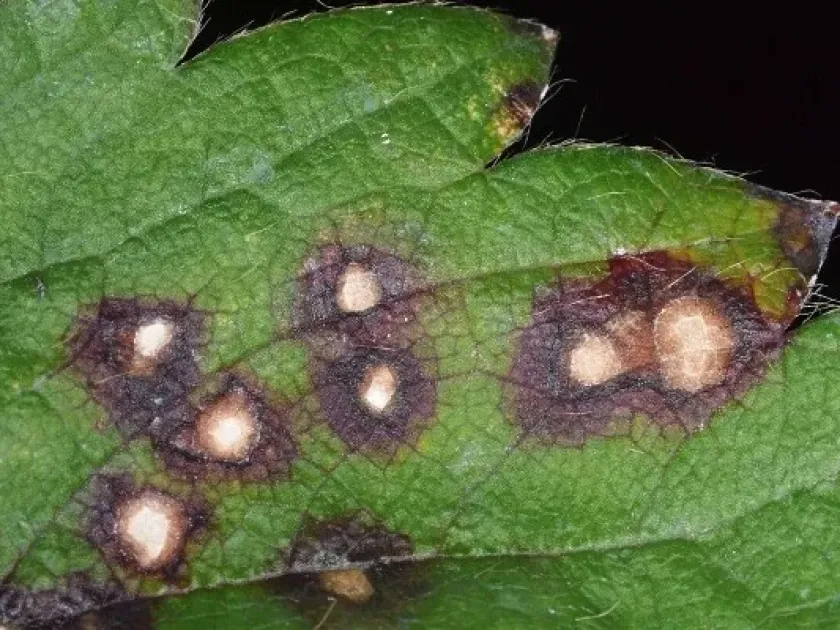
Description
Symptoms
The disease manifests as distinct leaf spots, which are initially small and chlorotic. Over time, these spots expand, often changing color to brown or gray, sometimes surrounded by a yellowish halo.
In humid conditions, a visible whitish or gray moldy growth may appear on the undersides of the leaves, representing the sporulation of the fungus. As the disease advances, these spots can coalesce, leading to extensive leaf necrosis.
Lower leaves are typically affected first, showing signs of premature yellowing and senescence. This process reduces the overall leaf area available for photosynthesis, which hampers plant growth.
In severe infections, the disease can spread to stems and other aerial parts, further weakening the plant structure. The symptoms are often mistaken for other leaf spot diseases, requiring expert diagnosis.
The presence of lesions leads to stunted development, particularly if the infection occurs during the early growth stages of the crop, significantly limiting yield potential.
Pathogen
The causal agent of this disease is the fungus Ramularia pakistanica, a member of the Ascomycota division. This pathogen is a specialized parasite that targets specific plant tissues, utilizing host nutrients for its development and reproduction.
The fungus reproduces primarily through conidia, which are produced on conidiophores emerging from the stomata of the host plant. These spores act as the main mechanism for the dissemination of the infection within the field.
Ramularia pakistanica is capable of overwintering as mycelium within infected plant debris or in the soil. This survival mechanism allows the pathogen to persist across seasons until environmental conditions become conducive to new infections.
Microscopic examination reveals hyaline, septate conidia, which are characteristic of the Ramularia genus. Identifying these structures is essential for confirming the presence of this specific pathogen in crop samples.
As a biotrophic parasite, it exerts stress on the plant by disrupting its metabolic pathways. The degree of damage caused is often proportional to the density of the fungal colonies on the leaf surface.
Conditions for development
Ramularia pakistanica thrives in environments characterized by moderate temperatures and high humidity. Optimal conditions often involve extended periods of leaf wetness, which are essential for spore germination.
The pathogen spreads most efficiently through wind and rain splashes. Dense canopy structures, which inhibit airflow and retain moisture, greatly accelerate the development of the disease in a crop field.
Environmental stress, such as nutrient deficiencies or poor soil health, makes plants more susceptible to infection. Once a few plants are colonized, the high concentration of inoculum leads to rapid secondary cycles of infection.
Seasonal weather patterns, particularly those with frequent rainfall during the mid-to-late growth stages, are critical triggers for outbreaks. Farmers should monitor meteorological data to anticipate potential infection windows.
The incubation period for the fungus can be quite short under ideal conditions, allowing the disease to reach epidemic proportions within a very brief timeframe if left untreated.
Why it matters
The economic impact of the disease is significant due to the loss of functional leaf area. This reduction in photosynthetic capacity leads to lower biomass production, poorer grain filling, and reduced overall harvest weight.
In addition to yield loss, the quality of the harvested crop may be diminished. Infected plants may exhibit signs of premature maturity, leading to reduced seed quality and lower market value.
Plants affected by the fungus show decreased resistance to secondary pests and pathogens. This complex of stressors often results in the total failure of vulnerable crops if management practices are neglected.
The long-term impact involves the accumulation of the pathogen in the soil, which complicates future cropping cycles. Maintaining a clean field environment is necessary to prevent persistent re-infestation.
Farmers face financial burdens not only from crop losses but also from the recurring need for fungicide applications and specialized management of infected fields.
Protection
Integrated pest management (IPM) is the best approach to control the disease. This includes the selection of resistant varieties, which provide the most durable and cost-effective defense against the pathogen.
Crop rotation is a fundamental cultural practice that prevents the build-up of the fungus in the soil. Avoiding host crops on the same field for several years breaks the disease cycle and lowers the inoculum load.
Proper field hygiene is essential; this involves the deep burial or removal of crop residues where the pathogen survives. Additionally, keeping the field free of weeds helps reduce potential reservoirs for the fungus.
Chemical control involving fungicides should be applied preventatively or upon the first sighting of symptoms. Utilizing systemic fungicides from different chemical classes can delay the development of resistance.
- Ensure adequate plant spacing to facilitate airflow.
- Implement balanced fertilization to maintain strong plant immunity.
- Conduct regular field scouting to detect early infection clusters.
- Use certified, disease-free seed for planting to prevent introduction.
Discussion
No discussions yet — be the first.