
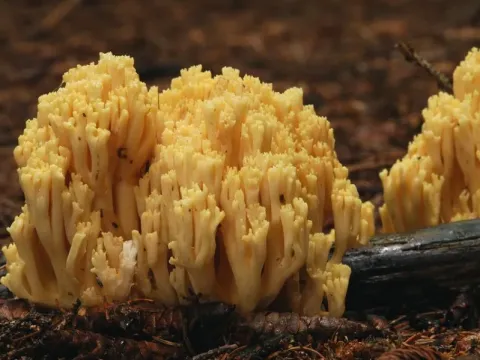
Coral fungus
Ramaria flava
Ramaria flava, commonly known as the coral fungus or yellow-tipped coral, is not a plant pathogen and does not cause diseases in crops or trees.
What the section contains
Coral fungus
It belongs to the Gomphaceae family and typically acts as a mycorrhizal fungus or a saprotroph within forest ecosystems, living in harmony with host trees.
Unlike parasitic fungi that invade living tissues, this organism thrives on decaying organic matter or forms symbiotic associations that benefit plant nutrient uptake.
Misidentifying this mushroom as a disease agent often occurs due to its growth near the base of trees, where it merely utilizes the moist, nutrient-rich environment.
In the field of plant pathology, Ramaria flava is recognized as a harmless, often beneficial component of the forest soil microbiome.
The development of the fruit bodies of this fungus requires specific environmental conditions including high humidity and moderate temperatures.
It prefers well-shaded areas in coniferous or mixed forests where the soil is covered with a thick layer of leaf litter and organic material.
Optimal growth occurs during the late summer and early autumn when soil moisture is consistent and ambient temperatures remain mild.
The fungus is highly sensitive to soil compaction and environmental pollution, making it an indicator of relatively undisturbed forest habitats.
Fluctuations in rainfall significantly impact the emergence of visible coral-like structures, which may disappear entirely during prolonged drought periods.
Ramaria flava causes no harm to agricultural or silvicultural plants and poses no threat to crop productivity or forest health.
The mushroom serves an essential role in breaking down complex organic compounds, which in turn enriches the soil with bioavailable nutrients for trees.
There is no economic damage associated with this species; therefore, no protection or eradication measures are necessary or recommended.
Implementing fungicide treatments specifically to target this mushroom would be an incorrect agronomic practice that disrupts the beneficial soil flora.
Producers are encouraged to preserve these fungi as they contribute to the overall resilience and fertility of the woodland ecosystems.