
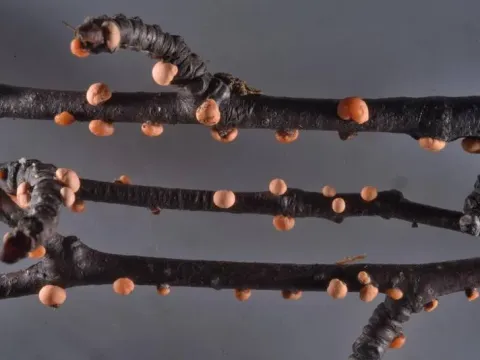
Coral spot disease
Corallomycetella
Coral spot is caused by the fungus Corallomycetella rhenana (formerly known as Nectria cinnabarina), a common ascomycete fungus.
What the section contains
Coral spot disease
The fungus is primarily a saprophyte that colonizes dead or dying wood, but it frequently acts as a facultative parasite on stressed or damaged trees.
Its life cycle involves the production of small, bright coral-pink to orange pustules on the bark, which release abundant spores throughout the growing season.
These spores are highly resilient and can be dispersed by rain splash, wind, and movement by insects or human interaction.
The pathogen thrives in dead wood and can remain dormant for extended periods before invading living tissues through wounds or pruning cuts.
The most distinctive symptom is the appearance of small, round, bright pink or coral-colored fungal pustules erupting through the bark of twigs and branches.
As the infection progresses, the infected bark becomes discolored and brittle, often resulting in small cracks as the underlying tissue dies.
Leaves on affected branches may turn yellow and wither prematurely, as the fungal growth restricts the vascular flow within the woody tissue.
Infection often results in the dieback of branches, with the necrosis spreading from the point of initial entry towards the tips of the shoots.
Internal wood infection is confirmed by dark brown, necrotic tissue visible if the bark is peeled back from an infected area.
The disease is most prevalent during periods of high humidity and cool to moderate temperatures, which provide ideal conditions for fungal sporulation.
Trees weakened by drought, waterlogging, nutrient deficiency, or poor pruning practices are significantly more susceptible to successful colonization.
Dense, poorly managed canopies with limited airflow create a microclimate that allows the fungus to spread rapidly from branch to branch.
Any injury to the bark, including sunscald, frost damage, or mechanical wounds, provides a direct entry point for the fungal spores.
Rapid changes in weather, especially during winter and spring, can weaken bark integrity and predispose the plant to widespread infections.
Coral spot affects a wide variety of woody plants, including maples, lime trees, apples, currants, and gooseberries, causing significant branch dieback.
The fungal infection can girdle stems and branches, effectively cutting off water and nutrient supply and leading to the eventual death of the affected part.
Severe infestations can lead to a significant loss of photosynthetic leaf area, reducing the overall vigor and yield of fruit-bearing species.
If left untreated, the fungus can progress into the main trunk, causing extensive structural damage and potentially killing the entire tree.
It acts as a persistent reservoir of infection within the garden, threatening surrounding susceptible plants and reducing the overall aesthetic quality.
The primary control measure is the immediate pruning of all infected branches, cutting back into healthy wood at least 15 cm below the visible necrosis.
All pruning tools must be cleaned and sterilized between cuts to prevent the accidental transfer of fungal spores to healthy sections of the plant.
It is essential to seal all significant wounds and pruning cuts with appropriate wound dressings or fungicidal pastes to encourage rapid healing.
Proactive care, including balanced fertilization and proper irrigation, helps maintain tree health and resilience against opportunistic fungal pathogens.
All infected prunings must be collected and disposed of by burning or deep burial, as the fungus can continue to produce spores on dead wood for years.