
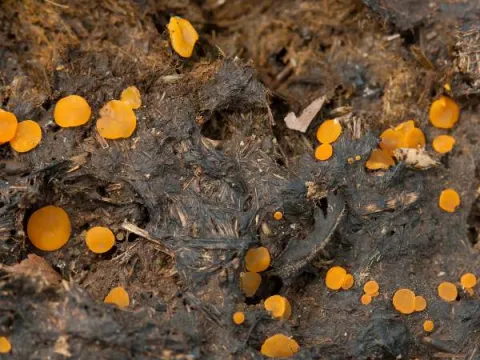
Coprobia
Coprobia
The fungus Coprobia (specifically Coprobia granulata) is a member of the Pezizaceae family within the Ascomycota division. It is primarily a saprotrophic organism that thrives on organic matter.
What the section contains
Coprobia
It is commonly found in environments rich in nitrogen, such as manure or highly fertilized soils. While often non-pathogenic in natural ecosystems, it can become problematic in intensive agricultural settings.
The mycelium of the fungus is highly efficient at breaking down organic material. It secretes specific enzymes that facilitate the rapid colonization of substrates containing nitrogenous compounds.
The fungus is easily identified by its reproductive structures, which appear as small, vibrant orange or yellow discs. These clusters often cover the surface of contaminated soil or potting mixtures.
Reproduction is driven by the production of spores that are easily dispersed through air currents, irrigation water, or human contact with contaminated gardening tools.
Coprobia development is heavily dependent on high moisture levels. Greenhouse environments, characterized by stagnant air and damp soil, provide an ideal habitat for the fungus.
Temperatures between 15°C and 25°C are optimal for the vegetative growth of the mycelium. In this range, the fungus can complete its reproductive cycle very rapidly.
The use of fresh, uncomposted manure as fertilizer is the primary driver of Coprobia outbreaks. The high concentration of ammonia and organic nutrients facilitates its growth.
Poor soil aeration and lack of drainage create conditions where the fungus can flourish at the expense of root systems. Overwatering is frequently associated with the presence of these fungal colonies.
The pH of the substrate also plays a role, with neutral to slightly alkaline conditions being favorable for colonization. Monitoring the soil environment is essential for prevention.
The main danger posed by Coprobia is its impact on seedling health. By outcompeting beneficial root flora, it can stunt the early development of young plants.
The metabolic activity of the fungus can lead to toxic build-ups in the root zone. This results in chlorosis, root weakness, and increased susceptibility to other pathogens.
In ornamental horticulture, the presence of these visible fungal discs creates a significant aesthetic issue, lowering the commercial value of the plants.
Severe infestations can lead to physical blockages in the soil structure, preventing water and air from reaching the root zone effectively. This can cause widespread wilting.
Once established in a greenhouse, it is difficult to eradicate without replacing the soil. This leads to increased operating costs for commercial growers.
The most effective strategy for control is strict adherence to the use of well-composted organic matter. Avoiding fresh manure prevents the initial inoculation of the growing environment.
Managing soil moisture through proper irrigation practices and drainage is critical. Allowing the surface of the soil to dry out periodically helps discourage fungal growth.
Preventative hygiene, including the sterilization of pots, trays, and tools, is essential. Treating the soil with fungicides may be necessary in extreme cases of contamination.
Improving greenhouse ventilation and air circulation significantly reduces humidity levels, making the environment less hospitable for the growth of Coprobia spores.
- Sterilizing growing media before planting.
- Using peat-based or synthetic substrates to avoid organic pathogen hosts.
- Implementing regular soil testing to maintain nutrient balances.