
Coral spot
Tubercularia
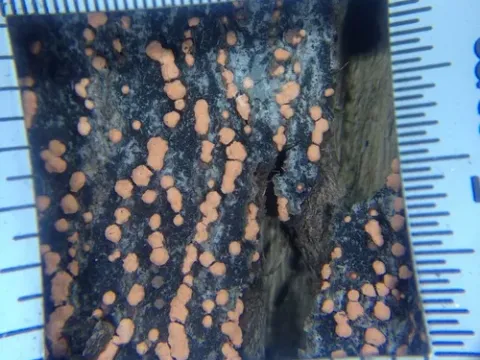
The most distinctive sign of Coral spot is the appearance of small, raised, coral-pink or brick-red pustules on the bark of infected branches. Over time, these fruiting bodies turn darker and eventually brownish or black.
What the section contains
Coral spot
The infection manifests through the sudden wilting and dieback of twigs and branches. Leaves on affected parts may turn yellow prematurely and wither, indicating that the vascular system of the branch is failing.
Affected bark often shows depressed areas or necrotic lesions where the cambium layer has died. When the bark is peeled back, one can often see discoloration of the inner tissue, which confirms the presence of fungal mycelium.
If left untreated, the fungus spreads to larger limbs and eventually the main trunk. This causes structural damage to the tree, leading to the distortion of the crown and eventual loss of the entire specimen.
Symptoms are most visible during the dormant season, especially in wet weather, when the bright red pustules are easy to spot on the grey or brown background of dead twigs.
The disease is caused by the fungus Tubercularia vulgaris (the asexual stage of Nectria cinnabarina). It is a widespread pathogen that affects a broad range of woody plants and shrubs.
This fungus behaves as a facultative parasite, meaning it thrives primarily on dead or decaying wood but aggressively invades living tissue when the plant is stressed or wounded.
Spores are dispersed by rain, wind, and insects, which carry them from decaying material to fresh wounds on healthy plants. Human activity, such as improper pruning, is a common vector for transferring the fungus.
The mycelium grows deeply within the wood, breaking down cellular structures and cutting off the supply of water and nutrients. Once established, it emerges through the bark to form new spore-producing structures.
Its biology is highly opportunistic. It exploits cracks, pruning scars, and frost damage, turning these points into entry ports for further colonisation of the tree's vascular system.
Coral spot thrives in moist and humid conditions. High humidity levels and frequent rainfall create an ideal environment for spore germination and rapid spread across the plant canopy.
Trees and shrubs suffering from environmental stress, such as frost injury or sunscald, are significantly more susceptible. Any open wound on the bark provides a pathway for the fungus to establish itself.
Poor horticultural practices, including infrequent irrigation or inadequate fertilization, leave plants weak and unable to mount an effective defense against the fungal invasion.
Overcrowded plantings and poor air circulation within the garden contribute to microclimates that remain damp for longer periods, which greatly facilitates the transmission of spores between plants.
Neglecting sanitation is a major factor. Leaving deadwood, fallen branches, or prunings near healthy trees serves as a persistent reservoir for the pathogen, ensuring a constant supply of inoculum.
The primary damage is the rapid death of branches, which ruins the appearance and health of ornamental plants. Severe infections can lead to the complete death of the host plant.
The fungus disrupts nutrient and water transport, causing significant physiological stress. This makes the affected tree more vulnerable to secondary pests and other opportunistic pathogens.
In orchards and nurseries, Coral spot causes significant economic losses by reducing plant quality and output. Infected branches often become brittle and break, posing a hazard in landscape management.
The pathogen is polyphagous, meaning it attacks a wide variety of species, including apples, maples, lindens, and various berry shrubs. This universality makes it a constant threat in diverse gardens.
Recovery of affected trees is often slow and requires significant labor. If the fungus reaches the main stem or crown, the damage becomes irreversible, necessitating the removal of the tree.
The most effective control method is prompt surgical removal of infected branches. Pruning must be done well below the infected area, into healthy, clear wood to ensure all mycelium is removed.
All pruning tools must be disinfected after every cut using alcohol or an appropriate disinfectant to prevent cross-contamination between healthy and infected branches.
Wounds larger than a certain size should be sealed with wound paint or a pruning sealant to protect them from spore entry, especially during damp or wet weather conditions.
Applying copper-based fungicides during the dormant season can help prevent the colonization of new spores on vulnerable surfaces, serving as a preventative measure in high-risk areas.
Maintaining plant vigor through balanced nutrition, correct watering, and minimizing mechanical injury is essential. Healthy plants are much better at compartmentalizing and resisting fungal entry.