
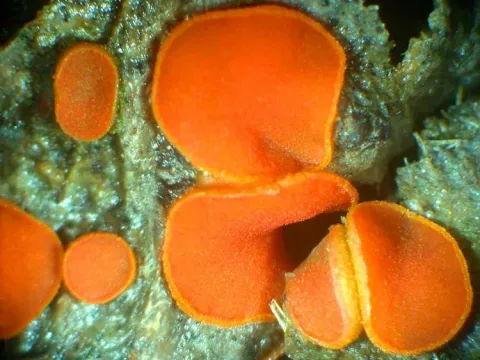
Coprobia granulata
Coprobia granulata
The causative agent is the fungus Coprobia granulata (formerly known as Ascophanus granulatus). It belongs to the Ascomycota division and is typically identified by its small, yellowish-orange apothecia, which have a distinct granular texture.
What the section contains
Coprobia granulata
This fungus is primarily a coprophilous species that thrives on animal manure. However, in agricultural environments, it acts as a saprotroph that decomposes organic matter, potentially affecting crop health when in direct contact with organic-rich soil.
The fungal life cycle involves the production of numerous spores dispersed by water and air. These spores remain viable in the soil for extended periods, waiting for suitable conditions to colonize organic substrates.
While not a primary virulent pathogen, Coprobia granulata can aggressively colonize weakened plant tissues, particularly those undergoing decay or stressed by external environmental factors.
Scientific studies highlight its role in nutrient cycling, but its proliferation in fields often serves as an indicator of an imbalanced soil ecosystem or the application of poorly composted fertilizers.
The primary prerequisite for the growth of Coprobia granulata is high soil moisture paired with an abundance of undecomposed organic material. It is most frequently found in fields treated with fresh manure.
The fungus thrives in moderate temperature ranges, typically between +15 °C and +22 °C. During this time, the development of fruiting bodies on the soil surface becomes particularly visible.
Poor soil aeration and dense plant spacing create a microclimate with high humidity, which is essential for the rapid germination and spread of fungal spores.
Inadequate drainage systems that cause stagnant water significantly increase the risk of colonization by this fungus, as it requires high water availability for its metabolic processes.
Soil structure plays a role as well; heavy, compacted soils that do not allow for rapid drying are more prone to harboring populations of Coprobia granulata compared to well-drained, sandy soils.
The harm caused by this fungus is characterized by the accelerated decay of plant parts that are in contact with the soil. It interferes with the healthy development of seedlings, often causing rot at the base.
In mature plants, Coprobia granulata can aggravate root rot symptoms, leading to wilting, stunted growth, and a significant reduction in the plant's overall vigor and physiological performance.
The presence of the fungus in the root zone can hinder nutrient uptake. By degrading organic matter too aggressively or producing metabolites, it may negatively impact the micro-environment necessary for healthy root growth.
For crops where the fruit or foliage touches the ground, contamination by the fungus leads to superficial lesions and rot, which negatively affects the marketability and quality of the final harvest.
Widespread infestations lead to decreased crop density, which directly impacts yield output and the economic efficiency of the agricultural operation.
The most effective strategy is the use of fully composted organic fertilizers. Ensuring that manure is thoroughly aged before application eliminates the potential for introducing spores into the field.
Improved soil management, including regular cultivation and weeding, enhances aeration and promotes the drying of the soil surface, which is a natural way to inhibit the growth of Coprobia granulata.
Implementing a proper crop rotation strategy helps to prevent the buildup of soil-borne pathogens, including opportunistic fungi that thrive on excessive organic matter.
Biological control methods, specifically the introduction of antagonistic fungi like Trichoderma species, can effectively suppress the growth of Coprobia granulata by competing for space and nutrients.
In protected cultivation environments, maintaining proper hygiene, sterilizing the substrate, and monitoring soil pH levels are crucial steps to creating an environment that is unfavorable for the fungus.