
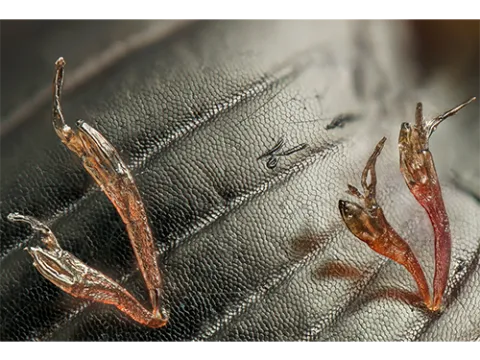
Pyxidiophorales
Pyxidiophorales
Pyxidiophorales is an order of fungi within the class Laboulbeniomycetes. These fungi are uniquely characterized by their obligate or facultative association with arthropods, which act as primary vectors for spreading their spores across forest and agricultural landscapes.
What the section contains
Pyxidiophorales
The morphological structure of these fungi, particularly the perithecia, is highly specialized to attach to the integument of insects, facilitating transport between host plants or necrotic woody substrates.
While often classified as commensals or symbionts of insects, some members of this group are involved in secondary colonization of plant tissues, particularly when the host is already compromised by environmental stress or insect damage.
Their life cycle is intricately linked to the behavior and life stages of the carrier insects, which ensures the survival of the fungus in varied ecological conditions.
Scientific research into this order highlights the complex interactions within forest ecosystems, where fungi and insects work in tandem to influence the health and decay processes of wooden plants.
The development of Pyxidiophorales is heavily influenced by the presence of insect populations and the availability of suitable habitats, such as bark wounds or decaying woody tissue.
Environmental conditions characterized by high relative humidity are conducive to the growth of fungal mycelia, allowing them to thrive on the surfaces of host plants where moisture accumulates.
Thermal stability is a key factor; mild to warm temperatures significantly accelerate the development of reproductive bodies and the active dispersal of spores by insect vectors.
Mechanical damage to trees, often caused by pruning, storms, or pest infestation, provides the essential entry points that fungi exploit to establish their presence within the plant structure.
Overcrowded plantations with poor aeration contribute to creating a microclimate that supports the long-term survival and propagation of these fungi throughout the growing season.
Effective management begins with the integrated control of insect vectors, as preventing their colonization of trees is the most direct way to limit the dispersal of fungal spores.
Sanitation practices, including the removal and destruction of decaying branches and debris, are crucial for reducing the fungal inoculum potential in orchards and nurseries.
Application of fungicides on areas with significant bark damage can protect the plant from secondary infections that often occur during the healing process of physical wounds.
Maintaining optimal tree vigor through balanced nutrition and proper irrigation helps the host plant develop better defenses against opportunistic fungal colonizers.
Monitoring programs that focus on the interaction between insect activity and plant damage are essential for applying timely and cost-effective preventative treatments.