
Quambalaria
Quambalaria
Description
Symptoms
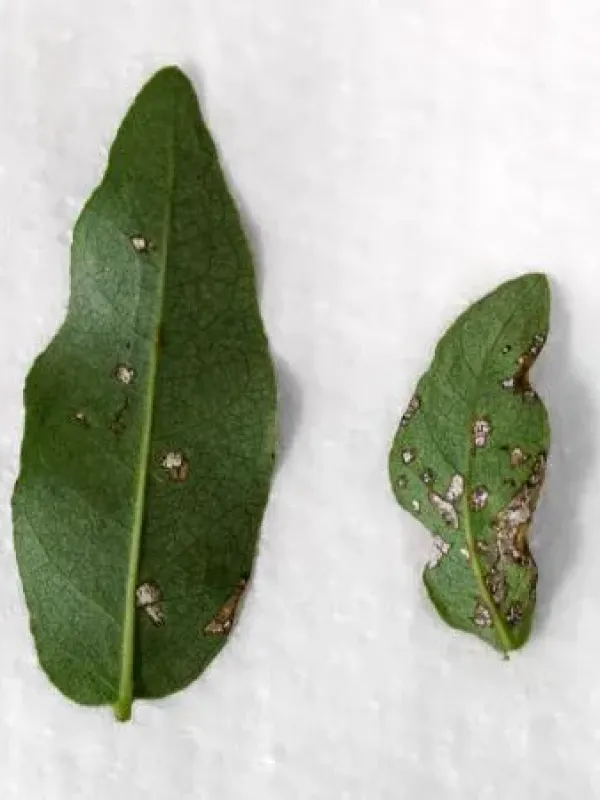
The infection typically manifests as small, chlorotic spots on leaves. As the disease progresses, these lesions expand and turn dark brown or necrotic, often with an irregular shape.
A distinctive feature is the white or creamy powdery exudate found on the undersides of leaves or on affected stems, representing the sporulation of the fungus during favorable conditions.
Young shoots are highly susceptible and often show severe deformation, stunted growth, or dieback. In chronic infections, the tree may exhibit a reduced foliage density and overall weakened appearance.
Cankers and lesions can develop on woody stems. These open wounds disrupt the flow of nutrients and water, potentially leading to the death of branches above the point of infection.
Severe infestations frequently result in premature leaf drop, which leaves the tree canopy sparse and vulnerable to further stress or secondary infections.
Pathogen
Quambalaria is a genus of fungi belonging to the order Microstromatales. These pathogens are notorious for causing significant foliage and shoot diseases, primarily in various species of Eucalyptus trees.
The fungus is known for its endophytic phase within host tissues, followed by a necrotrophic phase where it kills plant cells to extract nutrients. Notable species include Quambalaria pitereka, which is particularly destructive.
The life cycle involves the production of hyaline conidia on the surface of infected leaves and stems. These spores are dispersed by wind and rain splash, allowing the fungus to spread rapidly within a tree canopy or between adjacent trees.
Microscopic analysis reveals a dense hyphal mass, often visible as a powdery coating. The pathogen invades the intercellular spaces, secreting enzymes that break down cell walls and lead to tissue death.
As an opportunistic and aggressive pathogen, it has adapted to exploit the physiological vulnerabilities of its host, making it a significant subject of study in forest pathology.
Conditions for development
Quambalaria development is strongly correlated with high humidity levels. Extended periods of rainfall, heavy dew, or fog create the necessary moisture film for spore germination and tissue penetration.
The fungus thrives in moderate temperature ranges, typically between 18°C and 25°C. These conditions maximize the metabolic activity of the mycelium and the rate of spore production.
Plantations with high planting densities often suffer the most. Lack of proper airflow leads to prolonged leaf wetness, which significantly increases the risk of successful fungal infection.
Host susceptibility is increased by environmental stress factors such as drought, nutrient imbalances, or mechanical damage, which weaken the plant's natural defense barriers.
The accumulation of inoculum in debris or on surrounding vegetation acts as a primary source of infection, especially in regions with consistent, warm, and humid climates.
Why it matters
The primary economic impact of Quambalaria is the reduction in wood yield. By inhibiting tree growth and causing shoot dieback, the fungus severely compromises timber quality and production volume.
Loss of functional leaf area leads to a decrease in photosynthetic capacity. This exhaustion of the plant’s energy reserves makes the trees less resilient to other environmental pressures.
For nurseries, this disease is particularly devastating. It can kill young saplings in large numbers, forcing significant economic losses and increasing the costs of reforestation.
Damage to the bark and stems creates entry points for secondary pathogens, such as borers or wood-decay fungi, which can ultimately lead to the total decline and death of mature trees.
Ornamental plantings lose their aesthetic appeal and architectural structure, as the disease causes unsightly dieback and foliage shedding that is difficult to manage in public spaces.
Protection
The most effective long-term strategy for managing Quambalaria is the selection and planting of genetically resistant or tolerant Eucalyptus genotypes.
Proper silvicultural practices are essential. Maintaining appropriate spacing between trees improves air circulation, which helps keep the foliage dry and reduces the chances of infection.
Sanitation is a critical component of control. Pruning and removing infected branches or debris help to reduce the overall inoculum load within the plantation or nursery.
Fungicidal treatments can be employed in high-value areas, such as nurseries or ornamental collections. Applications should be timed with environmental conditions favorable for the disease.
Continuous monitoring programs allow managers to detect early signs of infection, enabling timely intervention before the disease reaches an epidemic level across a site.
Discussion
No discussions yet — be the first.