
Quambalaria coyrecup
Quambalaria coyrecup
Description
Symptoms
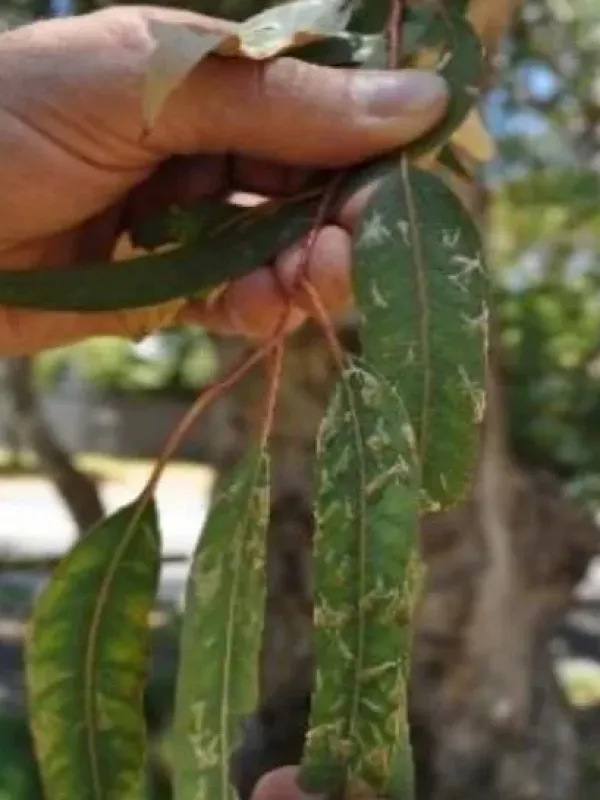
The earliest symptom of infection is the appearance of small, irregular spots on the foliage. These spots typically change color from pale brown to dark gray as the necrosis progresses.
A distinct white, powdery growth is often visible on the underside of the leaves in the affected areas. This represents the sporulating structures of the fungus, confirming active infection.
As the disease advances, individual spots may coalesce to cover large portions of the leaf surface, leading to leaf curling, browning, and eventually premature leaf abscission.
Young shoots may exhibit signs of stunting or physical distortion. In severe cases, the tips of the branches can die back, affecting the overall structural integrity and growth habit of the tree.
Heavily infected trees often show reduced crown density and an overall chlorotic or scorched appearance, which is a common diagnostic indicator during forest health assessments.
Pathogen
Quambalaria coyrecup is a fungal pathogen responsible for causing leaf spot and blight diseases in various species of Eucalyptus trees. It is classified within the Basidiomycota phylum.
The fungus produces conidia, which are asexual spores that serve as the primary means of dispersal. These spores are efficiently transmitted through wind currents, rain splashing, and occasionally by insect vectors.
Upon landing on a suitable host surface, the spores germinate and form a germ tube. The mycelium then penetrates the leaf epidermis, establishing an infection site and beginning the colonization of host tissues.
This pathogen has a high degree of host specificity, primarily targeting young leaves and succulent shoots, which are the most susceptible parts of the tree during its active growth phases.
The biological success of Quambalaria coyrecup is largely due to its rapid life cycle, which allows for multiple infection cycles within a single growing season if environmental conditions are favorable.
Conditions for development
High relative humidity is the most critical environmental factor for the development of Quambalaria coyrecup. Moist conditions facilitate both the germination of spores and the survival of mycelium.
Moderate temperatures, typically ranging between 18°C and 25°C, provide the ideal thermal window for the fungus to metabolize and colonize host tissues rapidly.
Poor air circulation within the canopy of dense plantations creates a microclimate that retains moisture for longer periods, thereby increasing the risk of severe disease outbreaks.
Prolonged rainfall events play a dual role by providing the necessary moisture for infection and acting as a physical mechanism for spreading spores throughout the tree canopy.
Stress factors such as drought or mechanical injury can make trees more susceptible to pathogen colonization, as the plant's natural defense mechanisms are weakened under physiological stress.
Why it matters
The primary economic impact of this disease is the reduction in growth rates and timber yield. Defoliation limits the photosynthetic capacity of the tree, directly affecting biomass accumulation.
In nursery environments, Quambalaria coyrecup can lead to high seedling mortality, causing significant financial losses and disrupting reforestation or plantation establishment schedules.
Chronic infections weaken the trees, making them more susceptible to secondary stressors, including other pathogens, insect pests, and extreme weather conditions like drought or frost.
Structural damage, such as shoot dieback, compromises the aesthetic and commercial value of the timber, as it alters the growth pattern and can result in deformed stems.
Long-term infestation drains the carbohydrate reserves of the tree, leading to reduced vitality and potentially increasing the probability of tree mortality under stress.
Protection
Effective management begins with strict sanitation practices, including the removal and destruction of infected leaf litter and debris to reduce the local inoculum source.
Ensuring proper spacing between trees during planting improves air circulation and reduces leaf wetness duration, which creates an environment less conducive to fungal growth.
Chemical control involving copper-based fungicides or systemic anti-fungal treatments may be warranted in high-value nurseries or during early-stage outbreaks in plantations.
Breeding and selecting for resistant or tolerant eucalyptus genotypes remains the most sustainable and long-term solution for managing Quambalaria coyrecup.
Regular monitoring programs are essential to detect the early signs of infection, allowing for localized control measures to be implemented before the disease reaches epidemic proportions.
Discussion
No discussions yet — be the first.