
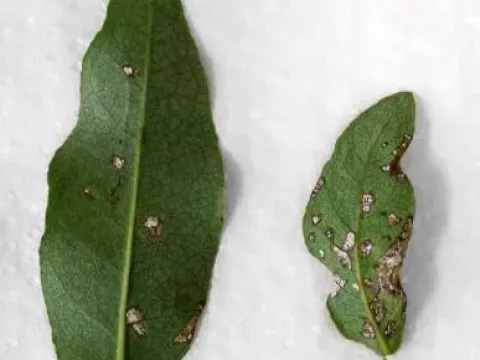
Quambalaria leaf spot
Quambalaria eucalypti
The disease is caused by the fungal pathogen Quambalaria eucalypti, a member of the Basidiomycota phylum. This fungus specifically targets various eucalyptus species, causing significant damage to foliage and young shoots.
What the section contains
Quambalaria leaf spot
The fungus produces white, powdery sporulating structures on the surface of infected leaves. These structures release conidia, which are responsible for the rapid secondary spread of the infection during the growing season.
Survival of the pathogen occurs primarily through dormant mycelium within fallen leaf litter or on woody tissues. This allows the fungus to overwinter and re-emerge when favorable conditions return.
The infection process involves the germination of spores in the presence of free water. Once a spore germinates, the hyphae penetrate the host tissue, leading to colonization of the leaf interior.
Ongoing research focuses on the genetic diversity of Quambalaria species to understand their host specificity and potential for evolution in response to environmental stressors.
Initial symptoms present as small, white, powdery spots on the underside or upper surface of the leaves. As the infection progresses, these spots expand and coalesce, eventually covering large portions of the leaf blade.
Infected leaves often become distorted, curled, or crinkled. Severe infections can lead to premature leaf drop, which leaves the tree branches bare and vulnerable.
Young shoots are frequently targeted, exhibiting necrosis and stunted growth. This can cause the tree to lose its natural shape and architectural integrity over time.
Brown, dead patches may develop within the whitened areas, indicating that the fungal colonization has killed the underlying plant tissues.
Microscopic analysis of the white areas reveals characteristic branched conidiophores. This confirms the presence of the pathogen distinct from other superficial molds.
High humidity and consistent rainfall are the primary environmental drivers for the development of Quambalaria leaf spot. Moisture on leaf surfaces is essential for spore germination.
Warm temperatures, typically ranging from 20 to 25 degrees Celsius, provide the ideal metabolic rate for the fungus to multiply and spread through the canopy.
Poor airflow within dense plantings or nursery settings traps moisture, creating a perfect environment for the pathogen to thrive and move between adjacent trees.
Lack of sufficient sunlight and stagnant air in the lower canopy layer significantly extend the duration of leaf wetness, increasing the period during which infection can occur.
Plants under physiological stress, such as drought, nutrient deficiency, or insect damage, show lower resistance to infection, making them more susceptible to rapid colonization.
The primary economic impact is the loss of photosynthetic area due to leaf tissue death and defoliation. This directly reduces the tree's overall biomass production.
Chronic infestation weakens the host, making it more prone to secondary attacks by wood-boring insects or other opportunistic fungal diseases.
In forest nurseries, the disease can devastate seedling crops, leading to significant financial losses and delays in reforestation efforts.
For ornamental or landscape eucalyptus, the disease ruins the aesthetic value by causing unsightly deformities and thinning the canopy.
Repeated yearly infections drain the energy reserves of the tree, potentially leading to branch dieback and an increased risk of long-term mortality for sensitive species.
Sanitation is a critical management strategy. Removing and destroying fallen leaf litter reduces the inoculum level available for the next season.
Proper spacing and pruning are essential to improve air circulation within the tree canopy, helping to reduce the time leaves remain wet.
Fungicide applications, particularly those containing copper or systemic active ingredients, can protect foliage from infection when weather conditions favor the fungus.
Breeding and selecting eucalyptus genotypes with natural resistance to Quambalaria eucalypti is the most sustainable approach for large-scale plantations.
- Regular monitoring for early signs of white powdery spots.
- Avoidance of overhead irrigation in nursery settings.
- Maintaining optimal tree health through balanced fertilization.