
Quambalaria pitereka
Quambalaria pitereka
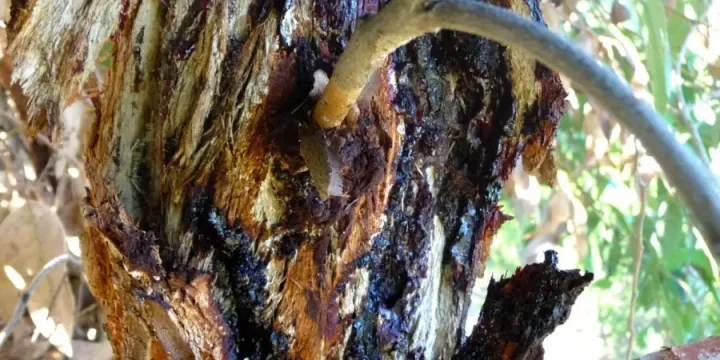
Description
Symptoms
The most distinctive sign of Quambalaria pitereka infection is the presence of necrotic spots on the leaves, which initially appear as small lesions and expand over time.
A white, powdery fungal growth often develops on the underside of the affected leaves. This represents the sporulating structures of the fungus and is a diagnostic feature.
Infected shoot tips often exhibit distortion, curling, and wilting. Frequently, the terminal buds die, which forces the tree to produce epicormic shoots, resulting in abnormal growth.
In severe cases, massive premature leaf drop occurs, leaving branches bare and significantly reducing the tree's capacity to perform photosynthesis.
Stem cankers or sunken lesions may appear on younger stems, where the fungal infection has penetrated deeper into the plant tissue, causing localized dieback.
Pathogen
The fungus Quambalaria pitereka is the primary pathogen responsible for the disease known as leaf blight on various Eucalyptus species. It belongs to the Basidiomycota phylum.
This pathogen specializes in infecting young, actively growing leaves and shoots. It reproduces via asexual spores (conidia) which are disseminated by wind, rain splashes, and human activity within nurseries.
The biology of the fungus allows it to colonize host tissue rapidly when moisture levels are high. It utilizes the nutrients within the plant cells, leading to localized necrosis and eventual tissue death.
The fungus is capable of surviving on leaf litter, serving as an inoculum reservoir for subsequent seasons. This persistence makes management in established plantations challenging.
It is widely recognized as a significant constraint in the production of Eucalyptus species, particularly in plantations and nurseries located in warm, humid regions.
Conditions for development
High relative humidity is the most critical environmental factor for the development and spread of this disease. Moist conditions favor spore germination on the leaf surface.
Temperatures ranging from 20°C to 25°C are considered optimal for the pathogen's growth. During these temperature windows, outbreaks can escalate very quickly.
Poor airflow, often caused by overly dense planting configurations, creates a stagnant microclimate that traps humidity and promotes fungal colonization.
Plants under nutritional stress or those suffering from adverse site conditions are significantly more susceptible to infection compared to vigorous, healthy trees.
In greenhouse or nursery settings, overhead irrigation systems are major drivers of disease spread, as they actively splash spores from infected to healthy seedlings.
Why it matters
The economic impact of this disease is substantial, primarily due to the loss of growth increment in commercial Eucalyptus plantations, leading to reduced timber yields.
Structural deformities in trees, such as multiple leaders or twisted trunks caused by repeated shoot dieback, significantly lower the quality of the harvested wood.
Increased mortality rates among young nursery stock represent direct financial losses, necessitating replanting and increased labor for disease management.
Defoliation leads to a weakened immune system, which can make the trees more vulnerable to secondary attacks by insect pests or other environmental stressors.
Landscape trees and ornamental plantings suffer from diminished aesthetic value due to crown thinning and permanent disfigurement of the foliage.
Protection
Selecting and planting genetically resistant Eucalyptus clones or varieties is the most effective and sustainable strategy for long-term disease management.
In nurseries, maintaining proper spacing and ensuring excellent ventilation are essential to reduce humidity around the foliage and inhibit fungal growth.
Sanitation practices, including the removal and burning of infected branches and leaf litter, are vital to reducing the local spore load and preventing recurring outbreaks.
The use of chemical fungicides may be necessary in high-value nurseries or during initial plantation stages, though it should be applied as part of an integrated management plan.
Regular monitoring of plantation health is critical for early detection, allowing for the timely implementation of control measures before the disease reaches epidemic proportions.
Discussion
No discussions yet — be the first.