
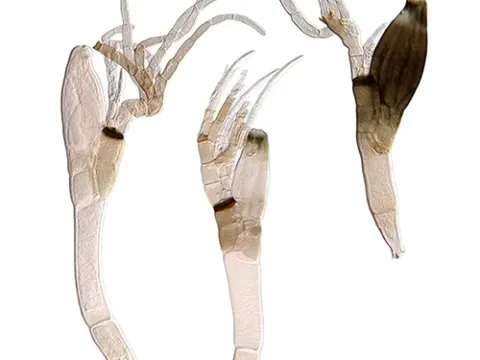
Pyxidiophoraceae
Pyxidiophoraceae
The Pyxidiophoraceae family consists of a group of Ascomycete fungi characterized by a specialized lifecycle. These fungi are typically associated with insects, which act as vectors to transport spores between host plants.
What the section contains
Pyxidiophoraceae
The pathogen attacks various plant tissues, including bark and vascular bundles. It produces perithecia, which are small fruiting bodies that become visible on the surface of the infected host once the infection is established.
As the mycelium colonizes the host, it degrades cell walls using specialized enzymes. This process extracts nutrients from the plant while physically obstructing the movement of sap within the xylem.
The disease is classified as a vascular or necrotic infection, leading to systemic weakness in the host plant. Unlike aggressive pathogens, Pyxidiophoraceae often act as secondary invaders that take advantage of weakened tissues.
Biological studies indicate that these fungi have evolved complex relationships with woody hosts and wood-boring beetles, making them a unique subject within the field of forest pathology.
Early symptoms of infection often manifest as chlorosis or yellowing of foliage, followed by wilting. This occurs because the fungal growth blocks the xylem, hindering the transport of water and nutrients.
Affected bark may show sunken spots, cracks, or necrotic ulcers. Tiny black structures, which are the fungal fruiting bodies, can often be observed appearing through the bark surface.
When the trunk or branches are sectioned, characteristic dark discoloration or streaks become visible in the wood. The internal tissues become brittle and lose their mechanical strength over time.
Crown thinning and the death of terminal branches are common signs of advanced infection. Eventually, if the infection is not managed, the entire tree may succumb to the disease.
- Yellowing and premature shedding of leaves.
- Necrotic patches and bark lesions.
- Dieback of twigs and branches.
- Presence of black perithecia on the surface.
Pyxidiophoraceae thrive in environments with high humidity and moderate temperatures. These conditions are conducive to spore production and the successful germination of fungi on host surfaces.
The presence of insect vectors is a critical factor for the spread of the disease. Without these insects, the fungi have limited ability to move between healthy hosts in a forest or orchard setting.
Plants under physiological stress, caused by drought, frost, or mechanical damage, are significantly more susceptible to infection. Healthy plants typically exhibit stronger natural defense mechanisms.
Inadequate orchard or forest management, such as failing to remove dead wood, allows the fungus to accumulate and persist in the environment, increasing the pressure of the inoculum.
The fungus can survive within the host tissues during winter, remaining dormant until environmental conditions favor the resumption of metabolic activity and spore release.
The primary harm caused by Pyxidiophoraceae is the reduction of tree vitality, which decreases the quality and commercial value of timber. Heavily infested trees often suffer from stunted growth.
In ornamental and fruit settings, the disease causes significant aesthetic loss and can lead to the death of expensive plants, resulting in substantial financial loss for growers.
The infection makes trees more susceptible to secondary pests and other pathogens. This cumulative effect can rapidly degrade the health of an entire stand or orchard.
Ecological shifts may occur if sensitive species are eliminated from the environment by the pathogen. This disruption can have cascading effects on the biodiversity of the local ecosystem.
Because these infections are often systemic, traditional control methods may be ineffective once the pathogen is deeply embedded in the plant vascular system.
Sanitation is the most effective management strategy. Regularly removing and destroying dead or infected plant material reduces the amount of inoculum available to spread the disease.
Monitoring and controlling insect vector populations, particularly wood-boring beetles, is essential. Pheromone traps and targeted insecticide applications can help limit the spread of the fungus.
Systemic fungicides may provide protection for young trees or nursery stock if applied early. However, these treatments are not curative for established systemic infections in mature plants.
Promoting plant health through balanced fertilization and adequate irrigation is crucial. Strong, well-nourished plants are better able to resist the initial stages of fungal colonization.
Quarantine measures are necessary when moving planting material across regions to prevent the accidental introduction of Pyxidiophoraceae into uninfected areas.