
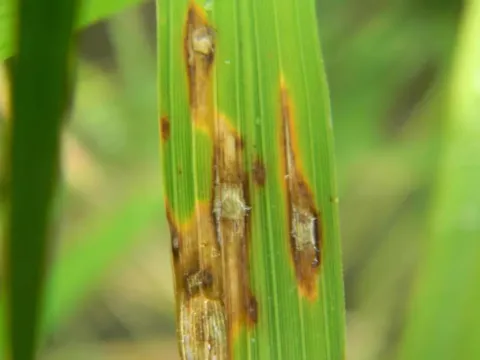
Rice Pyrenochaeta leaf spot
Pyrenochaeta oryzae
The causative agent of the disease is the imperfect fungus Pyrenochaeta oryzae, which belongs to the order Sphaeropsidales. This pathogen is characterized by the formation of pycnidia, small flask-shaped fruiting bodies embedded in the host plant tissue.
What the section contains
Rice Pyrenochaeta leaf spot
The fungus is capable of surviving for long periods in infected plant debris, acting as a primary source of inoculum. The mycelium can penetrate deep into plant tissues, making early field detection challenging.
The life cycle relies on pycnospores, which are spread by water droplets during rainfall or irrigation. This mechanism allows the pathogen to disperse rapidly throughout the rice field.
The pathogen does not require an alternate host to complete its life cycle, making it highly persistent in continuous rice cropping systems. Its ability to adapt to varying moisture conditions enhances its survival rate.
Genetic plasticity in Pyrenochaeta oryzae poses a significant threat, as the pathogen may evolve to overcome the resistance mechanisms of commercially available rice cultivars.
Symptoms initially appear as small spots on the leaf blades that gradually expand. These lesions typically show a light brown center with a dark, distinct border separating infected areas from healthy tissue.
As the disease progresses, minute black specks develop within the necrotic lesions; these are the pycnidia, which are a key diagnostic feature for identifying the disease in the field.
Severe infection leads to leaf yellowing and premature desiccation, significantly disrupting the photosynthetic capacity of the plant. This weakens the crop and reduces overall vigor.
Lesions can also manifest on the leaf sheaths and stems, hindering the translocation of nutrients to the developing panicle. Under humid conditions, a sparse fungal growth may be visible around the lesion sites.
Heavy damage results in leaf rolling and stunted growth. The affected tissues become brittle and necrotic, which is easily observable during the vegetative stages of the rice crop.
The development of the disease is favored by high humidity and temperatures ranging from 25 to 30 degrees Celsius. These environmental conditions are common in major rice-growing regions during the summer.
Excessive nitrogen fertilization often promotes more vigorous vegetative growth, which can make the plants more susceptible to fungal colonization. Dense canopies create a favorable microclimate for pathogen proliferation.
Crowded fields with poor airflow hinder the evaporation of moisture from the leaf surfaces, creating perfect conditions for spore germination and infection. Proper spacing is crucial to mitigate these risks.
Infected crop debris remaining in the soil acts as the primary reservoir for the fungus. This ensures that new seedlings are exposed to the pathogen early in the growing season.
Prolonged flooding or stagnant water conditions, combined with high temperatures, facilitate the movement of spores across the field. This waterborne spread can lead to rapid disease outbreaks.
The primary harm caused by rice pyrenochaeta is the significant reduction in the photosynthetic leaf area. This leads to diminished plant growth and lower overall crop yield.
Reduced nutrient translocation to the panicle negatively impacts grain development, resulting in lower grain weight and potentially poor quality. In epidemic years, yield losses can be substantial.
Plants weakened by the disease are more prone to secondary infections and environmental stress, such as lodging. This complicates harvest operations and reduces the marketable quality of the grain.
Using seeds collected from heavily infested fields may decrease seed germination rates, causing long-term agricultural issues for the producer. This perpetuates the disease cycle in subsequent seasons.
Economic losses arise not only from reduced yields but also from the added costs of monitoring and applying fungicides. The pathogen directly impacts the profitability of rice production.
The primary strategy for managing this disease is the cultivation of resistant rice varieties. Breeding programs focus on identifying and utilizing genes that confer resistance to Pyrenochaeta oryzae.
Agronomic practices, such as deep plowing to bury crop residues, help accelerate the decomposition of infected material, effectively reducing the soil-borne inoculum level.
Maintaining balanced mineral nutrition, particularly avoiding nitrogen over-application while ensuring adequate potassium and phosphorus levels, strengthens the plant's natural defense systems.
If necessary, the application of registered fungicides at the appropriate time can effectively suppress the disease. Preventive monitoring during critical growth stages is essential for timely intervention.
- Practice effective crop rotation.
- Use certified, disease-free seed.
- Optimize water management and drainage.
- Conduct regular field scouting for early symptoms.