
Description
Symptoms
Initial symptoms of infection include stunted plant growth and overall loss of vigor. Affected rice plants often exhibit yellowing leaves, which is frequently mistaken for nitrogen deficiency.
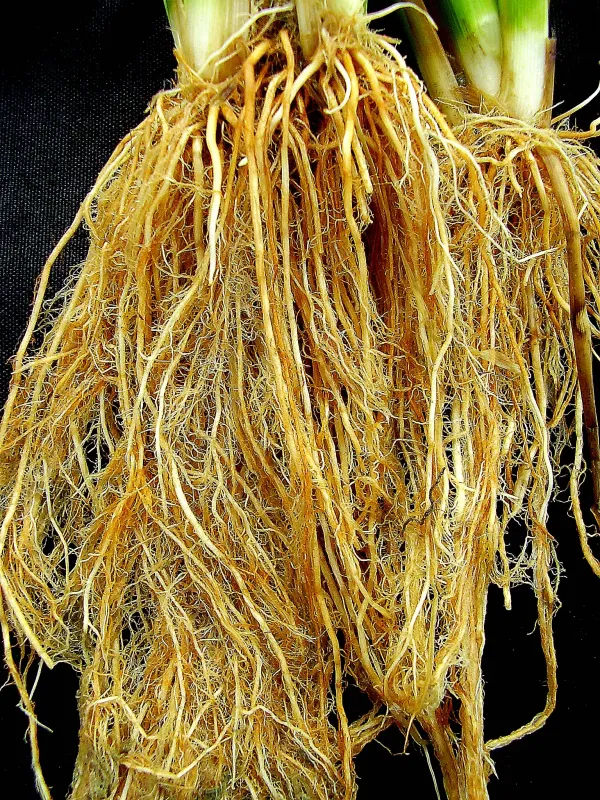
Examination of the roots reveals significant damage. The roots become stunted, discolored, and necrotic, often turning dark brown or black due to tissue destruction and secondary rot.
In the field, the disease manifests as patchy areas where plants are significantly shorter and less productive. These areas gradually spread as the nematodes move through the irrigation water.
Plants severely affected by the nematode show reduced tillering and fail to form large panicles. This leads to a substantial decrease in the total number of grains per plant.
Because the root system is compromised, plants exhibit poor tolerance to drought conditions and environmental stress, often resulting in premature senescence and lodging.
Pathogen
The causative agent of the disease is the microscopic worm of the genus Hirschmanniella (most notably Hirschmanniella oryzae). These are endoparasitic nematodes that inhabit the roots of aquatic plants.
The disease is a form of nematodiasis, characterized by the penetration of the nematode into the cortex of the roots where it feeds and multiplies, causing extensive damage to the plant tissue.
The life cycle involves eggs, larval stages, and adults, all of which are highly adapted to the flooded conditions of rice paddies. Unlike soil-dwelling species, these nematodes thrive in aquatic environments.
Rice (Oryza sativa) is the primary host for this pathogen. The constant presence of water in the fields facilitates the movement of the nematodes toward new root systems.
Other weed species, particularly those belonging to the Cyperaceae family, can serve as secondary hosts, allowing the nematode population to persist in the absence of rice.
Conditions for development
The primary factor for the spread of Hirschmanniella spp. is the continuous flooding of rice paddies. These conditions provide the necessary aquatic medium for the nematode to swim and reach new hosts.
Warm temperatures, ranging between 25°C and 30°C, are optimal for the rapid development and reproduction of the nematode, leading to higher population densities during the growing season.
Irrigation systems are the main vector for dispersal. Flowing water transports nematodes from infested fields to healthy ones, making the control of water movement a critical factor.
The use of infected seeds or soil residues on agricultural machinery provides a pathway for introducing the pathogen to previously clean fields.
Monoculture systems, where rice is grown repeatedly on the same land, significantly promote the buildup of high nematode populations in the soil.
Why it matters
The economic impact of the rice root nematode is severe, as it causes direct reductions in grain yield by damaging the root system's ability to absorb water and nutrients.
Damage to the root cortex creates infection sites for opportunistic soil-borne pathogens, including bacteria and fungi, leading to increased root rot and plant mortality.
Increased plant vulnerability leads to lodging and poor grain filling, which reduces the commercial value and quality of the final harvest.
Infested fields require higher inputs for fertilizers and management, yet still produce lower yields, significantly impacting the profitability of rice farming.
Long-term infestation can lead to soil fatigue, where land becomes unsuitable for productive rice cultivation without intensive and expensive rehabilitation efforts.
Protection
Crop rotation is the most effective cultural practice to manage the rice root nematode. Alternating rice with non-host crops helps to interrupt the nematode life cycle and reduce populations.
Drying the rice paddies thoroughly between planting seasons is essential. Nematodes have limited survival outside of a moist host environment, and soil desiccation drastically reduces their numbers.
The use of certified nematode-free seeds is crucial to prevent the introduction of the parasite into clean areas, ensuring a healthy start for the crop.
- Selection of resistant or tolerant rice varieties.
- Sanitation of equipment to remove soil before moving between fields.
- Management of weeds in and around the paddies to remove reservoirs.
- Regular soil and water testing to detect population increases.
Chemical control with nematicides is possible but is often restricted by environmental regulations and high costs, making integrated pest management (IPM) the preferred strategy.
Pathogens and affected parts
Affects crops · 1
Discussion
No discussions yet — be the first.