
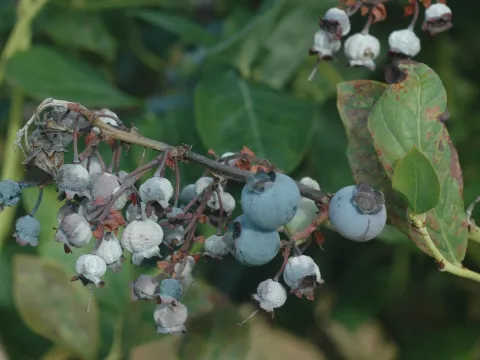
Blueberry monilinia blight
Monilinia baccarum
The disease is caused by the fungus Monilinia baccarum, which belongs to the Sclerotiniaceae family. It is a highly specialized pathogen that affects plants of the Ericaceae family.
What the section contains
Blueberry monilinia blight
The fungus survives the winter primarily as sclerotia, which are hard, black fungal structures that develop inside the mummified berries that fall to the ground.
In early spring, when blueberry buds start to swell, the sclerotia germinate in the soil and produce small cup-shaped apothecia, which release ascospores.
These spores are carried by wind to the young emerging blueberry shoots, where they infect the plant tissues during periods of rainfall and high humidity.
The fungus colonizes the plant, leading to the rapid growth of mycelium within the shoots and developing berries, effectively hijacking the plant's nutrients.
The first signs typically appear in spring as sudden wilting and browning of new shoots, which may curl and look as if they have been burned by frost.
Under humid conditions, a characteristic greyish fungal growth, representing the conidial stage, can be observed on the surface of the infected stems and leaves.
During the flowering stage, the fungus invades the blossoms, causing them to turn brown, wither, and drop, which results in significant yield reduction.
The most distinctive symptom occurs as the berries develop; infected fruit turns prematurely grey or brown, loses its turgidity, and becomes hard and shrivelled.
These so-called "mummy berries" are filled with a compact mass of black fungal tissue, the sclerotium, which serves as the primary inoculum for the following year.
The development of monilinia blight is heavily dependent on wet weather, particularly during the early spring when the apothecia are releasing ascospores.
Optimum temperatures for spore germination and fungal infection range between 10 and 18 degrees Celsius, which often coincides with the initial stages of blueberry growth.
High-density plantings that restrict air circulation create humid microclimates, significantly increasing the likelihood of rapid disease transmission between plants.
Fields with poor drainage are particularly susceptible, as prolonged moisture on the soil surface encourages the germination of overwintered sclerotia.
Plantations with a history of the disease where sanitation measures were neglected serve as primary hotspots for new outbreaks each season.
The primary economic impact is the direct loss of fruit production, as infected berries are inedible and render the crop unsuitable for both fresh market and processing.
Chronic infection weakens the blueberry bushes over time, leading to reduced overall plant vigor, poor vegetative growth, and a decrease in cold hardiness.
Once established, the disease creates a cycle of infection that requires ongoing management costs for fungicides and intensive labor for sanitation practices.
The aesthetic and physical deterioration of the plants often leads to the degradation of the plantation, eventually necessitating costly replacement of the bushes.
In severe cases, the disease can devastate the majority of the crop, creating significant financial losses for commercial growers and reducing yield consistency.
Effective management begins with strict sanitation, including the removal and destruction of all mummified berries and infected shoots from the field after the season.
Cultural practices such as deep cultivation or covering the soil with a thick layer of mulch (like wood chips) can trap the sclerotia and prevent the release of spores.
Proper plant spacing and regular pruning are essential to improve air circulation within the canopy, which helps to reduce local humidity levels.
- Apply approved fungicides at the green tip and early bloom stages.
- Remove any wild blueberry hosts in the surrounding areas.
- Select resistant cultivars whenever possible to minimize disease pressure.
Chemical control is most effective when applied preventively, so monitoring the timing of apothecia emergence is crucial for successful management of the disease.