
Rust disease
Pucciniaceae
Rust diseases are caused by obligate parasitic fungi belonging to the family Pucciniaceae. These pathogens are highly specialized, requiring living plant tissue to complete their life cycle, which often involves multiple spore stages.
What the section contains
Rust disease
The fungus invades plant tissues through stomata, establishing a mycelium network that feeds on the host via specialized structures known as haustoria. These structures draw nutrients directly from plant cells, causing severe metabolic stress.
A distinctive biological trait of rust fungi is their complex reproductive cycle, which can include up to five different spore types. Urediniospores are the most significant for crop epidemics, as they can travel long distances via wind currents.
Many Puccinia species exhibit high genetic variability, constantly evolving to overcome plant resistance genes. This necessitates continuous monitoring and the development of new resistant crop varieties.
The pathogen's ability to survive in various forms, including dormant mycelium or specific overwintering spores, ensures that the disease remains a persistent threat in agricultural regions worldwide.
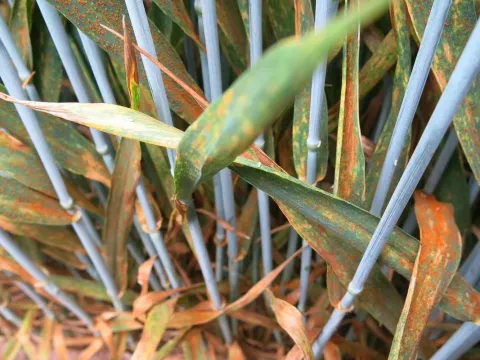
The most visible symptom of rust disease is the eruption of characteristic powdery pustules on leaves, stems, and leaf sheaths. These pustules range in color from yellow-orange to reddish-brown, depending on the pathogen species.
As the infection progresses toward the end of the season, these pustules often turn dark brown or black. This phase represents the formation of teliospores, which are dormant structures designed to survive winter or harsh conditions.
Affected plants exhibit signs of chlorosis, where yellowing occurs around the pustule sites. In severe cases, leaves may curl, wither, and die prematurely, significantly reducing the green surface area available for photosynthesis.
Stem rust is particularly damaging, as the rupture of the epidermis weakens the stem's structural integrity. This can lead to lodging, where crops fall over, making harvesting difficult and further reducing yields.
- Appearance of rusty, powdery spots on foliage.
- Leaf curling and premature senescence.
- Reduced plant vigor and stunted growth.
- Deformed and shriveled grains in the head.
- Spore mass easily rubs off onto clothing or equipment.
Rust development is highly dependent on climate conditions. Ideal development occurs in humid environments with temperatures ranging from 15°C to 22°C, and the presence of dew or light rain is essential for spore germination.
Dense crop stands create a localized microclimate with high relative humidity and reduced airflow, which significantly accelerates the spread of infection. Proper spacing and sowing density are crucial for mitigating these risks.
Mild winters allow the pathogen to survive on volunteer wheat or secondary hosts, serving as a primary inoculum source when the main growing season begins. This can lead to earlier and more severe disease outbreaks.
The presence of alternate host plants near agricultural fields is a major factor in the epidemiology of certain rusts. Removing these plants is a critical step in breaking the disease cycle.
Nutrient management also plays a role; excessive nitrogen applications promote succulent vegetative growth, which is more susceptible to fungal penetration, while adequate potassium levels can enhance plant defenses.
The primary impact of rust disease is a substantial loss in grain yield. By diverting nutrients away from the grain development process, the fungus causes grains to become shriveled, light, and low in quality.
In addition to yield loss, rust infections severely impair the plant's ability to manage water, as the ruptures in the epidermis lead to excessive transpiration. This makes the crop highly vulnerable to drought stress.
Rust-infected grain often suffers from reduced nutritional value and baking quality, which decreases its market value. Furthermore, infected plants may have poor vitality, leading to difficulties in storage and germination.
In winter crops, severe autumn rust infections can drastically reduce cold tolerance. Weakened plants are less likely to survive the winter, leading to sparse populations in the spring and wasted input costs.
The financial burden is compounded by the necessity of repeated fungicide applications, which increase the overall cost of production while creating potential environmental and regulatory challenges.
The most effective strategy for managing rust is the use of genetically resistant crop varieties. Breeders focus on identifying and stacking multiple resistance genes to stay ahead of the pathogen's rapid evolution.
Cultural practices are essential, including crop rotation to prevent the buildup of pathogen inoculum in the soil. Removing volunteer plants and managing weed reservoirs are also effective measures to limit disease spread.
Fungicide application is the standard chemical control, using systemic products such as triazoles or strobilurins. Timing is critical; applications should be made based on field monitoring before the epidemic reaches a severe stage.
Balanced fertilization and irrigation management help maintain plant vigor, making them less susceptible to initial infection. Avoiding high nitrogen regimes that create overly dense canopy cover is a key preventive strategy.
Integrated Pest Management (IPM) programs, which combine resistant cultivars with chemical control and regular field scouting, offer the most sustainable approach to protecting crop potential against Pucciniaceae threats.