
Rust of Allium
Puccinia sessilis
Description
Symptoms
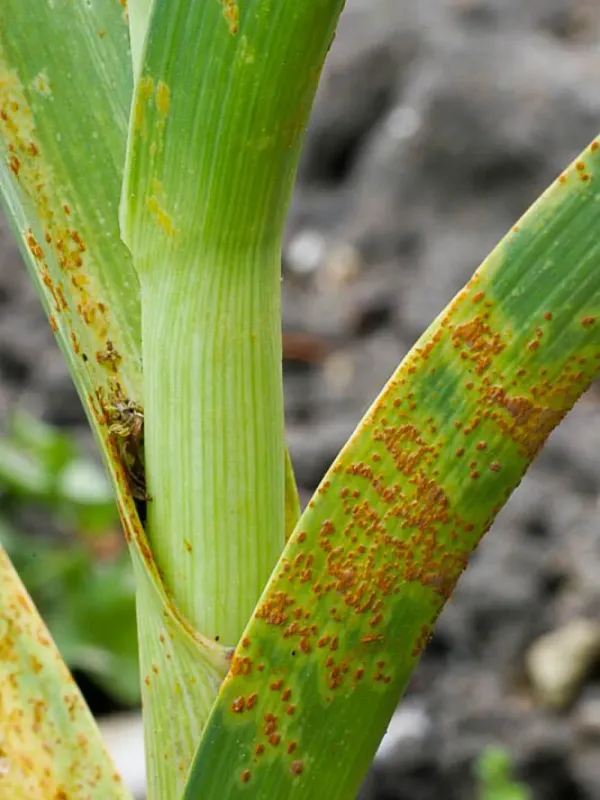
The first signs of rust appear as small, slightly raised yellow or orange spots on the surface of onion or garlic leaves.
These spots eventually rupture to release clusters of urediniospores, which look like fine, powdery, rust-colored dust.
As the infection progresses, the leaves begin to yellow prematurely, wither, and eventually die back completely.
Later in the season, these pustules can turn dark brown or black as the fungus shifts to producing teliospores for overwintering.
Severe infections can cover the entire leaf surface, significantly reducing the plant's ability to produce energy through photosynthesis.
Pathogen
The disease is caused by the obligate parasite Puccinia sessilis, a complex fungal species known as a rust fungus.
It is a heteroecious fungus, meaning it requires two unrelated plant hosts to complete its entire sexual life cycle.
Common intermediate hosts often include wild grasses, specifically reed canary grass, which harbor the fungus during certain stages.
Alliums like onions, garlic, and leeks serve as the secondary host, where the fungus thrives during the main growing season.
The fungus survives on plant debris or through resistant spores that can persist in the soil or on perennial grasses over the winter.
Conditions for development
High humidity and consistent leaf wetness are essential for the germination of fungal spores and the initiation of a new infection.
Moderate temperatures ranging between 15 and 22 degrees Celsius are optimal for the rapid spread and incubation of the pathogen.
Dense planting patterns that restrict airflow create a humid microclimate that dramatically accelerates the progression of the disease.
Frequent rainfall or persistent morning dew provides the necessary moisture for spores to migrate between plants in a field.
Proximity to wild grass areas where the intermediate host grows greatly increases the likelihood of an early outbreak in onion crops.
Why it matters
The primary impact of rust is a significant reduction in the total leaf area, which stunts bulb development and decreases yield.
Plants affected by rust have reduced vigor, making them more susceptible to other secondary infections and rot during the post-harvest stage.
Yield losses can be catastrophic if the infection occurs early in the growing season and conditions remain favorable for the fungus.
The aesthetic quality of the bulbs and greens is compromised, making the produce unsuitable for commercial sale or long-term storage.
Economic losses are compounded by the costs of applying fungicides and the potential need for complete crop destruction in severe cases.
Protection
Crop rotation is the most effective cultural practice, ensuring that Allium crops are not planted in the same soil more than once every three years.
Effective weed management, especially the removal of perennial grasses from the perimeter of the field, is crucial to break the disease cycle.
Proper sanitation, including the destruction or deep burial of crop debris, is necessary to reduce the primary inoculum for the next season.
Chemical control involving fungicides should be applied preventatively or at the very first sign of pustules on the leaves.
- Maintain proper spacing between plants for better air circulation
- Use disease-free planting material or certified sets
- Avoid overhead irrigation late in the day
- Monitor fields regularly for early symptoms
Discussion
No discussions yet — be the first.