
Rusty-brown bolete
Xerocomus ferrugineus
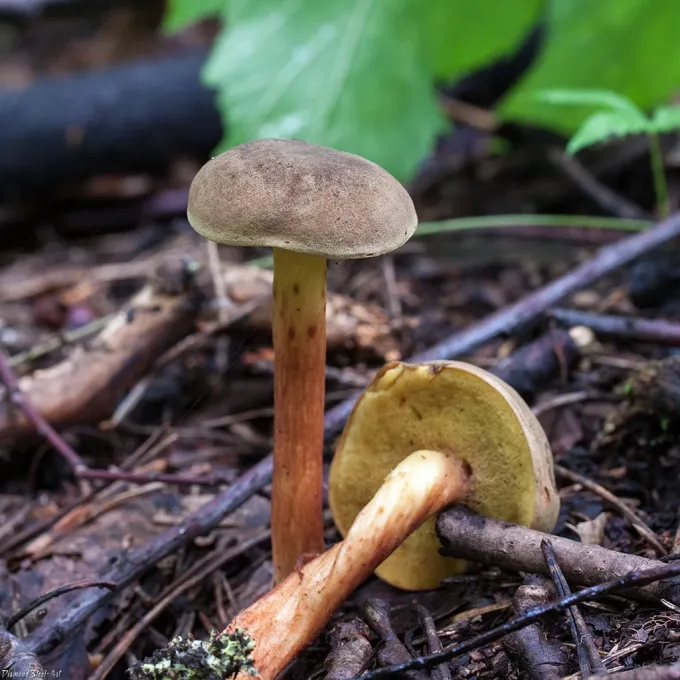
Description
Pathogen
The rusty-brown bolete (Xerocomus ferrugineus) is an edible mushroom species belonging to the Boletaceae family and is not a plant pathogen.
Instead of causing diseases, this fungus acts as a vital mycorrhizal partner for various coniferous and deciduous trees.
Biological studies confirm that the fungus engages in a mutualistic relationship rather than a parasitic one, providing nutrients to the host plant.
It lacks the enzymatic capability to penetrate or destroy living plant tissues, disqualifying it from being labeled as a disease agent.
The fungus maintains its life cycle by forming an extensive network of hyphae that exchange soil minerals for carbohydrates from the tree.
Conditions for development
Rusty-brown boletes thrive in moist forest environments where there is a thick layer of decomposing litter and organic matter.
The development of fruit bodies is highly dependent on sufficient rainfall and moderate temperatures ranging from 15°C to 22°C.
This species prefers acidic soil conditions often found in coniferous forests populated by pine or spruce trees.
Spore dispersal is facilitated by wind and soil-dwelling organisms, allowing the fungus to colonize suitable habitats effectively.
Symbiotic stability is maintained by the health of the host tree's root system, which provides the necessary site for colonization.
Why it matters
There is no evidence suggesting that the rusty-brown bolete causes any harm to agricultural or forestry crops.
In the ecosystem, it serves as a beneficial organism that improves soil structure and nutrient uptake for its symbiotic partners.
Its presence is typically interpreted as a sign of high biological activity and environmental health within a forest soil profile.
The species does not suppress plant growth, meaning it poses zero economic risk to commercial cultivation.
Therefore, it is treated as a component of the natural biodiversity rather than a threat to be managed or eradicated.
Protection
No protection or control measures are necessary for this species as it is not a threat to plant health.
If mushroom growth is considered undesirable in specific garden areas, improving soil drainage will naturally limit their expansion.
Reducing the buildup of organic mulch and increasing direct sunlight exposure can inhibit the formation of fruit bodies.
Fungicide application is not recommended, as it can disrupt the soil ecosystem and negatively affect beneficial mycorrhizal processes.
- Maintain proper soil drainage.
- Promote soil aeration.
- Limit surface organic debris.
Discussion
No discussions yet — be the first.