
Rust of pimpinella
Puccinia pimpinellae
Description
Symptoms
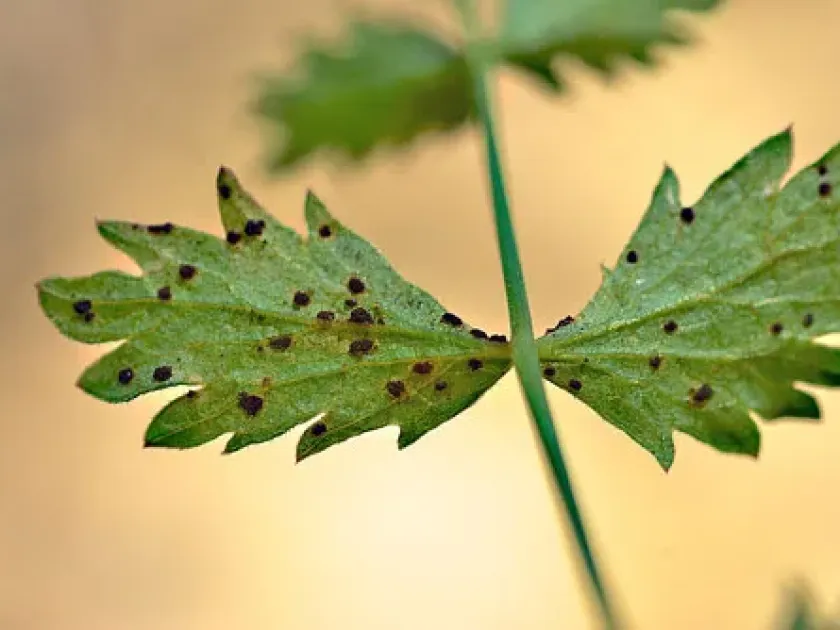
The most visible symptoms appear as small, dusty, reddish-brown pustules, known as uredinia, which erupt through the surface of leaves and stems.
As the infection progresses, these pustules can merge, covering large areas of the foliage and stems, causing them to appear burnt or rusty.
Affected leaves typically show signs of chlorosis (yellowing) around the pustule sites as the plant's metabolic processes are severely disrupted by the pathogen.
In advanced stages, leaves become brittle, curl, and wither prematurely, leading to a significant reduction in the total leaf area available for photosynthesis.
- Appearance of small chlorotic spots.
- Formation of rust-colored pustules.
- Stunted growth of the host plant.
- Premature leaf drop and senescence.
Pathogen
The disease is caused by the fungus Puccinia pimpinellae, a biotrophic pathogen that specifically targets plants belonging to the Apiaceae family.
This fungus is an obligate parasite, meaning it requires living host tissue to complete its life cycle. It belongs to the order Uredinales, known for complex spore-producing stages.
The infection begins when fungal spores land on host tissue and germinate under favorable moisture conditions, sending hyphae through the stomata into the plant tissue.
Inside the plant, the fungus develops an extensive mycelial network, using haustoria to penetrate cell walls and extract essential nutrients, weakening the host plant significantly.
The pathogen completes its cycle by producing multiple types of spores, including urediniospores for rapid spread and teliospores for survival during unfavorable dormant periods.
Conditions for development
The development of Puccinia pimpinellae is heavily dependent on high humidity and moderate temperatures, which are essential for spore germination.
Dew, fog, and frequent rainfall provide the necessary film of water on plant surfaces for spores to germinate and infect the underlying plant tissue effectively.
Densely planted crops often create a microclimate with stagnant air and high humidity, which significantly increases the susceptibility of the plants to the rust infection.
Optimal infection occurs when temperatures are within the range of 15°C to 22°C, which often coincides with the peak growth stages of many Apiaceae species.
Inadequate field sanitation, such as leaving infected plant debris in the field, creates a constant source of inoculum for subsequent growing seasons.
Why it matters
The primary impact of the disease is the reduction of the photosynthetic capacity of the plant, which leads to stunted growth and lower biomass production.
For medicinal and aromatic Apiaceae species, rust infection causes a decrease in essential oil content, negatively affecting the market value and quality of the crop.
Severe infestations can lead to complete defoliation, which causes the death of the plant or a total failure of the reproductive cycle, preventing seed formation.
By weakening the host, the rust fungus increases the plant's susceptibility to opportunistic secondary pathogens, including various bacteria and other fungi.
Economic losses are particularly high during wet and cool seasons when the disease can spread across fields rapidly, causing widespread damage to crop yields.
Protection
Implementing a strict crop rotation strategy is the most effective cultural method to break the fungal life cycle and reduce the build-up of spores in the soil.
Field hygiene is critical; all infected plant residues should be removed and destroyed or deeply plowed into the soil to prevent the survival of dormant spores.
The use of certified, clean seed and resistant cultivars is highly recommended as the first line of defense against the establishment of Puccinia pimpinellae.
When necessary, systemic fungicides, particularly those containing triazoles or strobilurins, can be applied to protect the foliage from early infection.
Proper plant spacing and weed management help to improve air circulation within the canopy, creating an unfavorable environment for spore germination and disease spread.
Discussion
No discussions yet — be the first.