

Description
Symptoms
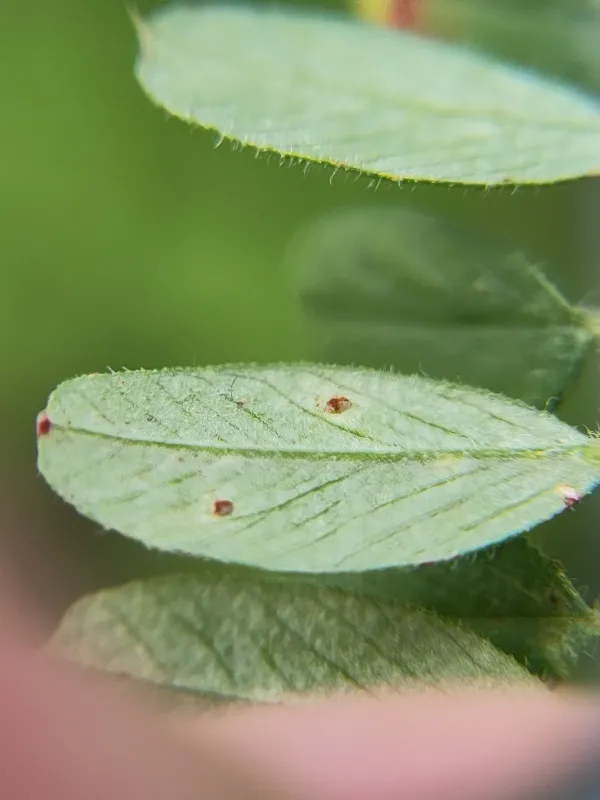
The first signs of the disease appear as small, slightly raised light-colored spots on the leaves, which eventually develop into pustules. These pustules contain fungal spores, have a rusty-brown appearance, and can be found on both leaf surfaces, as well as on petioles and stems.
As the urediniospores mature, the plant epidermis over the pustule ruptures, releasing a powdery mass of spores. In cases of severe infection, leaves turn yellow, wither, and drop prematurely, which significantly affects the overall appearance of the field.
Toward the end of the growing season, dark brown or nearly black pustules containing teliospores appear on the affected tissues. These structures are generally denser and do not release spores into the air as easily as the earlier uredinia, often appearing in clusters.
The infection usually spreads in uneven patches, which expand over time as the disease progresses. Infected plants appear stunted, their growth rate decreases significantly, and the overall leaf canopy is visibly reduced.
Heavy infection can lead to stems becoming brittle and breaking. Furthermore, pods may also develop pustules, which directly decreases the commercial quality and seed viability of the affected legumes.
Pathogen
The pathogen responsible for this disease is the obligate parasite Uromyces viciae-fabae. This is a monoecious rust fungus, meaning it completes its entire life cycle on a single host plant species, making it highly efficient at spreading within legume fields.
The life cycle involves the production of aeciospores, urediniospores, and teliospores. Urediniospores are responsible for rapid secondary infections throughout the summer, carried by the wind over long distances to start new infection cycles.
The fungus infects a wide variety of grain legumes, including peas, faba beans, lentils, and vetch. Infection typically begins at the lower canopy and moves upward as the season progresses and the inoculum load increases.
The pathogen primarily overwinters as teliospores on crop debris in the soil, although it can also be transmitted via contaminated seeds if cleaning practices are poor. In spring, these spores germinate to infect young seedlings.
Due to the fungus's high specialization, it can quickly adapt to various legume cultivars. Its biological strategy focuses on utilizing the living tissues of the host to maximize spore production during the most favorable climatic windows.
Conditions for development
Rust development is highly dependent on moderate temperatures combined with high humidity or frequent rainfall. Periods of heavy dew, fog, or prolonged rainy weather are crucial for spore germination and infection establishment.
Optimal temperatures for the development of the pathogen range from +18°C to +22°C. Under these conditions, the incubation period of the fungus can be as short as one week, leading to a rapid spread of the disease across the field.
Dense crop stands create a microclimate characterized by poor air circulation and high humidity within the canopy. This environment is ideal for the accumulation of spores and the secondary infection of healthy plant tissues.
Excessive nitrogen fertilization can lead to soft, succulent growth that is more susceptible to fungal penetration. Conversely, adequate potassium and phosphorus levels help strengthen plant cell walls and improve overall resistance.
While drought conditions may slow down rust progression, the inoculum remains present on plant debris. As soon as wet conditions return, the disease can quickly recover and continue its spread through the remaining growing season.
Why it matters
The economic impact of legume rust is mainly due to the significant reduction in photosynthetic leaf area. The plant struggles to accumulate enough energy to form a healthy harvest, resulting in lower yields.
The disease disrupts the water balance of the plant because pustules cause multiple ruptures in the epidermis, leading to increased transpiration and water stress even when soil moisture is adequate.
Yield losses can reach 30–50% in years with severe epidemics. Beyond quantity, quality is compromised as seeds often become small, shriveled, and lose their germination potential and nutritional value.
A reduction in protein content is another common consequence, which diminishes the value of the crop for both animal feed and human consumption, leading to significant financial losses for the grower.
Severe infections create a heavy inoculum load in the soil, which necessitates increased expenditure on chemical control and crop management in subsequent planting seasons to prevent recurring outbreaks.
Protection
The most important preventive measure is strict crop rotation, ensuring that legumes are not replanted in the same field for at least 3 to 4 years. Maintaining spatial distance between fields with different legume crops is also beneficial.
Effective soil management, including deep plowing to bury crop debris, helps reduce the initial inoculum level. Regular weeding is also essential to eliminate alternative host sites and improve air circulation around the crop.
Using resistant or tolerant cultivars is the most sustainable way to manage rust. Farmers should select varieties that have been tested and proven effective in their local environmental conditions.
When the first symptoms appear, timely application of systemic fungicides, such as triazoles or strobilurins, is crucial. Chemical control is most effective when applied early, before the pustules rupture and release masses of spores.
- Treat seeds with appropriate fungicides before sowing.
- Optimize plant density to ensure better airflow and lower canopy humidity.
- Maintain balanced soil nutrition, focusing on potassium and phosphorus.
- Perform regular scouting to detect the disease at the earliest possible stage.
Content graph
Connections · Rust of legumes
Most often together:
Marketplace
Products · 1
Community
Discussion
No discussions yet — be the first.