
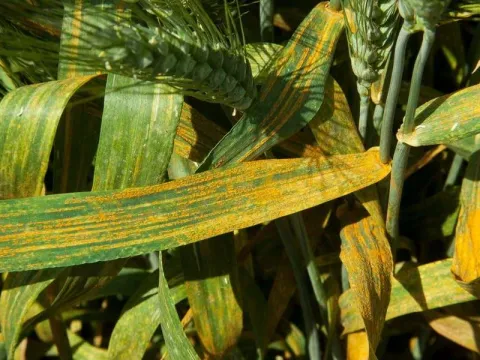
Yellow rust of wheat
Puccinia pseudostriiformis
The causal agent of this disease is the fungus Puccinia striiformis, an obligate biotrophic pathogen that specializes in infecting various cereal crops.
What the section contains
Yellow rust of wheat
The fungus relies on the host plant for survival and reproduction, spreading rapidly via urediniospores that can travel over long distances through wind currents.
The pathogen is highly specialized, meaning different strains or races often target specific varieties of wheat, making continuous monitoring essential.
It overwinters as mycelium in the tissues of winter wheat or volunteer plants, ensuring that the infection cycle resumes as soon as favorable conditions return in the spring.
The genetic diversity of Puccinia striiformis allows for the rapid evolution of new races that can bypass the resistance genes previously incorporated into commercial wheat varieties.
The disease is easily identified by the appearance of bright yellow uredinia, which develop in distinct, elongated stripes following the venation of the leaf.
As the infection progresses, these stripes coalesce, leading to severe chlorosis, leaf necrosis, and premature drying of the plant canopy.
Infected spikes often appear shriveled or deformed, leading to the production of light, shriveled grains that are significantly lower in nutritional and commercial value.
When environmental conditions are ideal, the spore mass can cover large portions of the leaf surface, giving the field a dusty yellow or orange appearance.
Later in the season, black telia may emerge within the yellow stripes, signaling the final stage of the fungal life cycle before the fungus enters dormancy.
Yellow rust thrives in relatively cool, humid environments, with optimal development occurring at temperatures between 10°C and 15°C.
High relative humidity and the presence of surface moisture from dew or light rain are critical for the germination of spores and the establishment of new infections.
While warmer weather above 20°C typically slows the progression of the disease, early spring infection can still cause devastating damage if it starts during a cool period.
Dense crop stands create a unique microclimate with high humidity, which significantly accelerates the rate of secondary infections within the field.
Excessive application of nitrogen fertilizers leads to lush, succulent tissue growth, which is highly susceptible to penetration by the fungal hyphae.
Yellow rust is considered one of the most destructive diseases of wheat worldwide, capable of causing yield losses of up to 80% in susceptible cultivars.
The primary impact is the reduction of the photosynthetic surface area, which starves the plant and prevents the proper filling of grains in the head.
In severe cases, the entire plant structure is weakened, leading to lodging and increased susceptibility to other biotic and abiotic stressors.
The quality of the harvested grain is significantly reduced, often resulting in lower test weights and poor bread-making quality for the milling industry.
Farmers face substantial financial strain due to both the direct loss of yield and the high cost of intensive fungicide spraying programs required to manage outbreaks.
The most effective management strategy is the deployment of wheat varieties that possess durable resistance genes against locally prevalent races of the fungus.
Good agricultural practices, such as controlling volunteer wheat and managing crop rotations, help disrupt the pathogen's survival cycle.
Fungicide applications should be timed correctly, targeting the onset of the disease to prevent large-scale spread and protect the flag leaf from infection.
Maintaining a balanced nutrient program ensures the crop is robust, improving its natural defense mechanisms against fungal attacks.
- Scout fields frequently during the early growing season.
- Avoid overly dense planting populations.
- Apply foliar fungicides at the first sign of yellow stripes.
- Use certified disease-resistant seeds.