
Yellow waxcap
Hygocybe ceracea
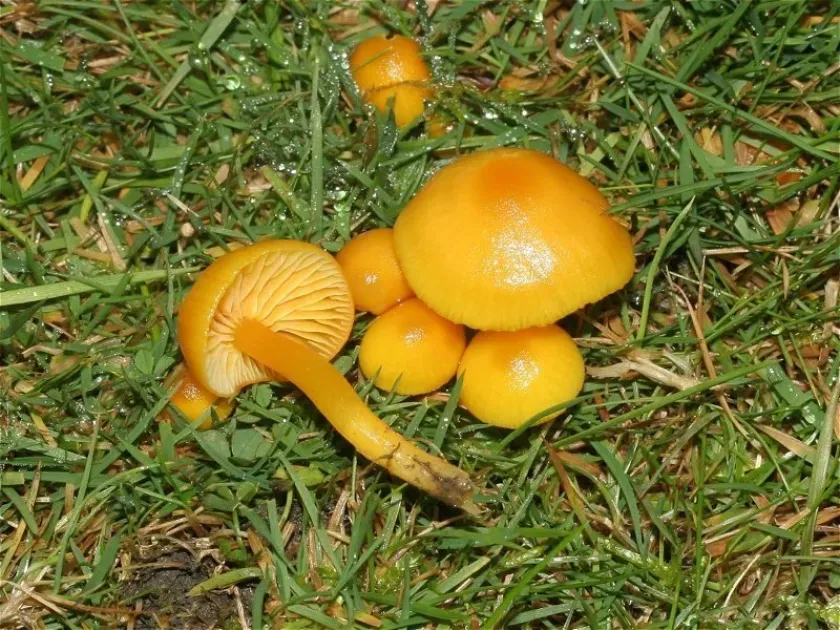
Description
Pathogen
The Yellow waxcap (Hygrocybe ceracea) is a species of agaric fungus in the family Hygrophoraceae. It is important to clarify that this fungus is not a plant disease and does not act as a pathogen for any agricultural crops.
This organism operates as a saprotroph. It obtains its nutrients by breaking down non-living organic matter, such as dead grass roots and organic debris, within the soil surface.
There is no mechanism within the lifecycle of Hygrocybe ceracea that allows it to infect living plant tissue. It does not cause wilting, necrosis, or structural damage to cultivated plants.
In agricultural practice, the presence of waxcaps is often considered an indicator of long-term stable soil health and the absence of heavy chemical contamination.
Therefore, no protective measures or fungicides are required to manage this fungus, as it is a natural part of a healthy grassland or soil ecosystem.
Conditions for development
The Yellow waxcap thrives in moist, undisturbed habitats. It is commonly found in nutrient-poor, unimproved grasslands and old pastures where the soil remains relatively stable.
The development of the mycelium and the subsequent formation of fruiting bodies are highly dependent on consistent moisture levels within the soil profile.
Growth is typically triggered during periods of high humidity and moderate temperatures, often occurring from late summer through autumn in temperate regions.
Soil conditions that promote the presence of Hygrocybe ceracea include low phosphorus levels and limited use of nitrogen-based mineral fertilizers, which can inhibit fungal growth.
Proper land management, such as avoiding intensive tillage, helps maintain the diversity of fungi like the Yellow waxcap, which contributes to overall soil biological activity.
Discussion
No discussions yet — be the first.