
Yellow scale lichen
Xanthoria parietina
Description
Symptoms
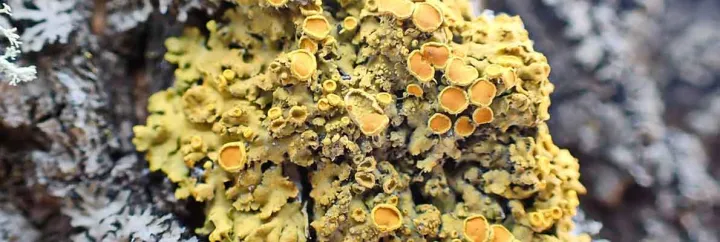
The most visible symptom is the appearance of bright orange or golden-yellow, rosette-shaped thalli on the trunks and larger branches of trees.
The rosettes are circular and tend to expand over time, eventually merging to cover large portions of the bark surface.
Small, disc-like fruiting bodies, known as apothecia, with a deeper reddish-orange hue, are often visible in the center of the mature thallus.
The bark underlying the lichen is frequently moist and may show signs of decay or premature weathering compared to unaffected areas.
During dry spells, the lichen becomes brittle and dull in color, but it rapidly regains its vibrant appearance and moisture-absorbing capacity upon contact with rain.
Pathogen
Xanthoria parietina, commonly known as yellow scale lichen or common orange lichen, is a foliose lichen that is frequently misidentified as a parasitic tree disease.
It is a symbiotic organism comprised of a fungus and an alga. The lichen does not derive nutrients from the tree itself, making it an epiphyte rather than a true pathogen.
The lichen utilizes the tree bark purely as a substrate for attachment. It obtains its water and mineral requirements from the atmosphere, rainfall, and dust deposits.
While it does not feed on the host, its presence is a biological indicator that the tree is in a state of reduced vigor or that the environmental conditions are overly moist.
Dissemination occurs via vegetative reproduction, where fragments of the lichen thallus are transported to new areas by wind or water runoff.
Conditions for development
Xanthoria parietina thrives in environments characterized by high air humidity and moderate levels of light.
It is predominantly found in unmanaged or neglected orchards where canopy density prevents sufficient air circulation and light penetration.
Poorly pruned trees provide a stable microclimate with high moisture retention, which is ideal for the successful colonization of lichen fragments.
Trees with aging, rough, or damaged bark offer the most receptive substrate for the lichen to gain a foothold.
Regional climates with frequent fog, heavy dew, or prolonged periods of rainfall significantly accelerate the development of lichen colonies on tree trunks.
Why it matters
Although not a parasite, the accumulation of dense lichen mats causes indirect harm by interfering with the bark’s natural gas exchange processes.
The moisture trapped beneath the lichen creates a hospitable environment for the development of opportunistic fungal pathogens and rot-inducing bacteria.
The lichen provides an ideal shelter for various garden pests, such as scale insects or mites, protecting them from predators and contact pesticides.
Trees heavily infested with lichen often exhibit lower vigor, reduced annual shoot growth, and diminished overall fruit production.
If left untreated for several years, the persistent moisture can lead to localized necrosis of the bark, eventually compromising the tree's vascular health.
Protection
The primary control measure is regular sanitation pruning, which opens the canopy to sunlight and promotes good airflow to keep bark surfaces dry.
Mechanical removal is highly effective; scraping the lichen off with wooden or plastic tools during the dormant season helps eliminate the bulk of the colonies.
- Applying 3–5% iron sulfate solutions during the dormant period to inhibit lichen growth.
- Whitewashing tree trunks with a lime mixture containing copper sulfate to prevent recolonization.
- Enhancing general tree health through balanced fertilization to encourage robust bark development.
Copper-based fungicides are effective in limiting lichen expansion, but they should be used as part of a comprehensive integrated pest management program.
Preventative maintenance, such as proper watering and timely treatment of physical bark wounds, is the most successful strategy to keep trees free from lichen epiphytes.
Discussion
No discussions yet — be the first.