
Yellow Sigatoka
Pseudocercospora musicola
Description
Symptoms
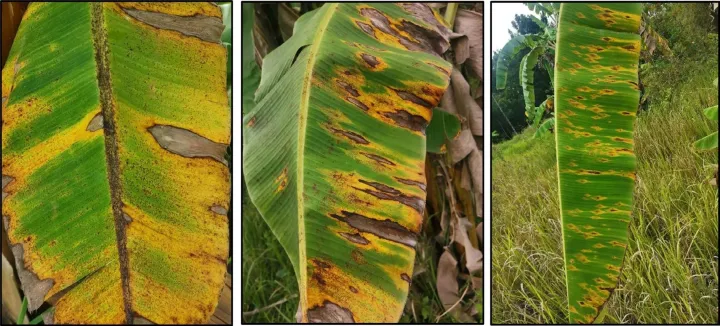
The first symptoms appear as small, pale yellow or greenish spots that are elongated and follow the pattern of the leaf veins.
These spots enlarge and turn into characteristic reddish-brown or dark-brown elliptical lesions, typically surrounded by a yellow halo.
As the disease progresses, the center of the lesions becomes grey or black, signaling the production of new spores that will facilitate further spread.
In cases of severe infection, leaves dry out prematurely, lose their structural integrity, and become brittle, significantly impacting the plant's health.
Total leaf necrosis occurs when multiple spots merge, leading to the collapse of the entire foliage area and significantly hindering plant development.
Pathogen
The disease is caused by the fungus Pseudocercospora musicola. This pathogen is a significant threat to banana plantations globally, specifically targeting the leaves of the genus Musa.
It reproduces through conidia, which are produced in the lesions found on the underside of leaves. These spores are highly effective at spreading via wind and water splashes.
The fungus is an ascomycete that thrives in tropical environments. Its biological strategy involves infecting host leaves through the stomata and colonizing the internal leaf tissue.
Successful infection depends on the pathogen's ability to withstand high temperatures while utilizing the high humidity characteristic of banana-growing regions.
Research confirms that the latent period between infection and the appearance of visible symptoms can vary depending on the host's cultivar susceptibility and environmental conditions.
Conditions for development
Yellow Sigatoka is most aggressive in warm and humid conditions, with temperatures between +25°C and +28°C being optimal for fungal growth.
Prolonged periods of rain or heavy dew are critical for the spread of the pathogen, as moisture is required for spores to germinate on the leaf surface.
Plantations with dense planting and poor air circulation often experience higher disease severity because humidity remains trapped around the leaves for longer.
The disease cycle is accelerated in the wet season, as frequent wind and rain help disperse the conidia throughout the field, leading to rapid outbreaks.
Environmental management, such as canopy thinning and effective drainage, is necessary to alter the microclimate and slow down the spread of the fungus.
Why it matters
The primary economic harm is the substantial reduction in leaf area, which decreases the plant's photosynthetic capacity and leads to smaller, lower-quality fruits.
Fruit quality is severely compromised; affected plants produce bunches that ripen unevenly and exhibit poor post-harvest storage characteristics.
Financial losses are driven by both the reduction in marketable yield and the high cost of intensive fungicide spraying programs required to manage the disease.
Chronic infestation weakens the banana plants, making them more susceptible to additional pests and environmental stresses that reduce the overall lifespan of the plantation.
If not managed, Yellow Sigatoka can lead to a drastic decline in plantation productivity, threatening the sustainability of banana exports in infected regions.
Protection
Sanitation is a vital control method; this involves the regular removal and destruction of infected leaf parts to reduce the fungal inoculum in the field.
Chemical control via fungicides is the standard practice for large-scale operations, utilizing both systemic and contact products in a strictly timed rotation.
Good agricultural practices, such as proper spacing and weeding, improve air flow and help dry the foliage, making the environment less favorable for the fungus.
Selecting and breeding for resistant banana cultivars remains the most sustainable and cost-effective approach to combating the pathogen in the long run.
Biosecurity measures, including cleaning tools and worker clothing between different plots, are essential to prevent the cross-contamination of healthy plants.
Discussion
No discussions yet — be the first.