
Celery rust
Puccinia laevis
The causal agent of celery rust is the fungus Puccinia laevis, a member of the Basidiomycota phylum. It is an obligate parasite, meaning it requires living host tissue to complete its life cycle and obtain nutrients.
What the section contains
Celery rust
This pathogen primarily targets plants in the Apiaceae (umbelliferous) family, including celery and parsley. Because it is highly specialized, it can survive and proliferate efficiently within the tissues of these specific host plants.
The fungus produces various types of spores that allow it to spread across fields via wind currents and splashing rain. This dispersal mechanism ensures that the disease can cover large areas in a short amount of time if weather conditions are right.
The infection begins when spores land on the leaves, germinate, and penetrate the plant through stomata. Inside, the fungus develops a complex network of hyphae that invade host cells to siphon off nutrients, eventually causing tissue degradation.
Understanding the biology of Puccinia laevis is essential for effective farm management. By recognizing that the pathogen relies on specific host cues to trigger infection, growers can implement more precise protective measures.
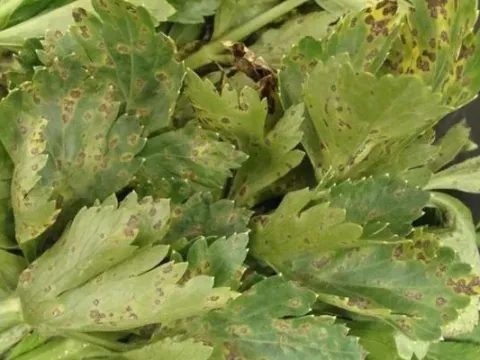
The earliest signs of celery rust are small, pale yellow or light green spots on the leaves and stalks. Over time, these spots expand and take on a distinct, rusty-brown color as the fungus matures.
A hallmark of this disease is the development of pustules, which are small, eruptive lesions filled with rusty, powdery spores. These pustules often rupture the leaf epidermis, releasing millions of spores into the air.
As the disease progresses, the infected spots often coalesce, covering large areas of the leaf surface. This causes the foliage to turn yellow, curl, and eventually wither, severely impacting the plant's photosynthetic capacity.
In cases of severe infestation, the stalks become discolored and deformed. This makes the celery aesthetically unappealing and generally unfit for fresh market consumption, causing economic losses for the farmer.
- Yellowing of leaf tissue.
- Rusty-colored pustules containing spores.
- Premature drying and necrosis of leaves.
- Deformation of stems and stalks.
- Reduced overall growth and vigor.
Celery rust thrives in high-humidity environments, especially when levels exceed 80%. Frequent rainfall, heavy morning dews, and dense fog create the perfect moisture film on leaves necessary for spore germination.
The optimal temperature range for the development of Puccinia laevis is between 15°C and 22°C (59°F–72°F). Under these temperatures, the fungus can complete its incubation period in just a few days.
Poor agricultural practices, such as excessive plant density, limit airflow through the crop canopy. This leads to longer leaf-wetness periods, which significantly increases the risk of infection and disease spread.
Nutrient imbalances, particularly high nitrogen levels combined with low potassium, can make plants more susceptible to fungal attacks. Lush, nitrogen-fed growth is often more tender and easier for the fungus to penetrate.
Overhead irrigation, especially if applied in the evening, keeps the foliage moist overnight. This provides the pathogen with the extended period of leaf wetness it needs to penetrate the leaf surface successfully.
The primary harm caused by celery rust is the significant reduction in crop yield and quality. Because the fungus damages the leaves, the plant cannot produce enough energy to support root development or stalk thickening.
Marketability is severely affected, as customers reject produce with visible rust spots or deformed stalks. This leads to direct financial losses and the potential for large portions of the harvest to be discarded.
Infected plants are weakened, making them prone to secondary infections from bacteria and other fungi. These secondary pathogens can cause rotting, which often spreads rapidly from the initial infection site.
The accumulation of spores in the soil creates a long-term problem for the field. If not managed, the disease will likely return with greater intensity in subsequent growing seasons, necessitating higher input costs for control.
In post-harvest storage, celery infected with rust tends to decay much faster than healthy produce. This reduces the shelf life and makes the product unsuitable for long-term supply chains or processing.
Crop rotation is the most effective cultural control method. Avoid planting celery or other susceptible Apiaceae species in the same field for at least three to four years to break the pathogen's life cycle.
Sanitation is critical; all infected plant debris should be removed and destroyed or buried deeply after harvest. This prevents the fungus from overwintering and serving as an inoculum source for the next season.
Fungicides containing copper or systemic active ingredients can be used if the disease is detected early. Application should follow local regulations and pre-harvest intervals to ensure safety and effectiveness.
Proper spacing and weed management are essential to improve air circulation and reduce humidity within the crop. Keeping the area free of alternative host weeds also limits the presence of the pathogen.
Prioritize planting resistant or tolerant celery varieties. Selecting breeding lines that have been tested against Puccinia species can significantly reduce reliance on chemical treatments and improve overall crop success.