
Cenangium dieback
Cenangium
The causative agent of the disease is the ascomycete fungus Cenangium ferruginosum, often associated with pine dieback in stressed forest stands.
What the section contains
Cenangium dieback
The fungus functions primarily as a facultative parasite, meaning it can live on dead organic matter but aggressively attacks weakened or stressed host trees.
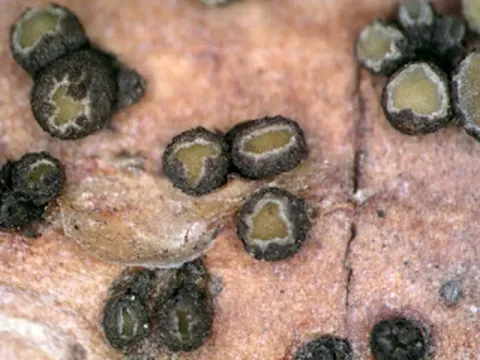
The lifecycle involves the formation of small, black, disc-shaped apothecia on the bark, which release spores during periods of high humidity and rainfall.
Infection spreads through spores landing on damaged bark, frost cracks, or wounds inflicted by insects, allowing the mycelium to penetrate the host tissues.
The fungus can persist for long periods in infected branches or dead material, making it a persistent threat to susceptible pine species within the forest ecosystem.
The primary symptom is the discolouration of needles on affected branches, which turn a reddish-brown color while remaining attached to the twigs for some time.
Necrosis of the bark is a diagnostic feature; the affected areas become dry, brittle, and frequently crack, exposing the inner tissues to further decay.
Tiny black fruiting bodies of the fungus emerge through the bark in clusters, particularly during spring and following periods of damp, cool weather.
The dieback often starts at the tips of the branches and gradually moves toward the trunk, eventually resulting in severe canopy thinning and mortality.
Affected branches often show a sharp line between healthy and necrotic tissue, and the cambium beneath the bark usually appears dark or discoloured.
Cenangium dieback is strongly linked to environmental stress, particularly water deficit during droughts and extreme temperature fluctuations during the dormant season.
Cool and humid weather conditions are ideal for the sporulation and germination of Cenangium ferruginosum, significantly accelerating the infection rate.
Densely planted forests with poor air circulation are more susceptible, as trapped moisture creates an environment that favors fungal development.
Physical injuries, such as those caused by wind or snow-break, as well as infestation by secondary bark beetles, serve as major entry points for the pathogen.
Trees that are poorly adapted to the local site conditions or are struggling due to soil nutrient imbalances are typically the first to succumb to the disease.
The disease leads to significant economic loss in forestry by causing widespread mortality in young pine stands, often in the 10 to 30-year age bracket.
Beyond timber losses, the disease degrades the ecological value of forests and can negatively impact the aesthetic and recreational quality of wooded areas.
Severe infections interrupt the tree’s nutrient and water transport systems, leading to rapid decline, needle drop, and the eventual death of the entire tree.
Outbreaks can necessitate costly sanitary management operations, which involve identifying and removing massive amounts of infected wood to curb the spread.
The loss of canopy cover due to dieback leaves the forest floor exposed, potentially facilitating the growth of invasive species or altering the microclimate.
Effective management begins with rigorous sanitary measures, including the prompt identification and removal of infected branches or entire dead trees.
Maintaining tree vigor through proper forest management, such as thinning to ensure adequate spacing, is crucial for preventing widespread outbreaks.
Integrated pest management to control wood-boring insects is essential, as these pests facilitate the entry of the fungus into the tree's vascular system.
In nurseries and high-value plantations, copper-based fungicidal sprays can be used as a preventative measure to protect bark from spore colonization.
Selecting climate-resilient and site-appropriate pine species is the most sustainable long-term strategy for minimizing the risk of infection in new plantings.