
Cenangium dieback
Cenangium ferruginosum
Description
Symptoms
The most prominent symptom is the premature browning and shedding of needles, often starting on individual lower branches. This discoloration usually progresses throughout the crown if the disease is not checked.
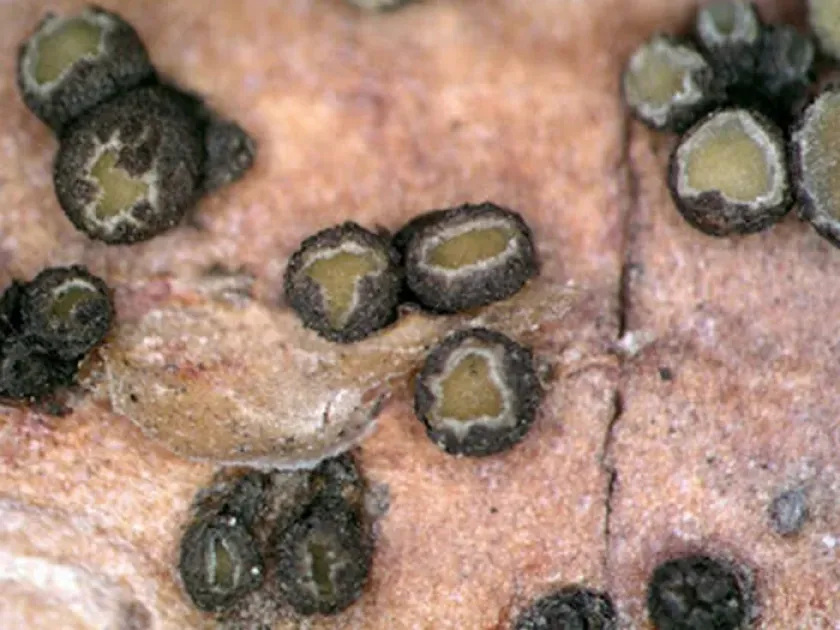
Small, black to dark brown apothecia become visible on the bark of infected branches or on the main stems of young pines. They often expand and become more distinct during wet, humid weather conditions.
Resin exudation is a common defense mechanism, often seen as streaks of hardened sap on the bark surface. The infected bark typically becomes necrotic, dry, and may eventually crack or sink.
When the bark is stripped away, the underlying cambium layer often appears dark brown or necrotic, indicating the fungal colonization. This necrosis prevents proper sap flow, causing branch dieback.
Advanced infections can lead to the death of the entire tree, especially in young saplings. In larger trees, the disease often creates flag-like symptoms where individual branches turn brown while others remain green.
Pathogen
The disease is caused by the ascomycete fungus Cenangium ferruginosum, which acts as a facultative parasite. It primarily targets weakened coniferous trees, specifically species within the Pinus genus.
The fungus produces small, cup-shaped fruiting bodies known as apothecia that erupt through the bark of infested branches. These structures are the primary source of inoculum for new infections.
Transmission occurs through airborne ascospores and rain-splashed conidia. The fungus thrives in the bark and cambium, systematically breaking down the host tissue to derive nutrients for its growth.
Under favorable conditions, the mycelium spreads rapidly within the host, colonizing the phloem and cambium layers. This colonization disrupts the flow of water and nutrients, leading to systematic tree decline.
The pathogen is widespread across temperate regions. Its life cycle is closely correlated with the health status of the host; it often remains latent in the bark until the tree experiences environmental stress.
Conditions for development
Cenangium dieback is predominantly a stress-related disease. Factors such as prolonged drought, extreme temperature fluctuations, or poor soil drainage significantly increase the susceptibility of pines.
High humidity and consistent rainfall, particularly during spring and autumn, are critical for the development of fungal fruiting bodies. These conditions maximize spore release and subsequent infection rates.
Overcrowded plantations often lack the necessary airflow, creating a humid microclimate that promotes fungal growth. Poor maintenance or lack of thinning increases the risk of rapid disease spread.
Pines weakened by insect attacks, particularly bark beetles, are highly vulnerable. The entry points created by insects provide an ideal environment for the fungus to establish its mycelium within the tree.
Inappropriate site selection—where trees are exposed to nutrient deficiency or waterlogging—results in chronically stressed pines, making them primary targets for Cenangium ferruginosum outbreaks.
Why it matters
The disease causes significant damage by killing branches and potentially entire trees, which reduces the economic value of pine timber and timberland assets.
In forests, the dieback changes the visual structure of the landscape and reduces biodiversity by killing off native pine stands. This loss of canopy cover has cascading effects on forest ecosystems.
Nursery operations face heavy losses when seedlings are infected, as the disease is difficult to eradicate once it establishes itself in the bark tissue. This leads to high economic costs.
The presence of dying trees increases the risk of secondary infestation by pests, creating a cycle of decline. Furthermore, large areas of dead, dry needles pose a severe forest fire hazard.
For parklands and decorative landscapes, the aesthetic impact is severe, as the browning foliage and dead branches diminish the visual appeal of the site, necessitating costly removal and replacement.
Protection
The primary control measure is the systematic removal and destruction of infected branches or trees through sanitary thinning. Removing the source of spores is crucial for preventing spread.
Promoting tree health through appropriate silvicultural practices, including proper irrigation and soil nutrient management, is the most effective long-term preventative strategy.
In forest nurseries, preventive application of copper-based fungicides can help protect vulnerable seedlings. Treatments should be timed to coincide with high-risk weather conditions for spore dispersal.
Monitoring for insect pests and managing their populations is essential, as healthy bark acts as a natural barrier against fungal infection. Protecting the tree from physical damage is also key.
- Sanitary pruning of dead and infected branches.
- Maintaining optimal tree density and airflow.
- Managing bark beetle populations.
- Application of fungicides in high-risk nursery settings.
- Selecting resilient pine varieties for reforestation.
Discussion
No discussions yet — be the first.