
Celery leaf spot
Phyllosticta apii
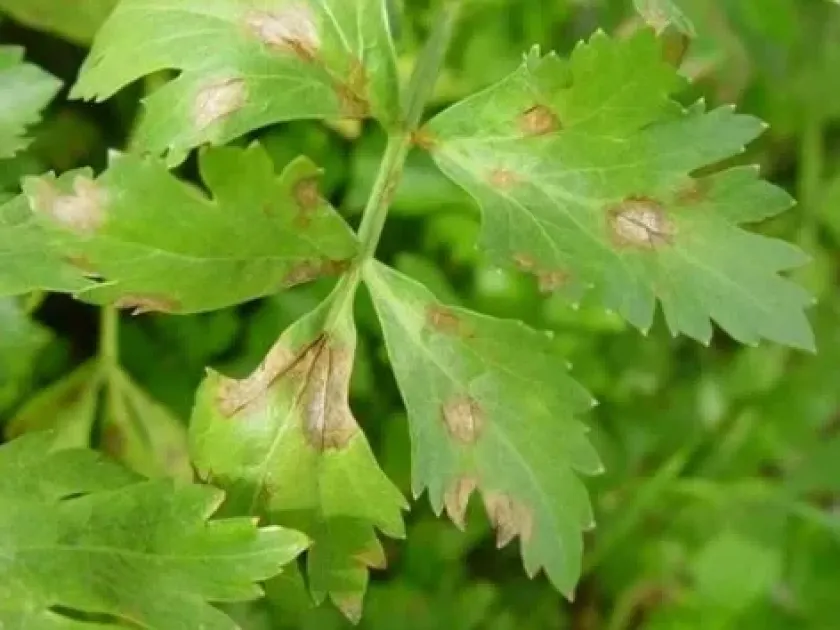
Description
Symptoms
The initial symptoms include the emergence of small spots on the lower leaves. These spots are typically irregular in shape and vary from pale brown to grayish-tan with a darker margin.
As the infection advances, the spots expand and may coalesce, covering a significant portion of the leaf surface. Within these dead zones, one can observe small black dots representing the fungal fruiting bodies.
Infected leaves eventually turn yellow, wilt, and die prematurely. If the weather remains humid, the disease can spread to the petioles, causing elongated, sunken lesions.
Severe infestation causes the entire plant to stunt, significantly reducing the vigor and quality of the crop. The plant loses its ability to produce high-quality foliage due to tissue necrosis.
Visual identification is critical for management. If not detected early, the pathogen can quickly overwhelm the canopy, leaving the plant severely weakened and prone to secondary rot.
Pathogen
The causative agent of celery leaf spot is the fungus Phyllosticta apii, which is classified within the Deuteromycetes class. This pathogen targets the vegetative parts of the celery plant, causing necrotic damage.
The fungus survives the winter season in the form of pycnidia located on crop debris within the soil and on infected seeds. With the arrival of warmer weather, pycnidiospores are released and spread through rain splashes or irrigation.
Once it lands on a leaf, the fungal mycelium penetrates the plant tissue through stomata or mechanical damage. It secretes toxins that destroy chlorophyll, leading to the formation of localized dead zones.
The life cycle of Phyllosticta apii is rapid under favorable conditions, allowing the fungus to produce several generations of spores during a single growing season.
As the infection progresses, the pathogen develops mature pycnidia — visible as tiny black specks — which serve as the primary source of secondary infection throughout the field.
Conditions for development
Leaf spot thrives under high humidity and frequent rainfall. The moisture on the leaf surface is essential for the fungal spores to germinate and infect the plant tissue.
Optimal temperatures for Phyllosticta apii development range between +18°C and +25°C. In this range, the pathogen's metabolic activity reaches its peak, leading to faster symptom progression.
Poor aeration in dense plantings creates a microclimate with high moisture, preventing the leaves from drying out. This environment is highly conducive to the spread of the fungus.
Inadequate sunlight exposure can weaken the plant's natural defense mechanisms, making it more susceptible to various leaf pathogens, including Phyllosticta apii.
Poor soil drainage also contributes to high ambient humidity levels near the ground. Furthermore, failure to remove plant residues from previous seasons provides the pathogen with a perfect wintering environment.
Why it matters
The primary harm caused by leaf spot is the loss of photosynthetic leaf area, which directly leads to reduced vegetative biomass and stunted growth of celery stalks.
Economic losses arise not only from lower yields but also from poor product quality. Infected celery is often unmarketable due to the ugly appearance of the leaves and stalks.
Post-harvest shelf life is significantly shortened for infected crops, as lesions become portals for secondary soft rot bacteria, leading to spoilage during storage or transit.
Severe infestations during the early stages of development can lead to total crop failure. Furthermore, infected seed crops may produce low-quality seeds, perpetuating the disease cycle.
The disease drains the energy reserves of the celery plant, making it less resilient to environmental stressors like heat waves or water scarcity, leading to overall crop decline.
Protection
Crop rotation is the most effective preventative measure. Farmers should avoid planting celery in the same area for at least three to four years to starve the soil-borne pathogen.
Using certified, disease-free seeds or treating seeds with hot water or fungicides before planting can significantly reduce the risk of early-season infection.
Sanitation is paramount. After harvesting, all plant debris must be collected and either deep-buried or destroyed to prevent the fungus from surviving the winter in the field.
- Maintain proper spacing between rows to facilitate airflow and rapid leaf drying.
- Routinely inspect fields and remove infected leaves to slow down the rate of pathogen spread.
- Apply balanced fertilization to strengthen plant immunity against fungal attacks.
When environmental conditions favor the disease, prophylactic spraying with copper-based fungicides or systemic chemical treatments may be necessary, provided that pre-harvest intervals are strictly followed.
Discussion
No discussions yet — be the first.