
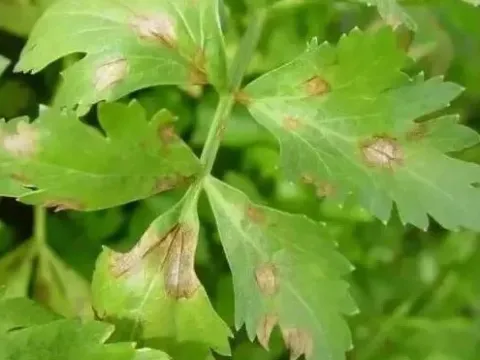
Celery leaf spot
Cercospora apii
The disease known as celery leaf spot is caused by the fungus Cercospora apii, an ascomycete that primarily attacks celery and other Apiaceae family members. It is recognized as one of the most destructive foliar diseases in commercial celery production worldwide.
What the section contains
Celery leaf spot
The fungus survives between seasons on infected crop debris left in the field and on contaminated seeds. It produces conidia, which act as primary inoculum, spreading through wind, rain splashes, and human activity within the field.
Once the conidia land on the leaf surface, they require a film of moisture to germinate. The fungal mycelium then enters the plant tissue through the stomata, initiating the process of infection and colonizing the host's cellular structure.
The pathogen thrives by secreting specialized enzymes that break down plant tissues, facilitating the spread of the fungus. Its high capacity for producing spores ensures rapid secondary cycles throughout the growing season.
Genetic diversity among Cercospora apii populations allows the pathogen to evolve and occasionally bypass the resistance traits bred into certain commercial celery cultivars, making integrated management essential.
Initial symptoms present as small, pale, circular spots on the foliage. As the disease develops, these lesions turn brown or reddish-brown, often surrounded by a distinct darkened margin or a yellow halo.
Under conditions of high humidity, a characteristic greyish-to-olive velvet-like mold develops on the underside of the leaf spots. This mold consists of fungal conidiophores and conidia, which are readily visible under magnification.
As the infection progresses, lesions expand and merge, causing large areas of the leaf to necroticize. Eventually, the entire leaf may yellow, curl, and wither, significantly reducing the plant's photosynthetic capacity.
Lesions can also appear on petioles and stems, appearing as elongated, sunken spots. Severe infections on petioles can make the celery brittle and aesthetically unappealing, severely impacting its marketability.
Unlike Septoria apiicola, which also causes leaf spot, Cercospora apii typically lacks the black fruiting bodies (pycnidia) within the lesions, instead displaying a more diffuse, fuzzy fungal growth.
Cercospora apii thrives in warm, humid conditions. Temperatures between 20°C and 28°C (68°F–82°F) coupled with high relative humidity are optimal for rapid disease development and sporulation.
Leaf wetness is the most critical environmental requirement for the fungus. Frequent overhead irrigation, prolonged dew periods, or heavy rainfall facilitate the germination of spores and subsequent penetration of leaves.
Poor field hygiene and overcrowding of plants inhibit proper air circulation, creating a microclimate with stagnant, moist air. This environment is highly conducive to the rapid spread of the pathogen from plant to plant.
Soil nitrogen levels play a role; excessive nitrogen can lead to rapid, succulent growth that is more susceptible to fungal entry. Conversely, balanced nutrition helps maintain the plant's natural defense mechanisms.
The presence of weeds such as wild carrots or other related Apiaceae species provides a green bridge for the fungus, allowing it to persist in the field and infect the crop even when the soil is otherwise clean.
The primary economic impact of celery leaf spot is the significant reduction in marketable yield. Extensive leaf necrosis diminishes the plant's ability to produce energy, resulting in stunted growth and smaller stalks or roots.
Quality degradation is a major issue; the unsightly spots and potential for secondary rot make the produce unacceptable for the fresh market. This leads to substantial financial losses for growers.
Heavy infections can necessitate increased chemical inputs, which raise production costs and may lead to environmental and residue management challenges if not strictly controlled according to regulations.
In addition to yield reduction, the disease affects the storability of the produce. Necrotic tissues provide entry points for opportunistic soft-rot bacteria during storage, further reducing the shelf life of the crop.
Seed-borne infection is particularly dangerous as it introduces the pathogen into new areas, potentially leading to persistent field issues for future growing seasons if not addressed early.
Integrated disease management is essential. A strict crop rotation of at least three years, avoiding Apiaceae crops, helps break the lifecycle of the fungus by reducing its presence in the soil.
Sanitation practices are paramount: removing and destroying infected plant debris immediately after harvest reduces the overwintering inoculum. Deep plowing helps bury the pathogens, promoting their decomposition.
Using disease-free, certified seeds and hot-water treatments can eliminate the fungus before planting. Selecting resistant cultivars is a cost-effective and sustainable strategy for long-term control.
- Applying protective fungicides such as copper-based sprays or systemic fungicides.
- Controlling weeds in and around the field to remove pathogen reservoirs.
- Optimizing irrigation methods (e.g., drip instead of overhead) to reduce leaf wetness.
- Maintaining proper spacing between rows to promote air movement and reduce humidity.
For active infections, fungicidal spray programs must be initiated at the first sign of symptoms. It is critical to rotate chemical classes to prevent the development of resistance in Cercospora apii populations.