
Daylily rust
Puccinia hemerocallidis
The causative agent of this disease is the specialized rust fungus Puccinia hemerocallidis. It is an obligate parasite that specifically infects members of the Hemerocallis genus.
What the section contains
Daylily rust
The life cycle of this fungus involves the production of urediniospores, which can be spread rapidly by wind, rain splashes, and gardening activities, leading to widespread infections in daylily beds.
The fungus invades the leaf tissue, developing mycelium that consumes the host plant's nutrients, eventually disrupting the photosynthetic capacity of the foliage.
Under favorable conditions, the pathogen completes its life cycle quickly, producing thousands of spores that burst through the leaf surface, ensuring its survival and transmission.
As an obligate parasite, it relies entirely on the live tissues of the daylily to persist, making the health of the host plant critical for the fungus's continued reproduction.
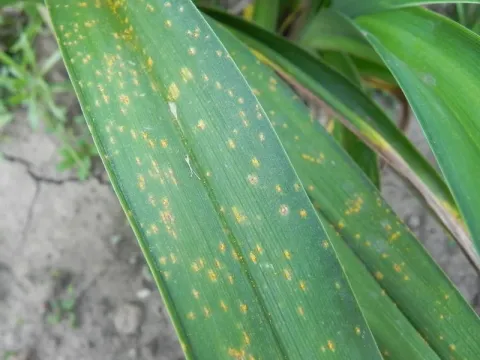
Initial symptoms of daylily rust include small, yellow-white chlorotic spots on the leaves, which often appear more clearly when held up against light.
As the disease progresses, these spots develop into raised, bright orange-brown pustules, which eventually rupture and release a distinct, powdery mass of spores.
Heavily infected leaves may turn yellow, wither, and die prematurely, significantly detracting from the aesthetic appearance of the daylily clumps.
Infections typically appear first on the lower, older leaves before moving upward, creating a visible progression of the disease throughout the entire plant.
In severe cases, the foliage becomes completely covered in rust-colored dust, leading to stunted growth and a general decline in the plant's overall vigor.
The development of daylily rust is heavily dependent on specific environmental conditions, with a preference for warm temperatures between 18°C and 25°C.
High relative humidity and the presence of free water on leaf surfaces, such as dew, fog, or heavy rainfall, are essential for spore germination and infection.
Poor airflow, caused by overcrowded planting or stagnant garden environments, creates a microclimate that allows the fungus to thrive and spread rapidly.
The disease is often introduced into new areas through infected nursery plants, which then act as a primary source for local outbreaks.
Prolonged wet seasons increase the risk of epidemics, as constant moisture prevents the foliage from drying out, leaving the plant vulnerable to constant spore bombardment.
The primary harm caused by daylily rust is the destruction of leaf tissue, which drastically reduces the plant's ability to perform photosynthesis and produce energy.
Chronic infections weaken the plant's immune system, making it more susceptible to environmental stresses and other secondary diseases or pest infestations.
Flowering is frequently impacted; the plant may produce fewer or no blossoms as it redirects all its energy towards survival and coping with the fungal infection.
In garden settings, the unsightly nature of rusted foliage ruins the decorative value of the daylilies, often leading to the need for total removal and destruction of the plants.
Long-term survival of the daylily is threatened, as recurring infections over several seasons can lead to the complete death of the plant cluster.
Effective management of daylily rust involves the use of systemic fungicides, which help to suppress fungal growth and protect new, healthy foliage from infection.
Sanitation is a vital component of control; all infected leaves and plant debris should be carefully removed and destroyed to minimize the pool of available spores.
Improving cultural practices, such as providing adequate spacing between plants, ensures good air circulation and reduces leaf moisture, hindering fungal development.
Watering should be done at the base of the plant, preferably in the morning, to keep the foliage dry throughout the day and prevent favorable conditions for rust.
- Monitor daylilies regularly for early signs of yellow spots.
- Use fungicides such as those containing myclobutanil or propiconazole.
- Ensure plants have sufficient sunlight and proper drainage.
- Avoid over-fertilizing with nitrogen to prevent overly succulent growth.
- Incorporate resistant daylily cultivars into the garden design where possible.