
Deceiving Cortinarius
Cortinarius arquatus
Description
Pathogen
Deceiving Cortinarius (scientific name Cortinarius arquatus) is a mushroom species belonging to the Cortinariaceae family. It is crucial to note that this organism is not a plant disease or a pathogen that causes damage to agricultural crops.
The fungus is a classic mycorrhizal symbiont, meaning it forms a mutually beneficial relationship with the root systems of certain forest trees. It does not penetrate plant tissues to harm them but rather extends the reach of roots for water and nutrient uptake.
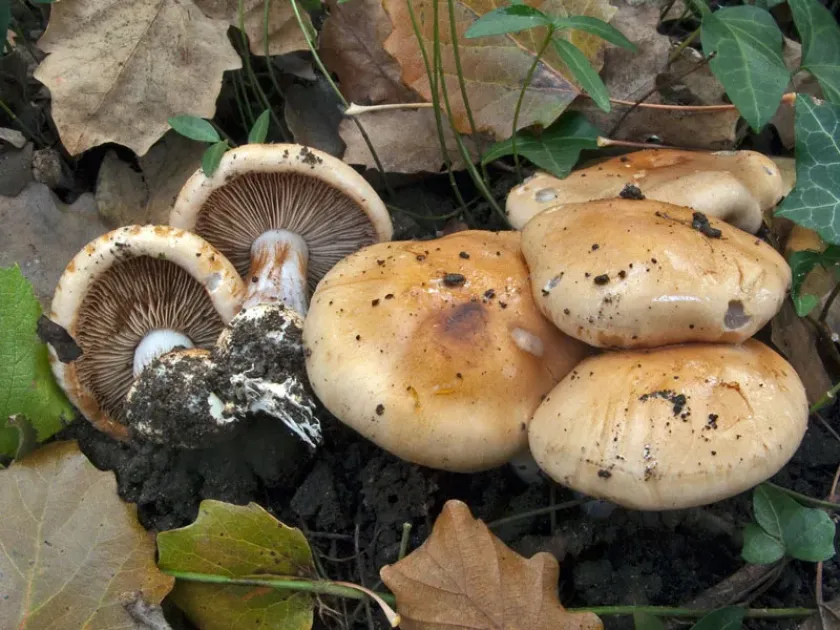
The fruiting body is characterized by a bright, yellowish cap and a robust stem. Like other members of the genus, it possesses a spider-web-like veil during its developmental stages, which eventually disappears.
The fungal mycelium spreads through the soil, connecting to the host tree's roots. This network is essential for the health of forest ecosystems, facilitating nutrient exchange between the soil and the plant.
Identification of the species is based on the specific coloration of the gills and the microscopic structure of the spores. It is generally recognized as a non-pathogenic component of the forest floor.
Conditions for development
The development of Cortinarius arquatus requires a stable forest environment, particularly in areas dominated by beech and oak trees. It relies heavily on the specific organic composition provided by leaf litter.
Environmental moisture is the primary driver for the emergence of its fruiting bodies. During periods of drought, the fungus remains inactive as an underground mycelial network.
Temperature fluctuations in late summer and autumn dictate the growth cycle of the mushroom. Mild, humid autumns are the most favorable for the formation of visible fruiting structures.
Soil structure is another critical factor. The fungus thrives in well-aerated but moist soils that are not susceptible to severe flooding or long-term compaction.
Conservation of the natural forest habitat is essential for the survival of this species. Any major alteration to the topsoil chemistry, such as high fertilizer input or pollution, can negatively affect the sensitive mycorrhizal balance.
Discussion
No discussions yet — be the first.