
Death cap
Amanita phalloides
Description
Pathogen
Amanita phalloides, commonly known as the death cap, is not a plant disease pathogen. It is a mycorrhizal fungus that lives in a symbiotic relationship with the roots of specific tree species.
The fungus belongs to the Amanitaceae family. Its vegetative part (mycelium) extends through the soil, forming an intimate connection with the roots of trees like oak, beech, hazel, and sometimes pines.
In agronomy, this organism is categorized as a natural soil inhabitant rather than a crop disease. It does not infect, degrade, or compete with agricultural crops or vegetables.
The life cycle involves the production of fruiting bodies above ground, which appear during late summer and autumn in forested areas or near edge-of-field trees.
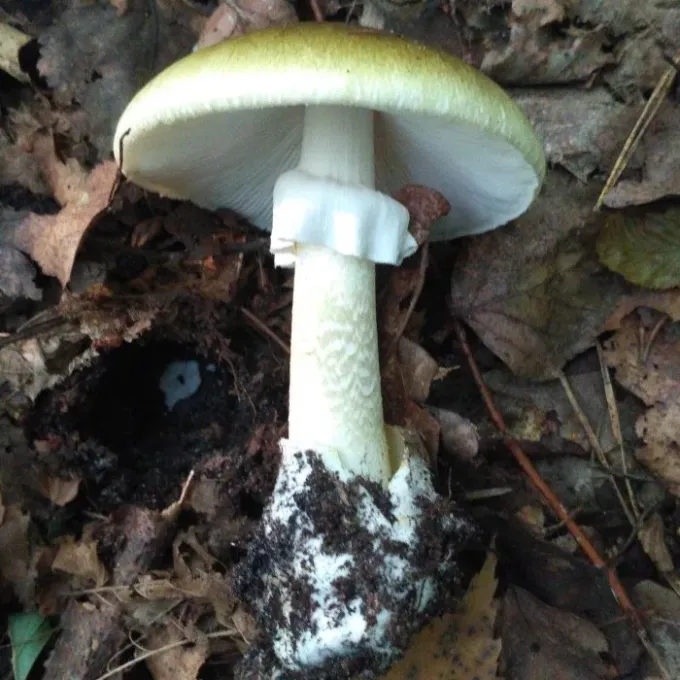
Identification is key for safety: the mushroom features a cap, white gills, a ring on the stem, and a persistent cup-like volva at the base of the stem.
Conditions for development
Development depends heavily on the presence of host trees. The ideal environment includes moist, nutrient-rich, and slightly acidic or neutral soils found under a dense canopy or near wooded borders.
The fungus thrives in mild temperatures, typically ranging from 15°C to 22°C, which correspond to the seasonal patterns of forest mushroom cycles.
Dissemination occurs via spores dispersed by wind, rain splashes, or small animals moving through the soil and forest litter.
It rarely establishes itself in cultivated fields because standard agricultural crops do not support the specific mycorrhizal associations required for the fungus to complete its life cycle.
Seasonal occurrence is concentrated between August and October, making it essential to monitor garden perimeters adjacent to wooded areas during these months.
Why it matters
The primary concern regarding the death cap is its extreme toxicity. It contains amatoxins and phallotoxins that cause fatal damage to the human liver and kidneys if ingested.
The fungus causes no agricultural damage. It does not attack the foliage, fruit, or root systems of commercial or ornamental plants; therefore, it does not reduce yield or plant vigor.
The hazard is strictly health-related, posing a severe risk to humans and animals who might encounter it while working in or exploring garden grounds near tree lines.
Presence on the farm or garden does not indicate a pest infestation but serves as a warning of high-risk biological contamination that needs management.
Economic impact is limited to the potential liability and the requirement for safety awareness training for staff and visitors on the property.
Protection
Fungicides are ineffective and inappropriate for managing Amanita phalloides, as the mycelium is deeply embedded in the root system of mature trees, and chemicals would harm the tree's health.
Physical management is the most effective approach: removing fruiting bodies before they mature and release spores helps reduce the local spore load.
- Keep garden areas and lawn perimeters mowed to improve air circulation.
- Avoid using forest topsoil or untreated leaf litter from wooded areas for garden mulch.
- Educate employees and residents on how to identify and avoid this mushroom.
Any identified fruiting bodies should be carefully removed while wearing gloves and disposed of by incineration or deep burial far from garden zones.
Since this fungus is not a plant disease, it should not be targeted with plant protection products, but rather handled as a public safety issue for the landscape.
Discussion
No discussions yet — be the first.