
Delicatula
Delicatula
Description
Symptoms
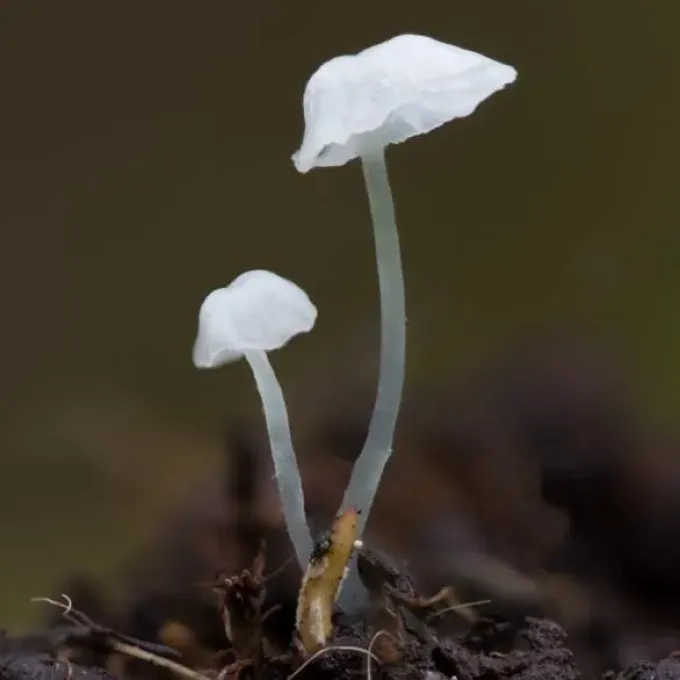
The primary sign of Delicatula presence is the emergence of small, fragile fruiting bodies. These often feature translucent caps and slender stems, which are characteristic of this genus.
The mycelial growth may be visible as fine, white thread-like structures permeating the decaying substrate. This indicates that the decomposition process is actively underway.
Fruiting bodies typically appear after periods of heavy rainfall or in high-humidity environments. They are often found scattered on leaf litter or fallen twigs, rather than in dense clusters.
The gills underneath the cap are often widely spaced or have a simplified structure, which is a key identifying feature for mycologists studying these specimens.
The presence of these mushrooms is a natural indicator of a moist environment and the ongoing biological breakdown of organic debris in the area.
Pathogen
The genus Delicatula belongs to the family Mycenaceae and consists of saprotrophic fungi. It is crucial to understand that these organisms are not plant pathogens and do not cause diseases in agricultural crops.
They act as decomposers, specialized in breaking down complex organic materials such as cellulose and lignin found in plant litter. Their role is ecologically significant as they facilitate nutrient cycling.
The mycelium of Delicatula grows within dead organic matter, gradually decomposing it. Since they lack the ability to attack living plant tissue, they are considered beneficial or neutral in agricultural settings.
Their life cycle involves the production of spores, which are disseminated by wind to colonize new substrates. This enables them to thrive in forest floors, decaying wood, and moist organic debris.
Scientific interest in this genus is primarily focused on their biological role in the ecosystem rather than agricultural protection or disease management.
Conditions for development
Delicatula thrives under conditions of high relative humidity and low light exposure. They require constant moisture in their substrate to maintain active metabolic growth.
The ideal temperature range is generally moderate, consistent with forest undergrowth or shaded garden environments. Extreme heat or desiccation will halt their growth and lead to the collapse of fruiting bodies.
The preferred substrates include decaying plant materials such as leaf litter, bark, and small woody twigs. These materials provide the necessary carbon sources for their development.
A balanced pH environment is usually favorable for their enzymatic activity. They are commonly found in areas where organic matter is stable and protected from rapid temperature fluctuations.
Adequate ventilation and moisture levels in the immediate microhabitat are the main drivers for their successful sporulation and mycelial spread.
Why it matters
There is no harm caused by Delicatula to cultivated plants. As non-parasitic fungi, they do not impact the health, yield, or quality of agricultural produce.
Their presence does not result in necrotic spots, wilting, or any other pathological symptoms on crops. They are entirely focused on the utilization of non-living tissue.
Ecologically, these fungi are beneficial because they accelerate the mineralization of organic matter, returning essential nutrients to the soil for future plant use.
No economic damage is associated with this genus, making it unnecessary to track them as a threat to farming or forestry operations.
In most cases, the presence of these fungi goes unnoticed by farmers, as they do not interfere with standard agricultural practices or equipment.
Protection
No chemical control or fungicide application is required for Delicatula. They are not plant pathogens, so treating them with chemicals would be scientifically and economically groundless.
If for aesthetic or management reasons you wish to reduce their presence, simply clearing away excessive dead plant debris will naturally limit their habitat.
Improving soil aeration and drainage can also help, as these measures reduce the high-humidity environment that these fungi prefer.
Maintaining a clean field environment by disposing of old organic litter is a sufficient non-chemical method to prevent the growth of various saprotrophic fungi.
Overall, focus on standard agronomic practices that keep the field healthy, as these will naturally manage any saprotrophic activity without the need for interventions.
Discussion
No discussions yet — be the first.